Physical Address
304 North Cardinal St.
Dorchester Center, MA 02124
Physical Address
304 North Cardinal St.
Dorchester Center, MA 02124
Helpful ideas. Squeaky value.
Helpful ideas. Squeaky value.
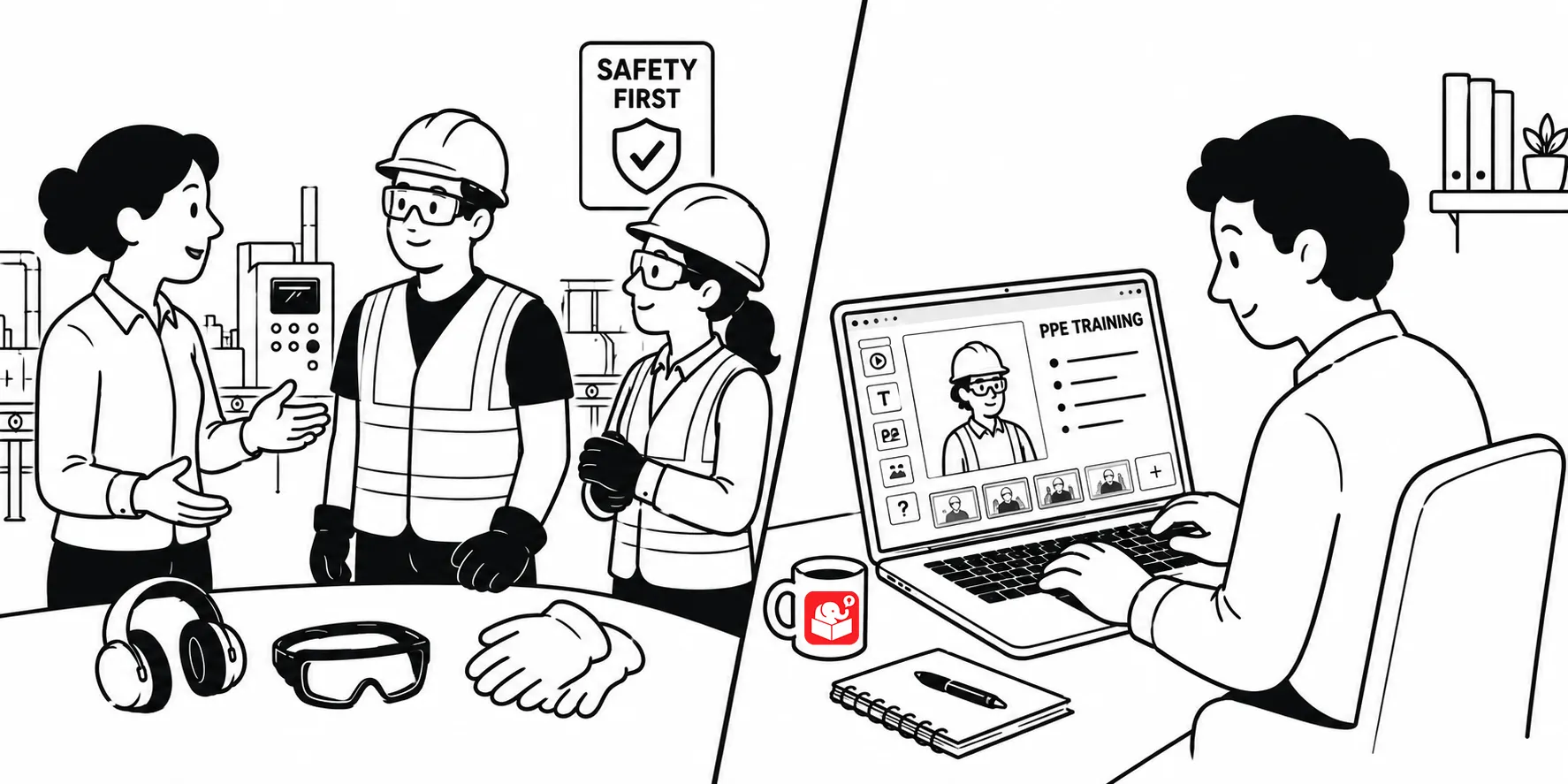
In previous posts we looked at the blended training program I used for machine operators in a loud production environment. Part of the program used a learning journal and I shared what I included in it.
Today I will share a little more about how I designed the program to work with the on-demand e-learning courses and the peer-coached training program, and how they both used the learning journal.
Why split training into modules and peer coaching? A few reasons. The shop floor was loud. Adult learners nod along even when they’re lost, and you can’t always tell if they’re tracking. Peer coaches already had a real job to do, plus coaching. Taking some training off their plate freed up their time. Modules also let us pack in more content and deliver it the same way, every time.
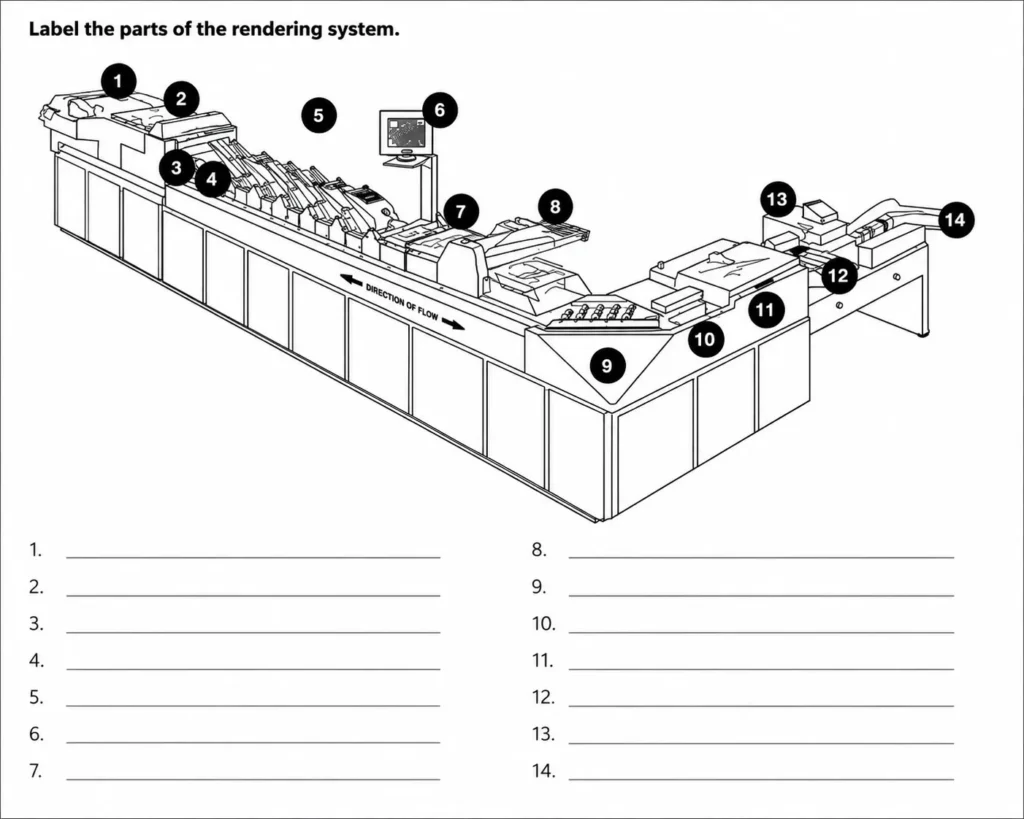
Create a note-taking section that corresponds with the e-learning modules. I like to add visual clues where it makes sense. For example, if I show parts of a machine in the course, I’ll include that in the learning journal or give them an activity where they label the parts of the machine on the paper. I also like to include a few fill in the blank sections for critical information.
Give them a note-taking section they’ll actually use alongside the e-learning modules. I want it to capture the stuff that matters, the kind of thing they’ll need later. Not while they’re sitting in the course, but later, on the floor, while chatting with a peer coach.
Keep the e-learning lean. It doesn’t need to carry every piece of information. That’s what the learning journal and other resources are for, including the conversation with your peer coach.
Both the e-learning modules and the journal end with a review section. A few key learning points, plus some review questions. These aren’t stump-the-learner trivia. They’re not graded either. Every question ties to the module’s core objectives, the stuff they’ll need on the floor. Basically a preview of what a peer coach might ask in production, just to check the content stuck. They can also spark discussion with the peer coach.
We had to train the peer coaches too. How to coach new people, how to ask the right questions. Turns out that training was a nice side benefit. It gave them a taste of management and supervisory skills. We covered the program itself, plus how to give feedback and assess a new learner.
You can build a standalone peer coach guide to pair with the learning journal. I usually skip that and just add a peer coach section right in the journal instead. It triggers a conversation between the coach and the new learner. At this point, the peer coach just needs a read on what stuck from the modules, how much they actually understand, before moving into real activities.
Afte the training has run a bit, schedule some debrief time with your peer coaches. They’ll help you build a better program than you could on your own. They see where people get stuck. They know the best practices that actually work on the floor. Plus, every training program picks up some bureaucracy over time. Working with peer coaches is a good way to cut through it.
After the training is complete, you want them to walk away able to do specific things. So make a list: every task a new learner should be able to perform by the end of training. Be specific. “Meets safety requirements” is vague. “Knows how to put on safety gear and activate the alarm in an emergency” is specific.
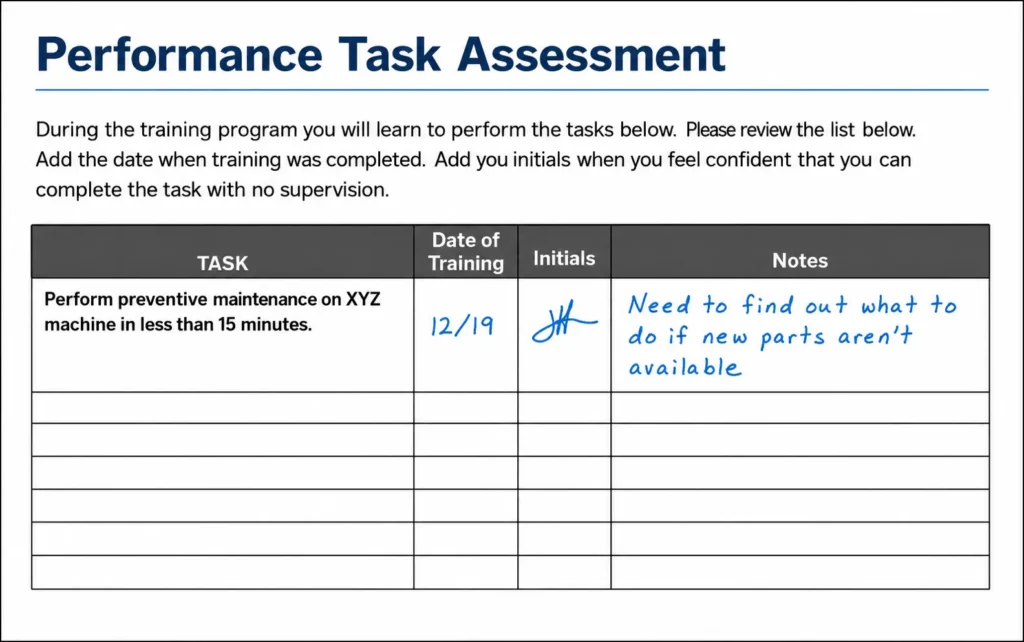
As they move through training, that list becomes a checklist. They can run through it and confirm, yeah, I can do that. It also surfaces gaps where they missed something along the way. Have them mark off each task they feel confident on. Wherever they hesitate or ask questions, that’s your sign of where to focus the remedial help.
The checklist can also double as a formal training record, proof that the training happened. When I build one, I list every task tied to that module, then have the learner self-assess and sign off. The peer coach reviews it, signs it too, confirming the person finished both the modules and the real-world tasks.
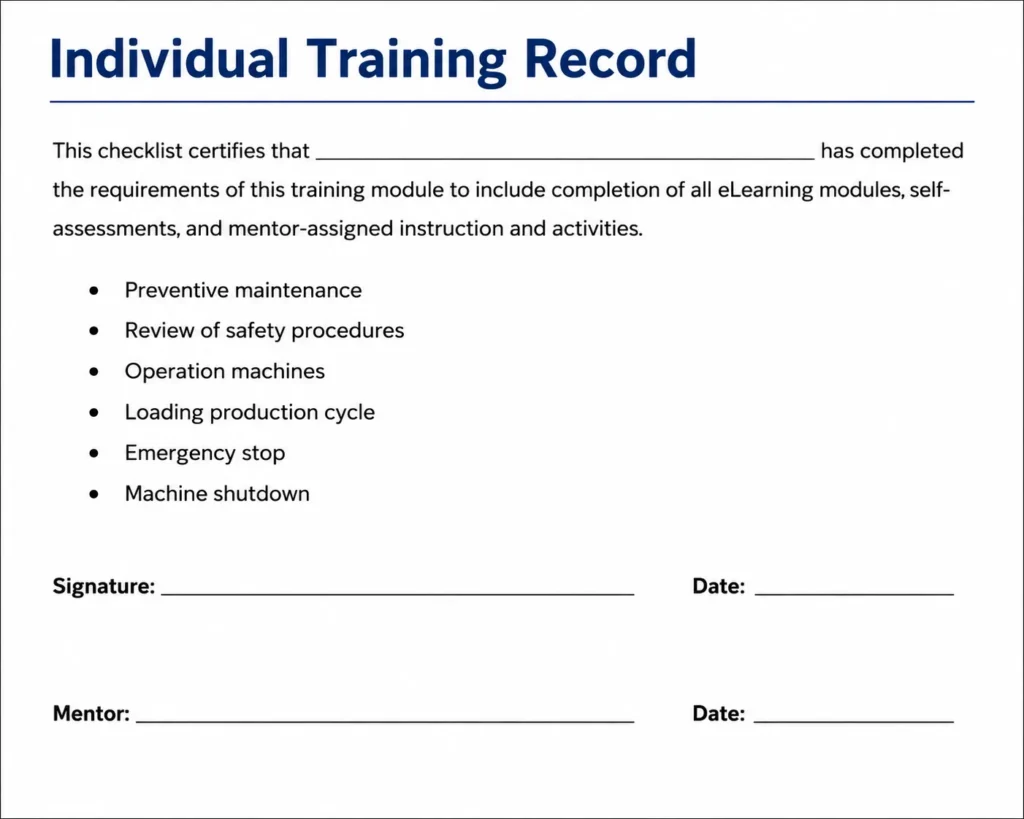
From there it can go wherever it needs to: the manager, the training group, HR, whoever needs it on file.
Since the learning journal doubles as their personal training manual, I like to pack in some extra resources too. Important contacts, links to the intranet, whatever else they might need down the road. That way they’ve got one quick reference to turn to after training wraps, if they ever get stuck.
Move some training off the floor and into an e-learning module, and you get consistency, plus a faster time to train. Pair a new learner with a peer coach, and you get better training and a real social connection at work. The learning journal is what bridges the two.