Physical Address
304 North Cardinal St.
Dorchester Center, MA 02124
Physical Address
304 North Cardinal St.
Dorchester Center, MA 02124
Helpful ideas. Squeaky value.
Helpful ideas. Squeaky value.
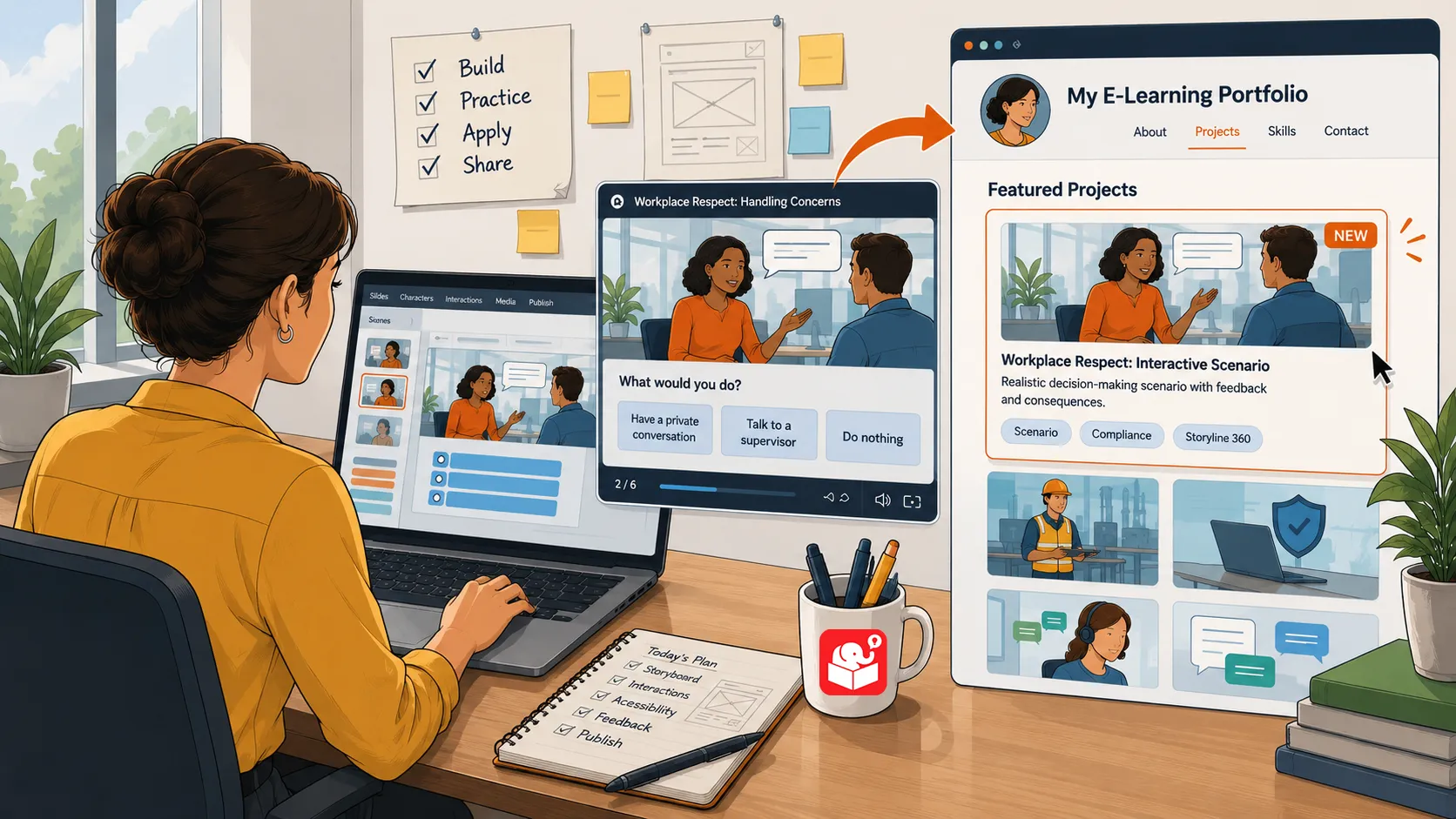
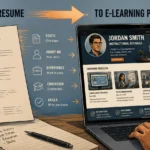
A resume lists what you’ve done. A portfolio shows what you can do. For e-learning designers, that distinction can make all the difference.
A portfolio has three jobs:
When you’re being hired, the portfolio does what a text-based resume can’t, it shows your skills in action.
When I review candidates for instructional design roles, the portfolio tells me more than the degree does. Someone might list years of experience and education on a resume, but without samples I can’t see what they can do.
If you want people to notice your skills, you need somewhere to put them.
Most people know they need a portfolio. Finding the time to build one is another matter. Here are a few solutions to the most common obstacles. The most common problem is time. If you’ve been putting it off, start small.
The second common issue is proprietary work. If your projects can’t be shared, here are three ways to handle that:
You’re probably already learning even if you’re not documenting it. Heck, you’re reading this post. That counts for something. You read blog posts, watch videos, and take courses. What you’re likely not doing is capturing any of it.
Adding a blog to your portfolio is one of the best ways to turn passive consumption into active learning. Write a quick post after finishing a video, reading an article, or completing a chapter in a reference bookl. You’re not writing for an audience, just for yourself. But write as if you’re explaining it to someone else. Over time, those short posts build a real record of your growth.
Here are some prompts to get started:
It’s easy to spend years at a job building the same type of course over and over. Let’s face it, a lot of corporate e-learning isn’t very good and you probably don’t get to stretch your creative muscles. You’re not building a hundred different skills. You’re using one skill a hundred times.
Your portfolio is the place to practice what you don’t get to try at work. The weekly e-learning challenges are a great source of prompts. Here’s a simple approach:
Knowing which skills to build is half the battle. Years ago I decided to transition to from media production to training. I went online and reviewed all of the training-related job postings and then I created a two-column list. On one side, I listed all desired qualifications and on the other, my corresponding experience. Needless to say, there was a big gap between what companies wanted and the skills I had.
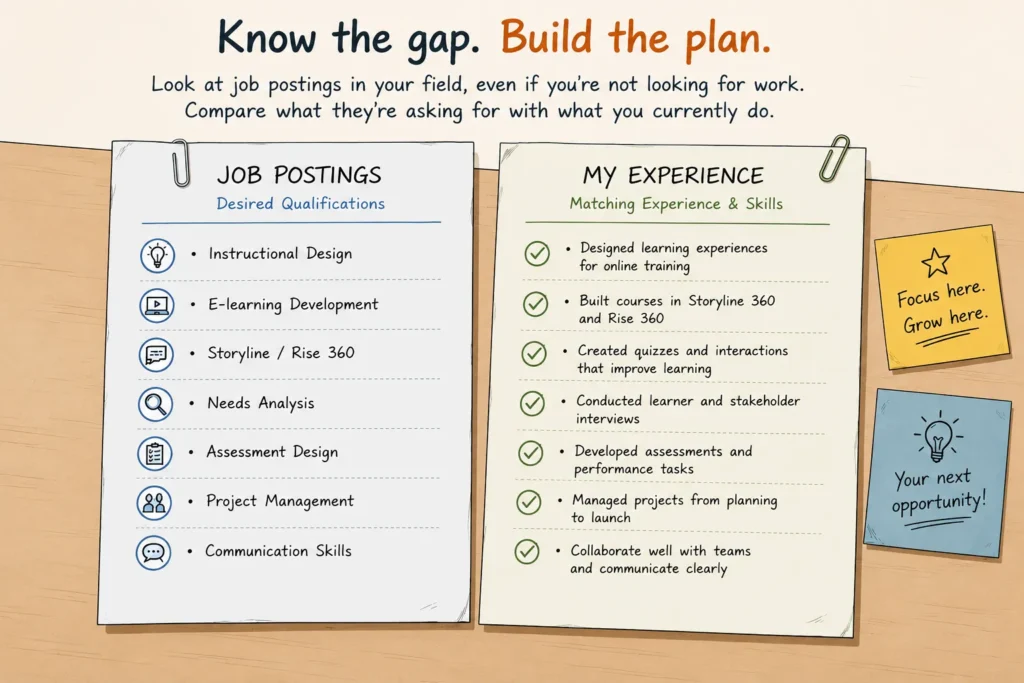
So I went out and acquired the skills by volunteering or participating in projects. Then I created a portfolio to document what I was learning and the types of projects on which I worked.
I think that’s a still a good way to do this.
For skills that are hard to find on real projects, try volunteering. Local non-profits, community groups, and government organizations often need training materials. Offer to build something for them. It doesn’t need to be complex. The goal is to document that you did it.
Starting a portfolio doesn’t require a polished website or a stack of completed projects. It requires a habit. Pick one thing to document this week and then do it again next week. As your portfolio grows, so will your clarity about where you’re headed and what skills will get you there.
Comments are closed.


[…] For some people, it’s a curated set of best work they rarely touch. For others, it’s a living record of projects and learning. During the planning stage, decide which of those you actually want to […]