Physical Address
304 North Cardinal St.
Dorchester Center, MA 02124
Physical Address
304 North Cardinal St.
Dorchester Center, MA 02124
Helpful ideas. Squeaky value.
Helpful ideas. Squeaky value.
The theory behind good instruction — how people learn, what makes training actually work, and the thinking behind course decisions.
Some courses need learners to prove they can do something. Others just need to build awareness. Here's a simple framework for figuring out which one you're building, and how to write objectives that actually match.
Every course is built with some idea of who's going to take it. The problem is that idea is often wrong. Getting clear on who your learners actually are — not who you assume they are — changes everything about how you design a course.
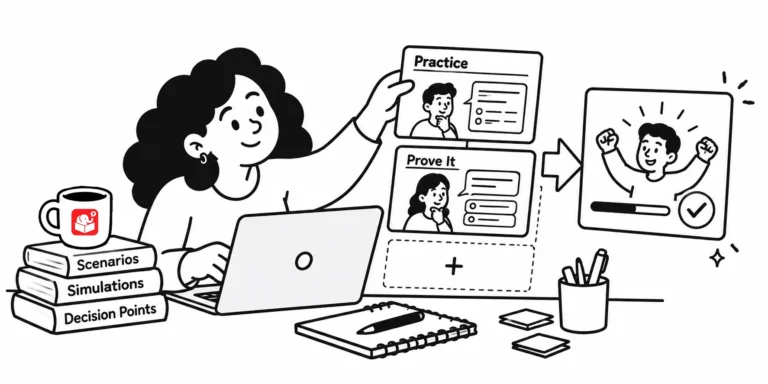
If your course has performance expectations, learners need more than content. They need to practice and prove they can apply it. You can build that inside the course or as part of a broader learning experience.

Most learning objectives end up as vague statements that look good on a slide but don't actually guide course design. There's an easier way to write them — one that keeps your course focused on what learners need to do, not just what they need to know.
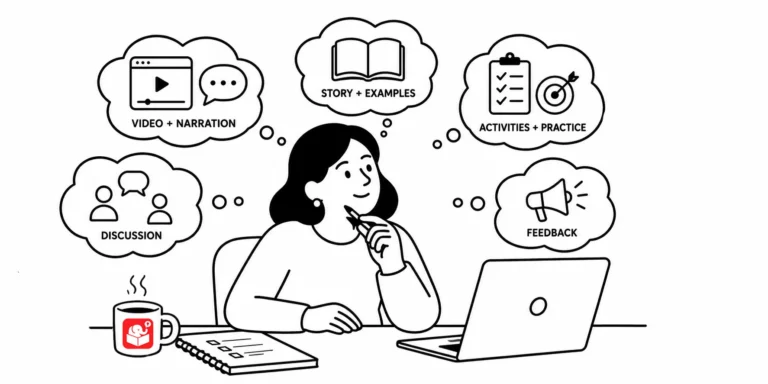
You put information on a screen. Your learner reads it. But what they walk away understanding isn't always what you meant. Here's how to design courses that close that gap.
Learners don't remember everything you put in a course. They remember what their brains had room to process. Here's a quick look at cognitive load and three ways to design around it.
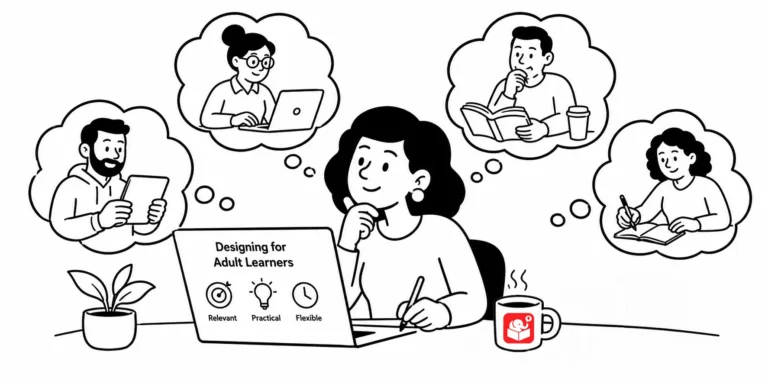
Kids jump right in and figure things out. Adults hold back, afraid to get it wrong. Here's how to design e-learning that gets adult learners past that hesitation and actually engaged.
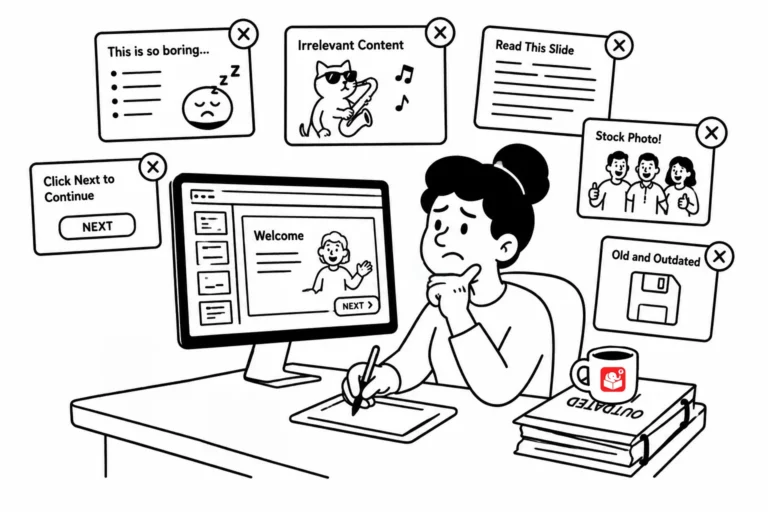
Learners can spot a bad course fast: no relevance, no point, no polish. Here are three habits that guarantee yours misses the mark, and what to do instead.
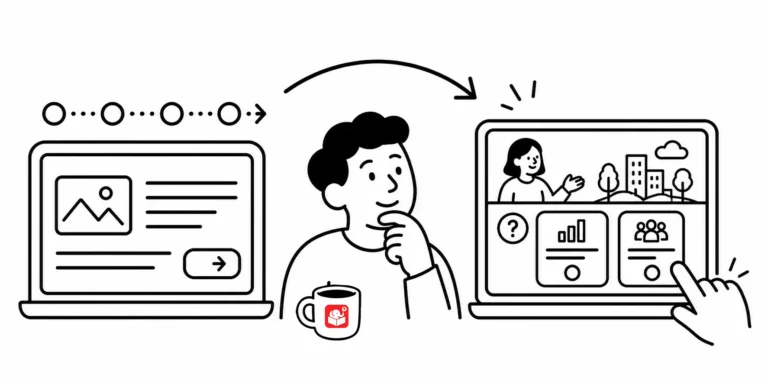
Making content interactive isn't the same as teaching people to make good decisions. Here's why so many e-learning courses stop short of the real work, and what it actually takes to build decision-making practice into your training.
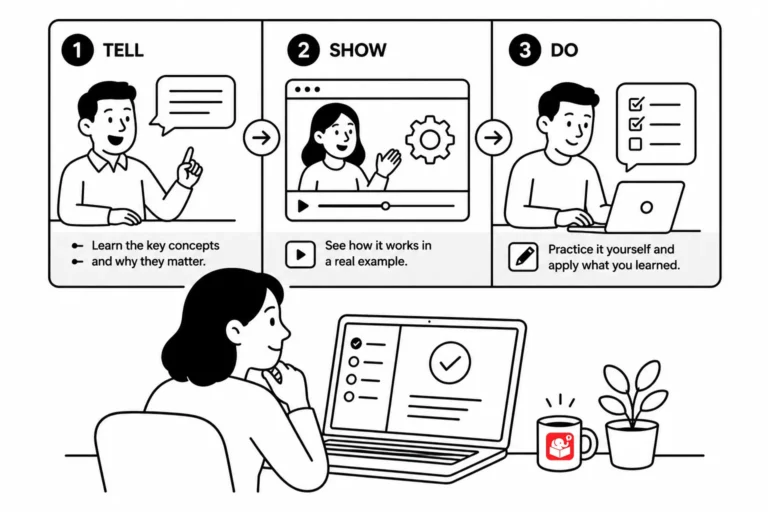
Three structured approaches that move learners from information to applied skill A lot of online courses are still mostly linear. That’s fine for annual compliance content with no real performance objective attached. But if you want real behavior change, you…
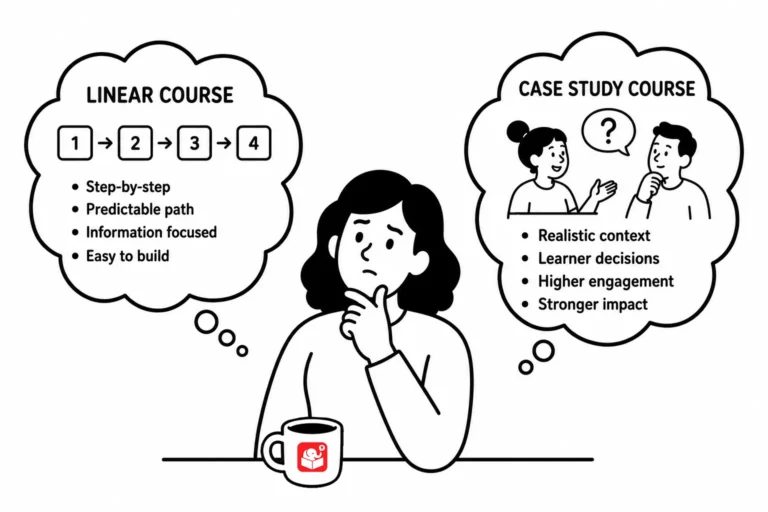
Skip the click-and-read information dump. Turn your content into a case study and build an e-learning course people actually remember.
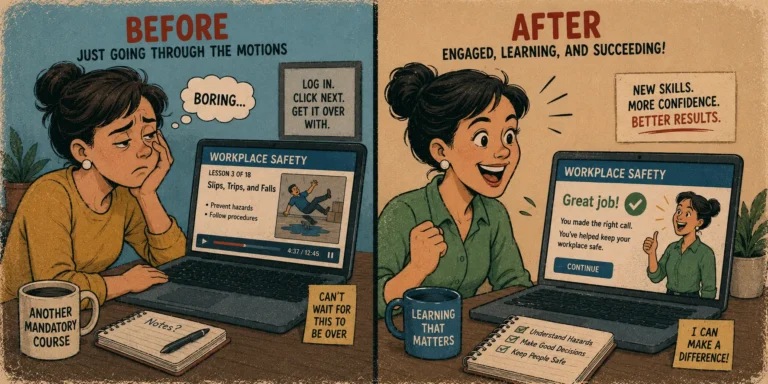
You can't force anyone to learn. But you can design a course that gives learners a real reason to try. Here's how to build motivation into your course from the start — before they ever click next.
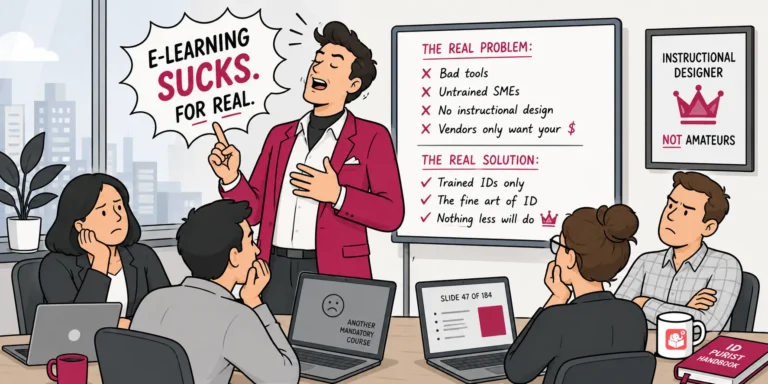
You've taken the course. You know the one. Three hours, a lot of slides, a quiz at the end, and nothing that changed how you do your job. Bad e-learning isn't new, and it's not caused by the tools designers use. This post gets into what actually drives it — and where AI fits into that honestly.

Leslie Robinson's comedy video about mandatory training went viral for a reason. The comment section turned into a catalog of every broken e-learning pattern. It's worth reading as a design checklist.

Your learners' brains have a built-in limit on how much they can process at once. When you design without that in mind, the course feels hard in the wrong way. Here's what cognitive load is and why it matters for the courses you build.