Physical Address
304 North Cardinal St.
Dorchester Center, MA 02124
Physical Address
304 North Cardinal St.
Dorchester Center, MA 02124
Helpful ideas. Squeaky value.
Helpful ideas. Squeaky value.
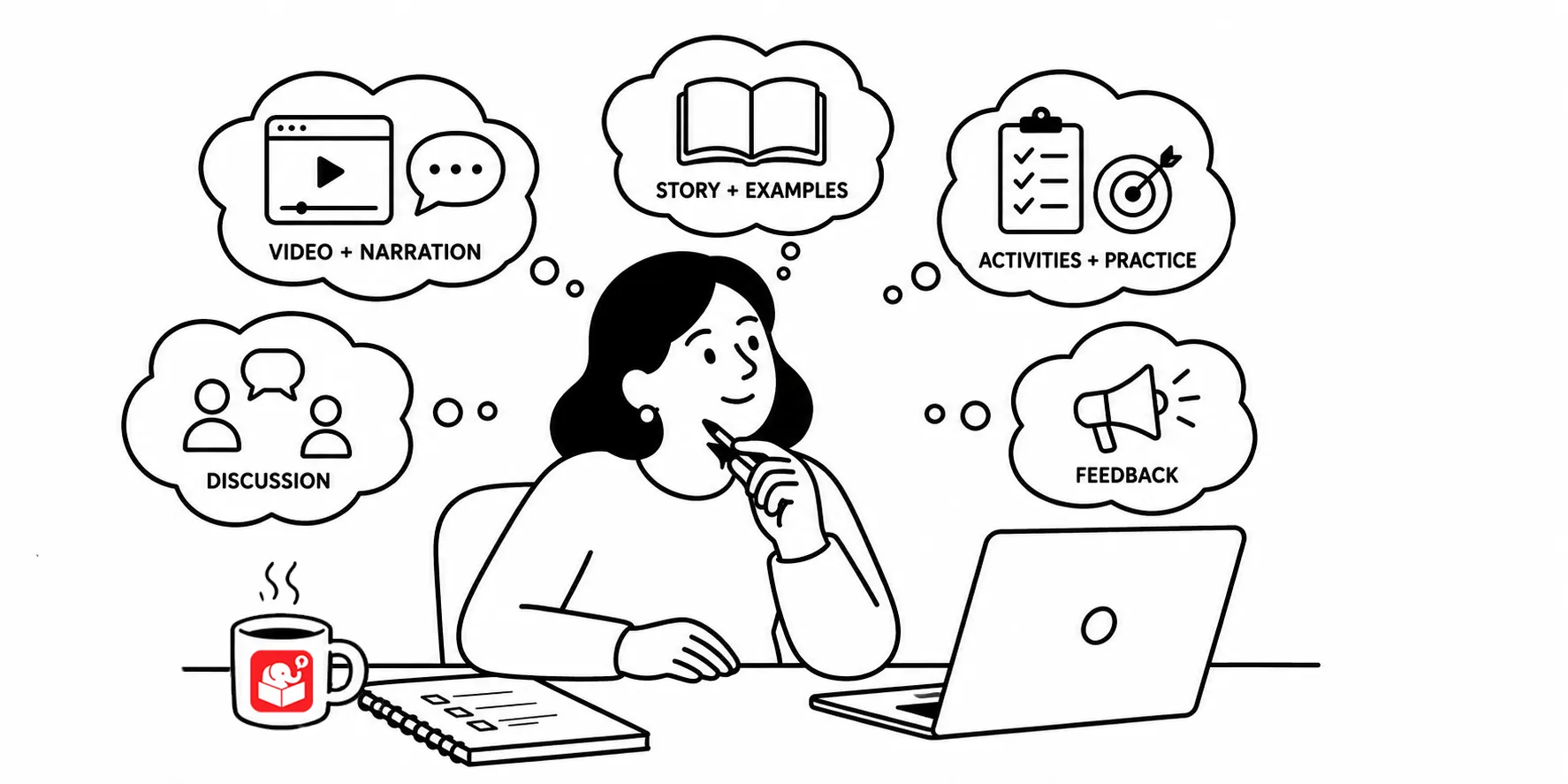
Years ago, I was in a video production class where each student would watch someone else’s work before learning what the creator intended. What the audience got from the video was almost never what the creator meant.
That gap between intent and perception is the same challenge you face every time you build an e-learning course.
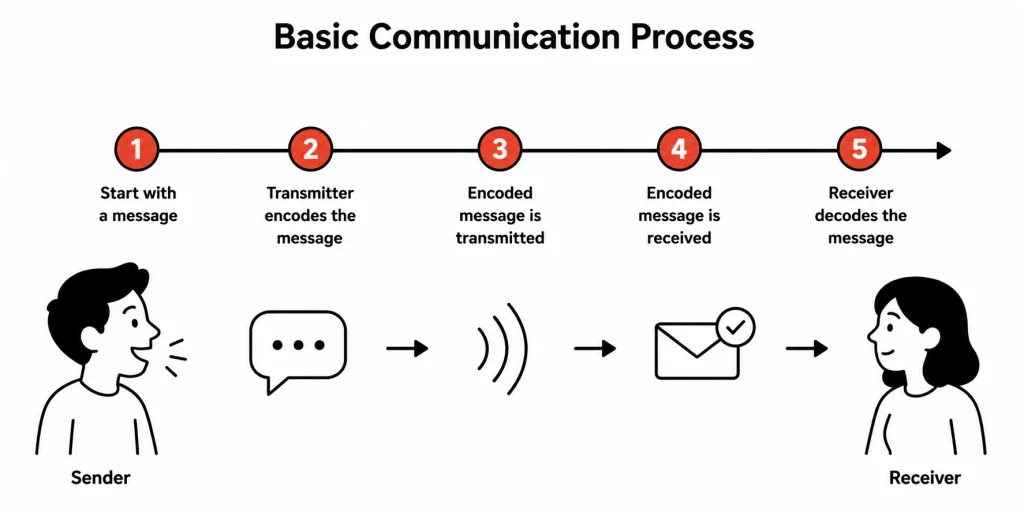
Every e-learning course follows a basic communication model:
Goal is that what they decode matches what you encoded.
But between your intent and their understanding, a lot can go sideways.
In a live classroom during onsite training, a facilitator picks up on the room’s confusion and can make adjustment. They see the blank stares, hear the questions, and change course. That’s real-time communication.
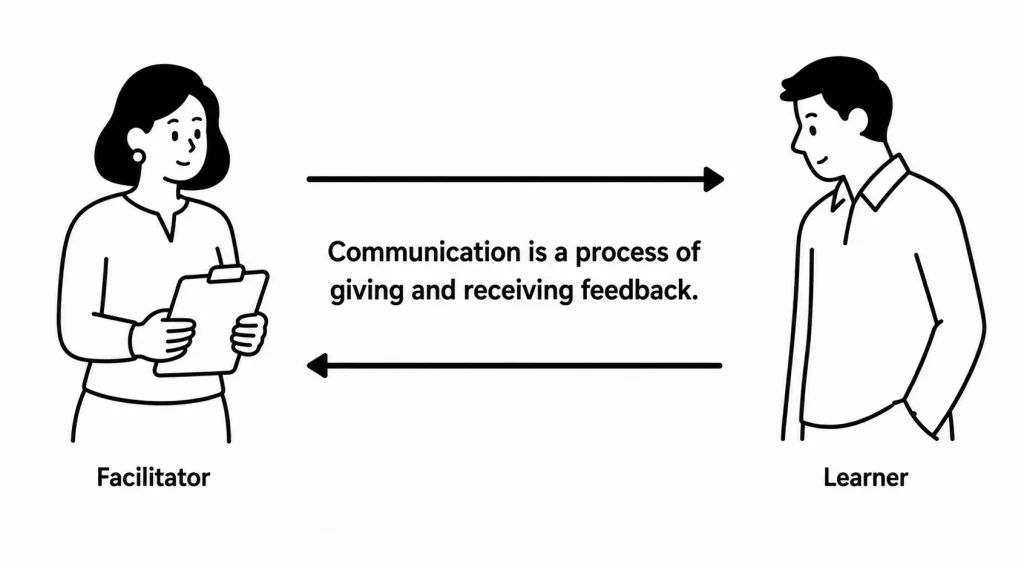
In an e-learning course, you don’t get that real-time feedback. You set the course once, and it runs the same way for every learner. You can’t see the blank stares and confusion if it exists.
And that’s the design challenge: anticipate misunderstanding and build around it.
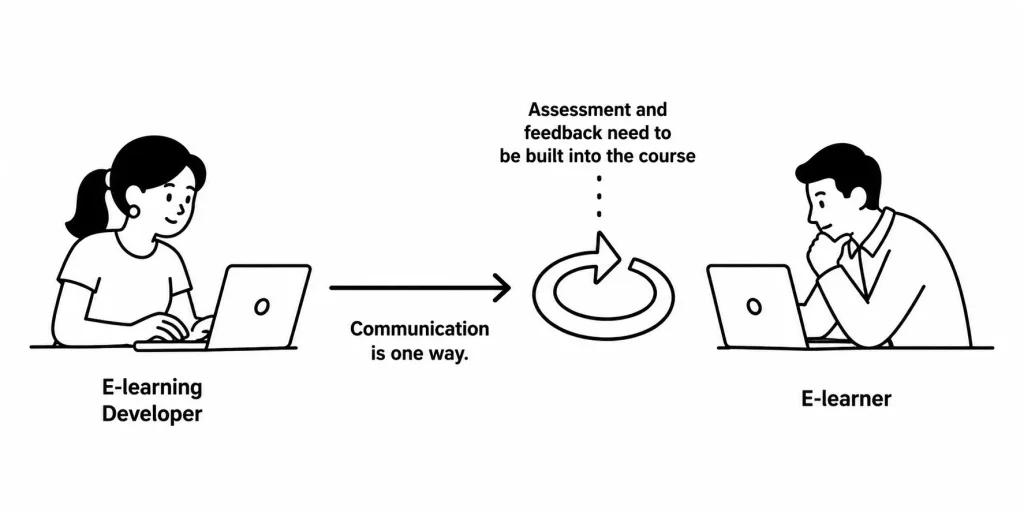
The communication model points to three spots where things go wrong. Each one is a design decision you make whether you know it or not. Address them intentionally, and your courses will land better.
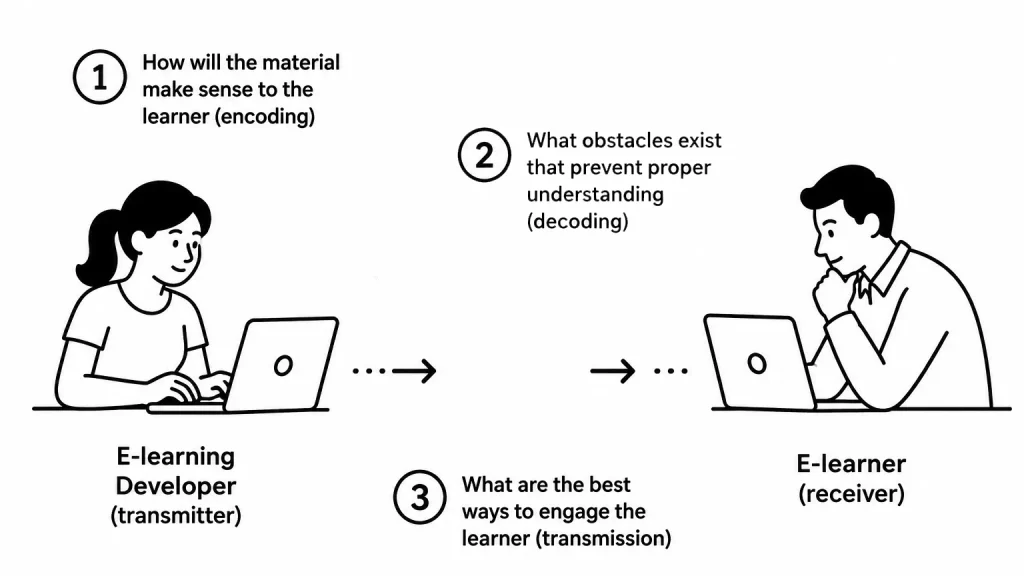
The way you structure content determines whether learners can make sense of it. If the learner doesn’t know something, proceeding with content may not help
A few ways to improve how you encode content:
Every learner comes to your course with a different background. Different experience levels, different cultural frames, different vocabulary. What reads clearly to one person is a puzzle to another.
The better you know your learner, the more you can anticipate where decoding breaks down. It doesn’t take a lot of research. Often a quick conversation with your subject matter expert {or potential learners) about the audience reveals the gaps you need to design around.
Even well-structured content goes nowhere if learners aren’t paying attention. Relevance is the biggest engagement driver. When learners can see how the content connects to their actual work, they’re more likely to take it in.
Ways to improve transmission:
Pick one of the three areas and review your next course through that lens. If you’re working on a new module, ask yourself whether the encoding is clear and whether you’ve removed decoding obstacles. Then look for one way to make the transmission more engaging.