Physical Address
304 North Cardinal St.
Dorchester Center, MA 02124
Physical Address
304 North Cardinal St.
Dorchester Center, MA 02124
Helpful ideas. Squeaky value.
Helpful ideas. Squeaky value.
Blog posts are great. Sometimes a single visual says it faster. I use AI to pull the key ideas from my posts on training and instructional design into clean, one-page infographics — a good example of how AI can help consolidate thinking into something useful.
Download them, share them, use them however you’d like. Attribution isn’t required, but it’s always appreciated. Click any image to read the full post behind it.
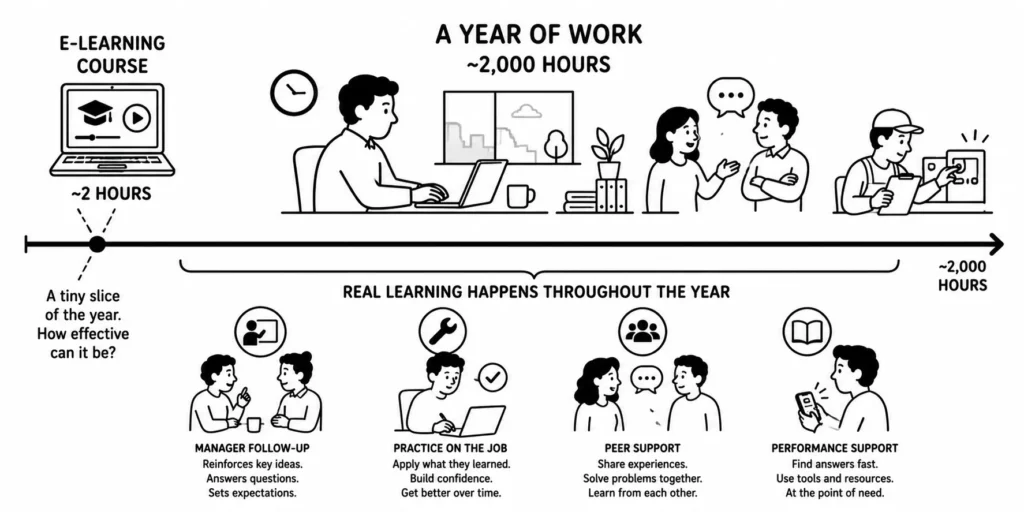
Most organizations treat the e-learning course like the training program. It isn’t. People learn all year long, through experience, peers, managers, and yes, the occasional course. Here’s how to think about where e-learning fits in that larger picture.
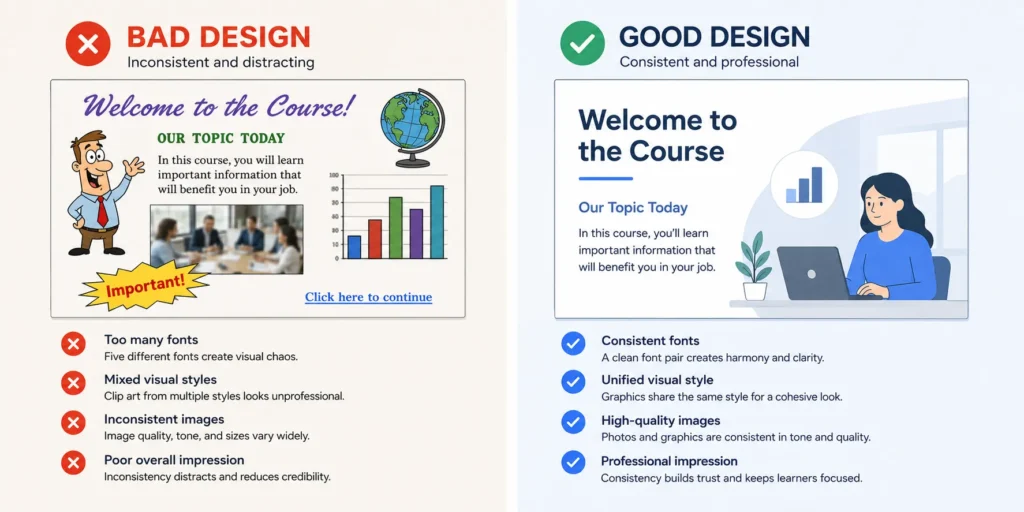
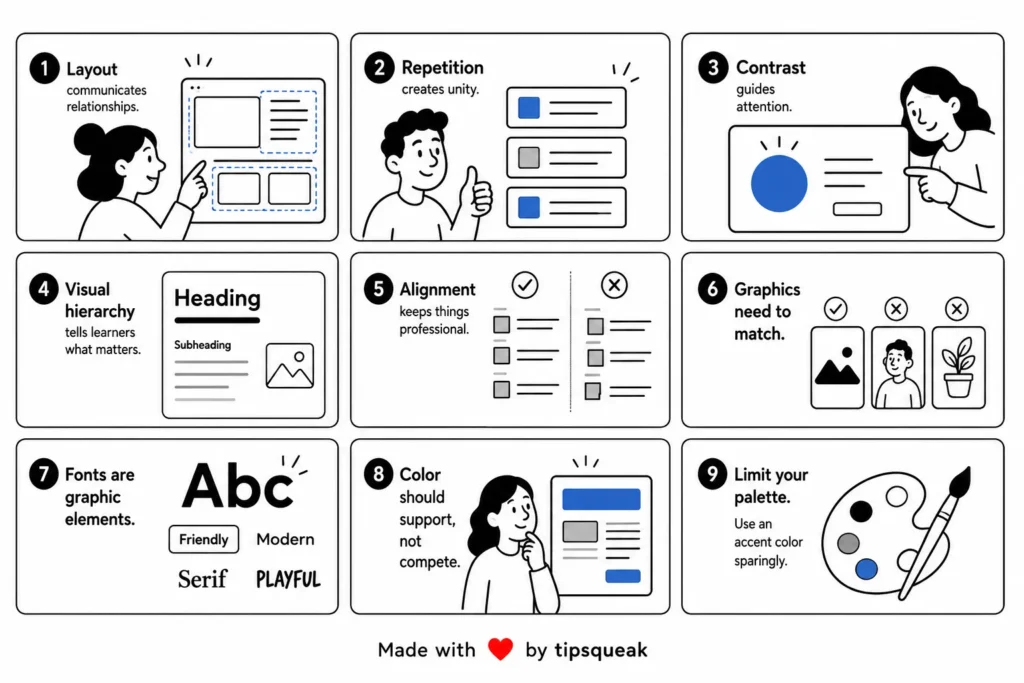
Most e-learning developers came up through training, not design — and it shows. This post covers the visual design principles every course builder needs, why AI tools can’t replace that foundation, and one book that puts it all together.
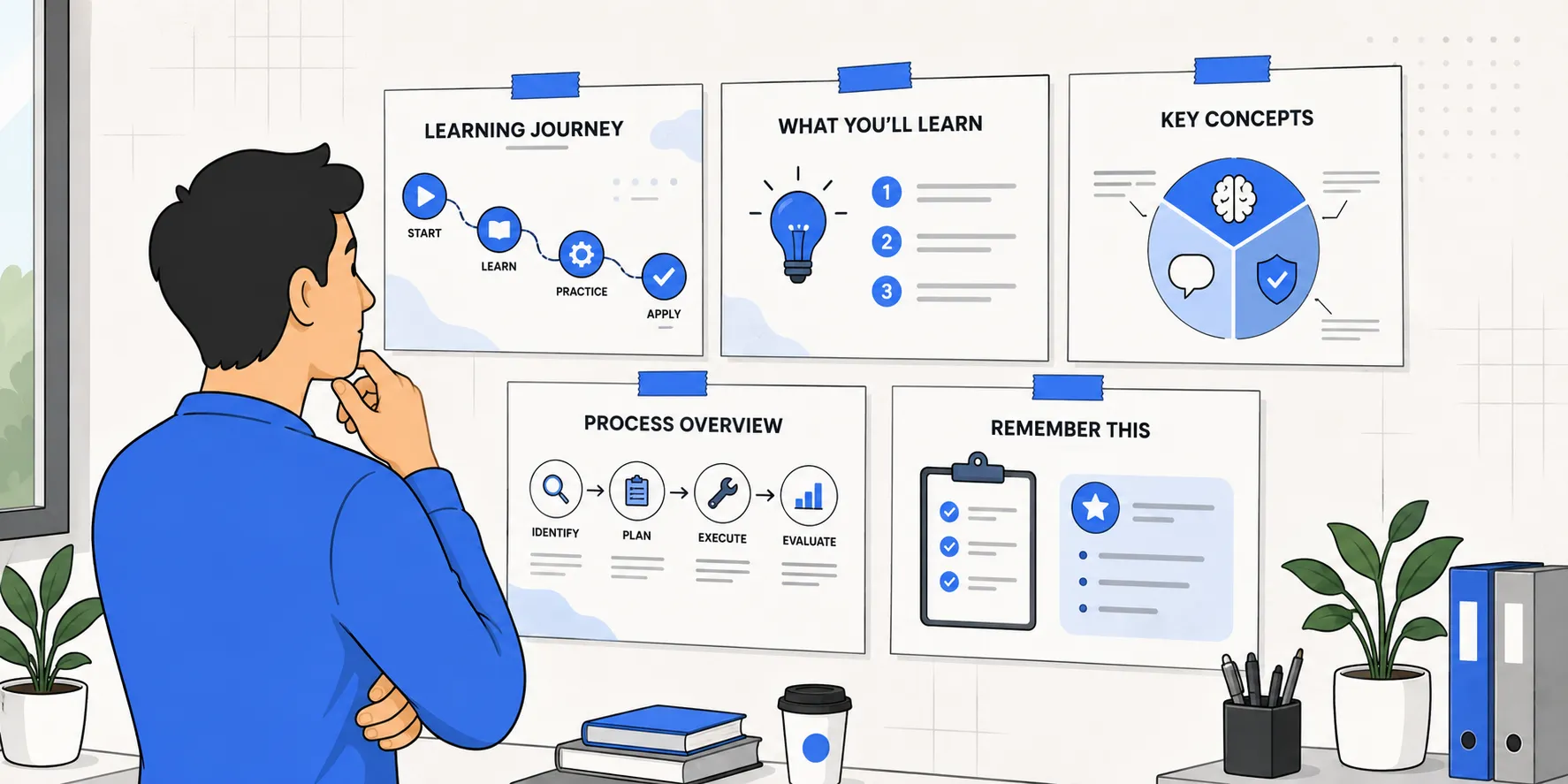
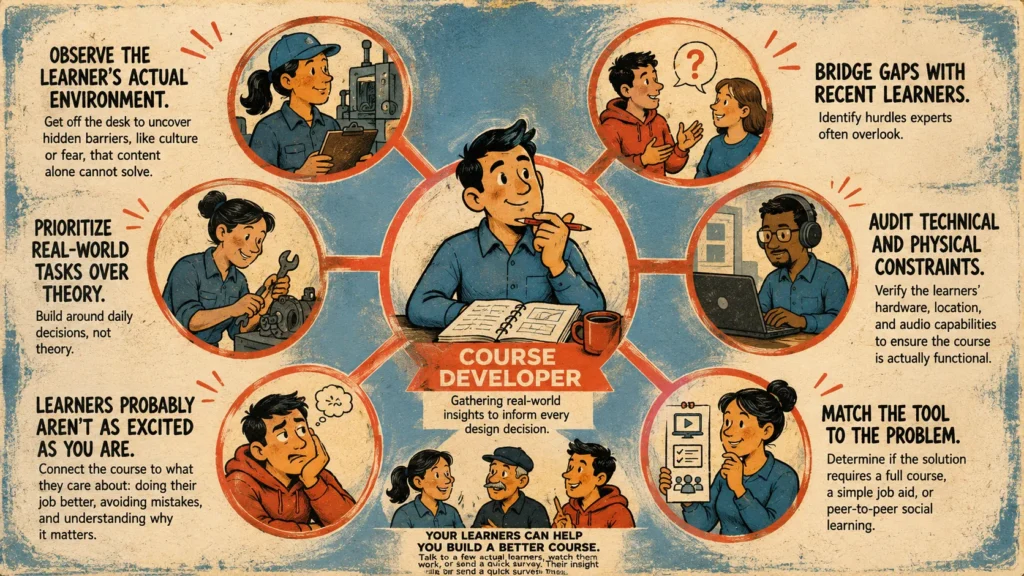
You can build a technically solid course and still miss the mark completely. It happens when you design based on what you think learners need instead of what they actually face. Here are eight things to watch for before you start building.
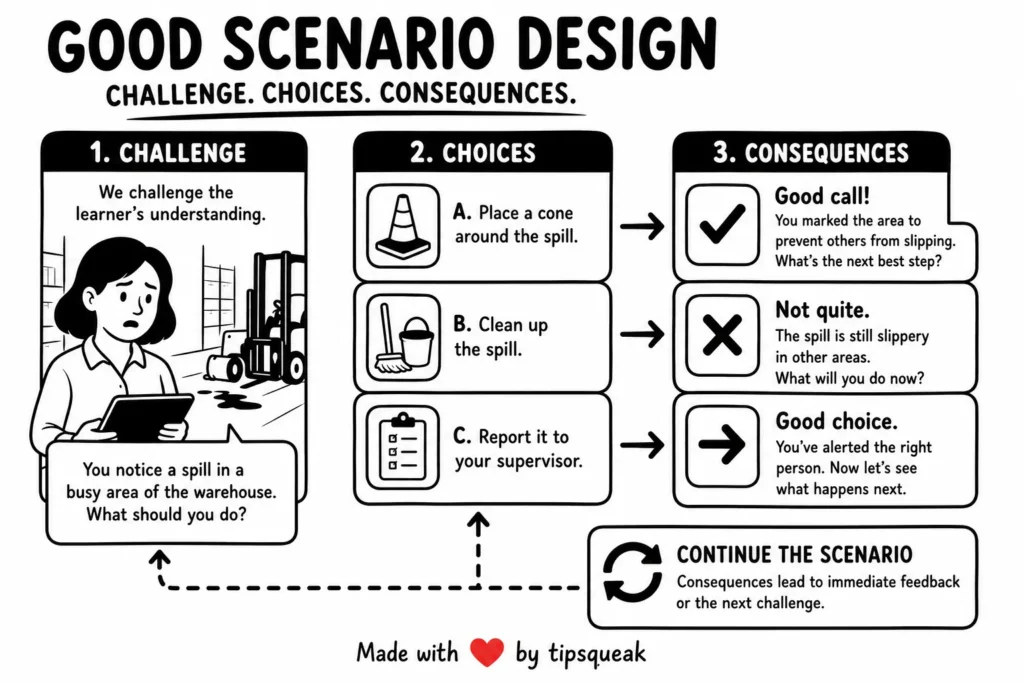
Most e-learning courses push information and call it training. The 3C model exists to fix that. It’s a simple structure for building scenarios that put learners in real situations and let them practice making decisions.
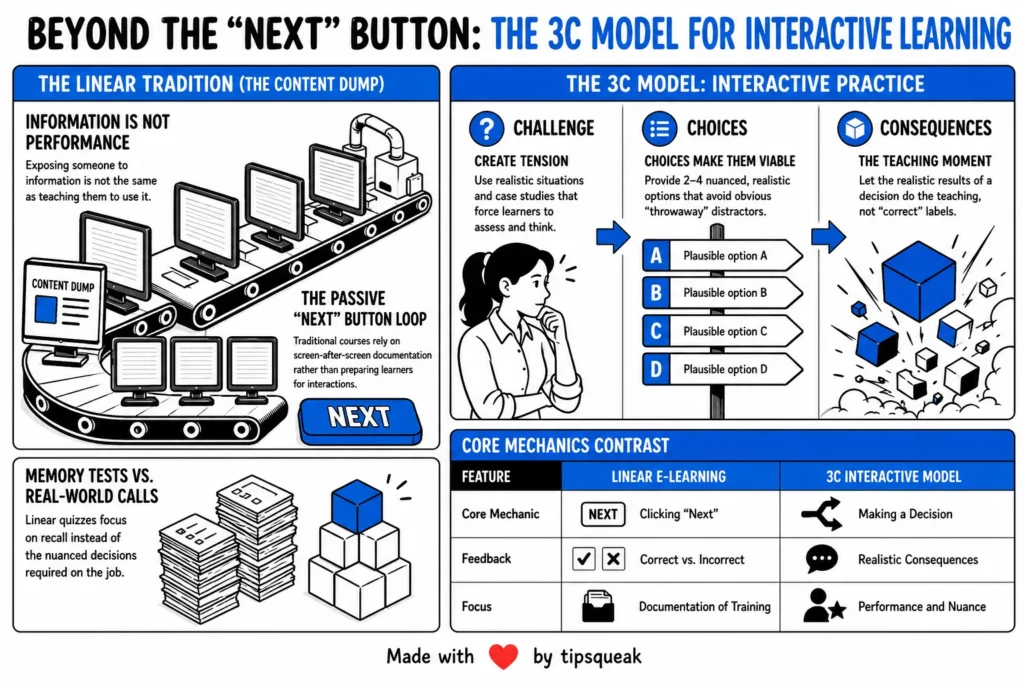
Most e-learning courses push information and call it training. The 3C model exists to fix that. It’s a simple structure for building scenarios that put learners in real situations and let them practice making decisions.
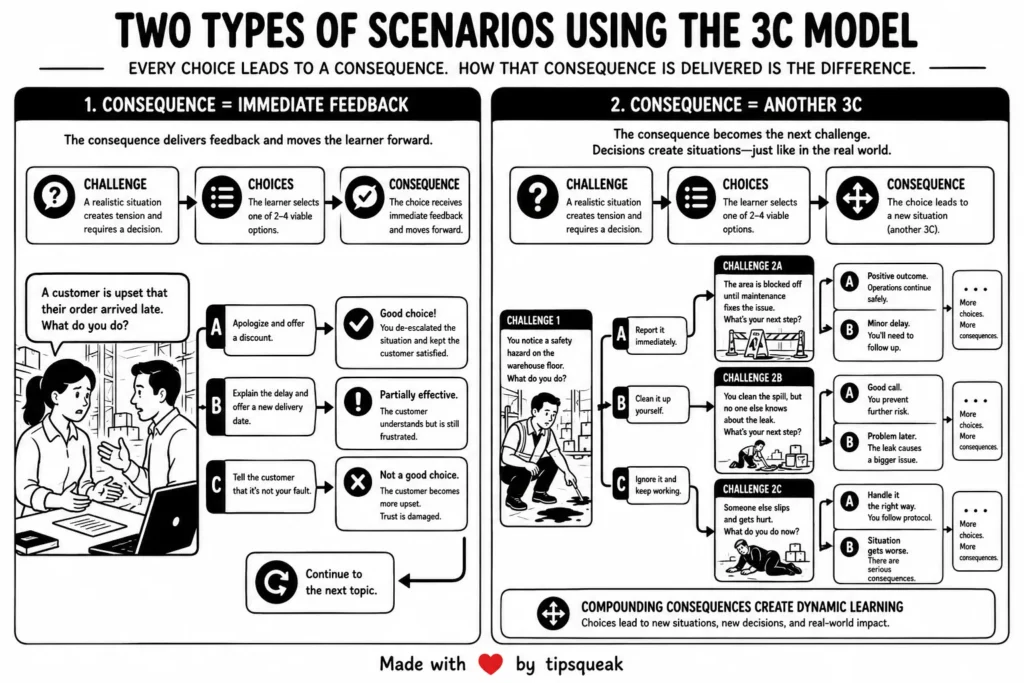
Most e-learning courses push information and call it training. The 3C model exists to fix that. It’s a simple structure for building scenarios that put learners in real situations and let them practice making decisions.
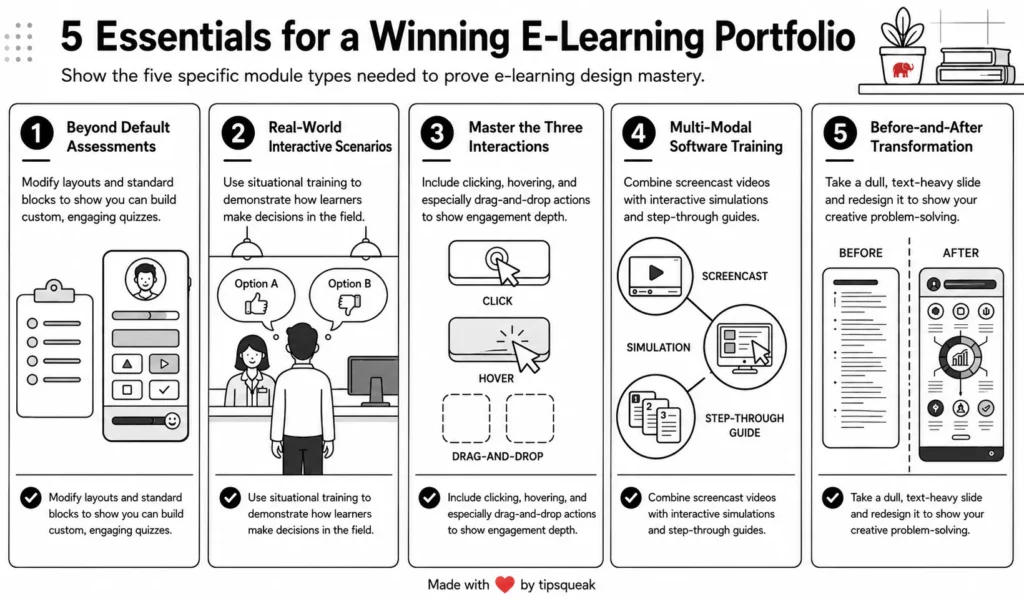
A portfolio grows with your skills, and every course you build is a chance to capture something worth showing. Start with these five types, make the visuals strong, and keep adding as you learn. What’s one piece you could add to yours this week?
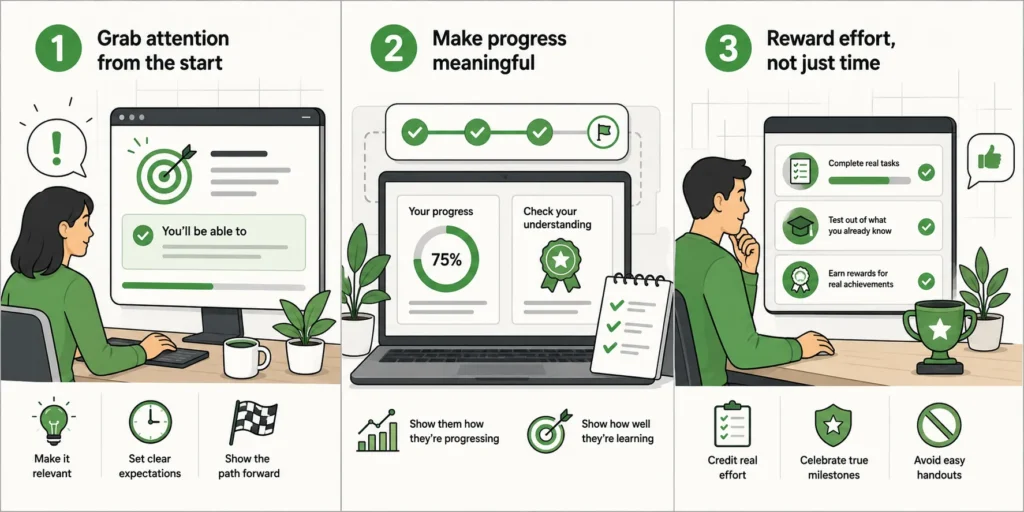
Good content isn’t enough to keep learners engaged. This post breaks down why motivation drops and gives you five practical ways to build it back in, plus a clear look at where AI fits into the process.
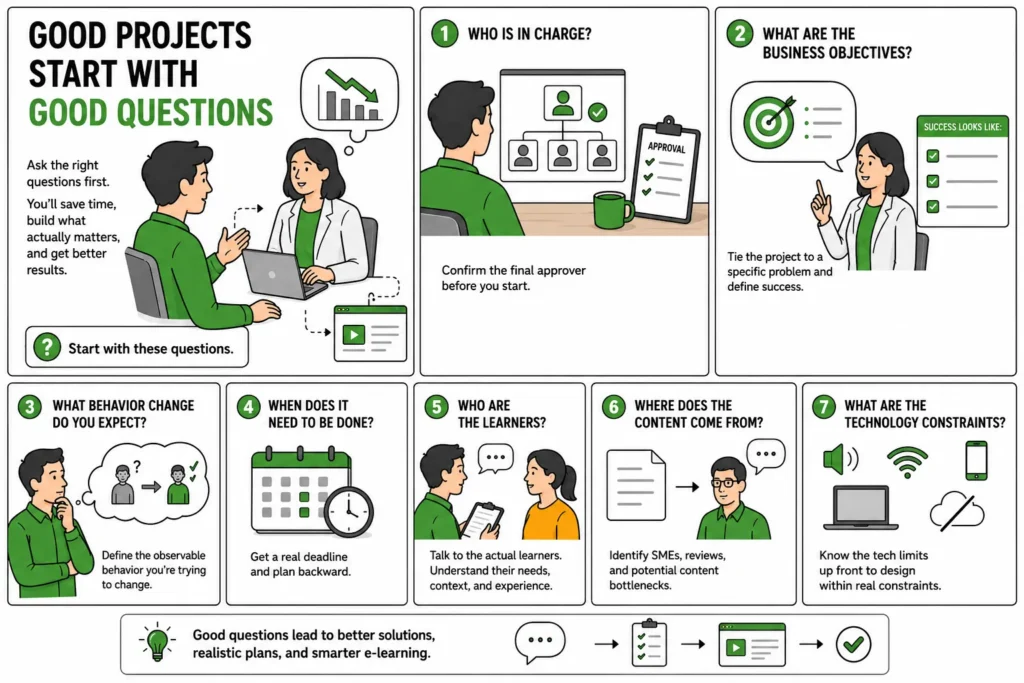
Most e-learning projects go sideways not because of bad design, but because nobody asked the right questions up front. These seven questions help you build the right thing before you write a single learning objective.
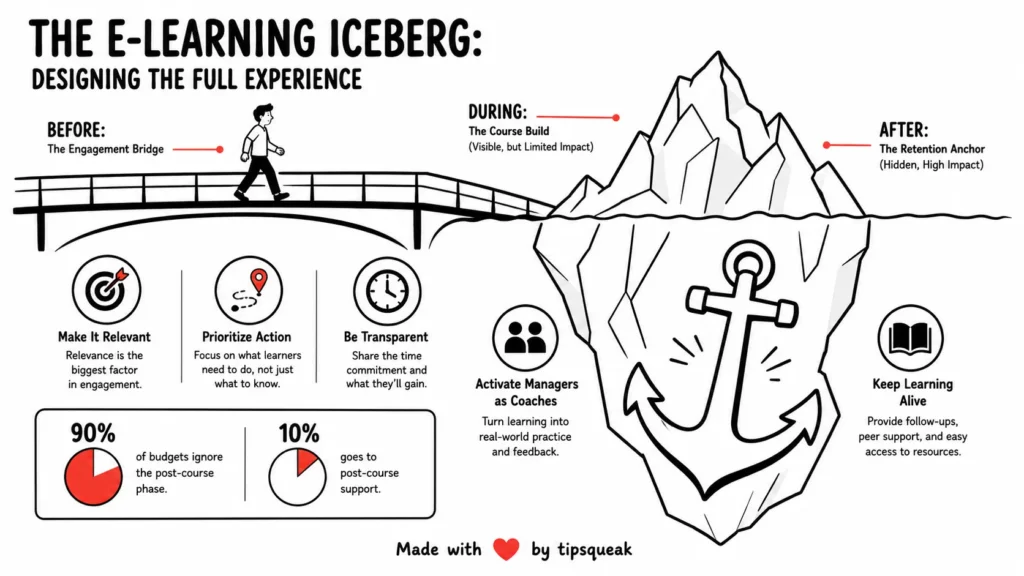
Most e-learning courses treat the course as the finish line. But learning happens before and after the course, too. Here’s how to think about all three phases so your course actually produces results.
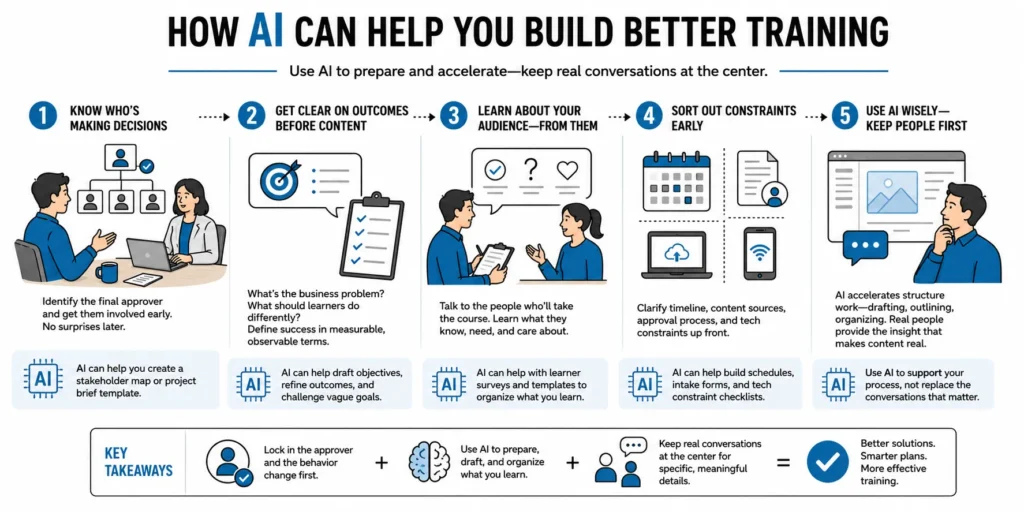
Most e-learning projects go sideways before the first slide is built. The problem usually isn’t the design. It’s what didn’t get sorted out at the start. This post covers the discovery work that protects your project, and how to use AI in that process without ending up with content that sounds like it came from nowhere.
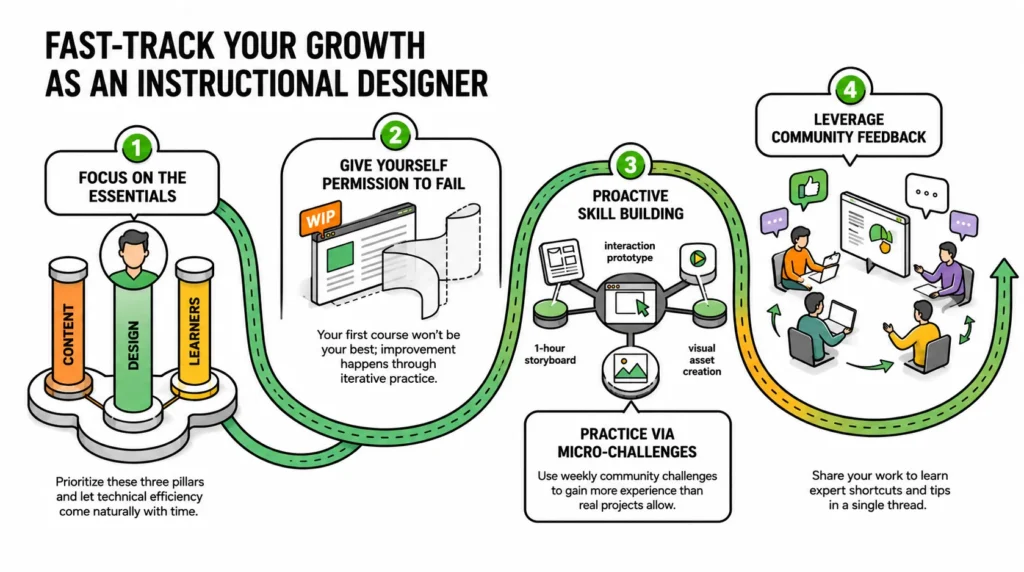
New e-learning developers often expect to get good quickly. But your first course won’t be your best, and that’s completely fine. Here’s what actually matters if you want to improve and build your skills the right way.
People judge things by how they look. That’s not shallow, it’s just how attention works. If your e-learning course looks thrown together, learners assume the content is too. Here’s how to change that without a design degree.