Physical Address
304 North Cardinal St.
Dorchester Center, MA 02124
Physical Address
304 North Cardinal St.
Dorchester Center, MA 02124
Helpful ideas. Squeaky value.
Helpful ideas. Squeaky value.
How to develop strategies and use AI tools and concepts in your e-learning work, from generating images and characters to speeding up content creation.

Making content interactive isn't the same as teaching people to make good decisions. Here's why so many e-learning courses stop short of the real work, and what it actually takes to build decision-making practice into your training.

You've taken the course. You know the one. Three hours, a lot of slides, a quiz at the end, and nothing that changed how you do your job. Bad e-learning isn't new, and it's not caused by the tools designers use. This post gets into what actually drives it — and where AI fits into that honestly.

Most e-learning projects go sideways before the first slide is built. The problem usually isn't the design. It's what didn't get sorted out at the start. This post covers the discovery work that protects your project, and how to use AI in that process without ending up with content that sounds like it came from nowhere.
AI can do a lot of things faster than you can. That doesn't mean the results are always worth using. Here's an honest look at where AI actually helps in e-learning development — and where it creates the illusion of progress without the substance to back it up.
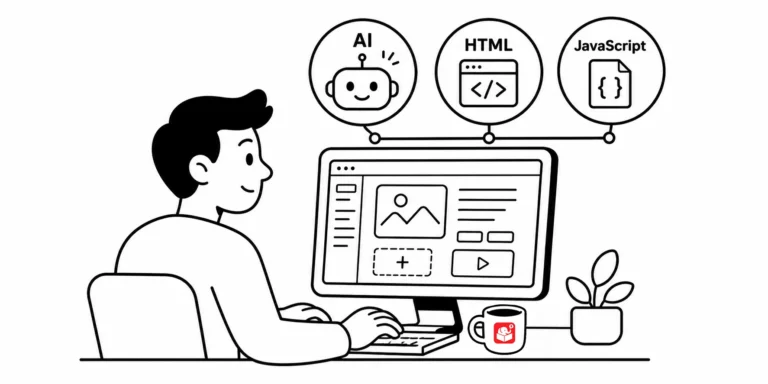
Storyline and Rise handle the heavy lifting, but a little code and AI knowledge still pays off. Learn where HTML and JavaScript solve embedding problems, and where AI now speeds up creating text, images, video, and audio for your courses. Both come down to the same thing: knowing enough to spot a problem and fix it fast.
The secret to good AI illustrations isn't the tool. It's knowing how to write prompts that get you what you actually need. This post breaks down the three-part structure that works.