Physical Address
304 North Cardinal St.
Dorchester Center, MA 02124
Physical Address
304 North Cardinal St.
Dorchester Center, MA 02124
Helpful ideas. Squeaky value.
Helpful ideas. Squeaky value.
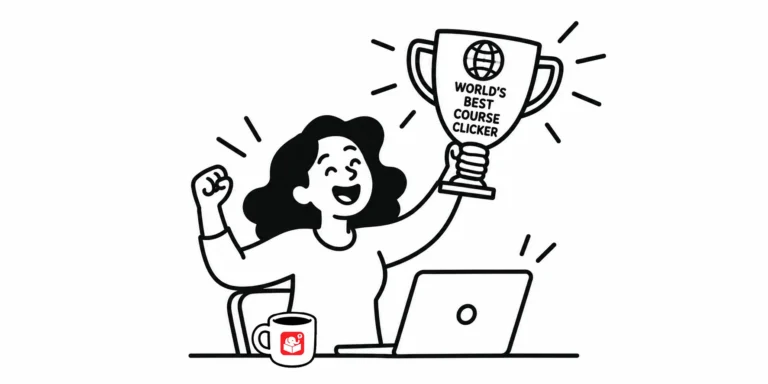
A common pattern in e-learning is to list what people need to know and then quiz them on it. That approach measures recall, not understanding. Four design changes can close that gap.
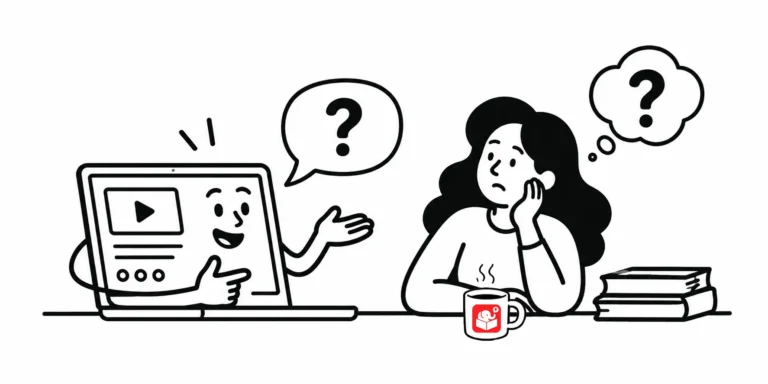
Real communication goes back and forth. Most e-learning doesn't. Here's how to build feedback and assessment into the course itself instead of leaving it all to a quiz at the end.
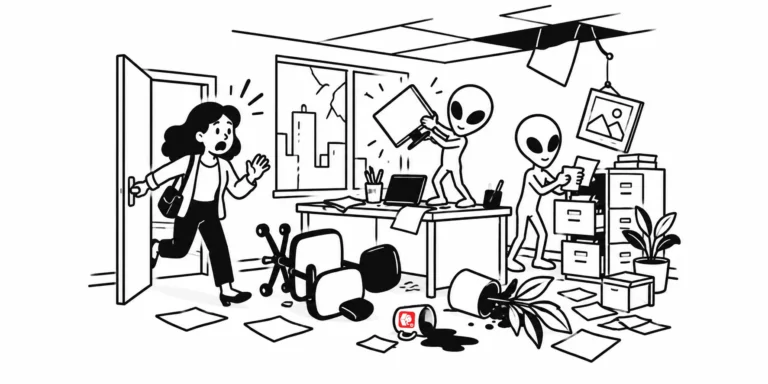
Real-world content can actually work against your course. Here's why flipping the scenario, even into something as odd as an alien abduction, keeps learners focused on the objective instead of the details they already know.
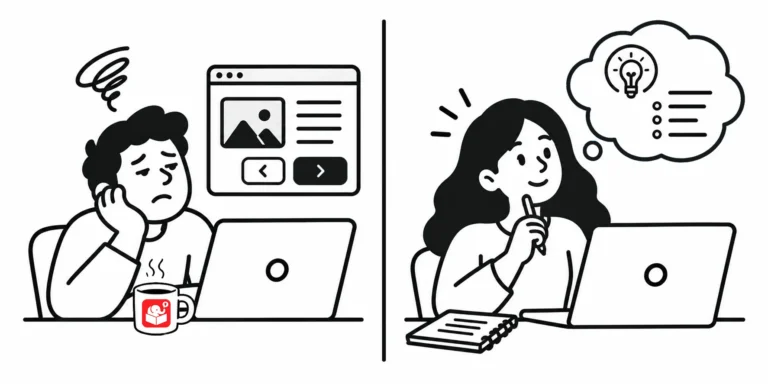
Stuck building another content-heavy compliance course? These 7 ideas show you how to add context, drama, and decision-making without a full redesign.
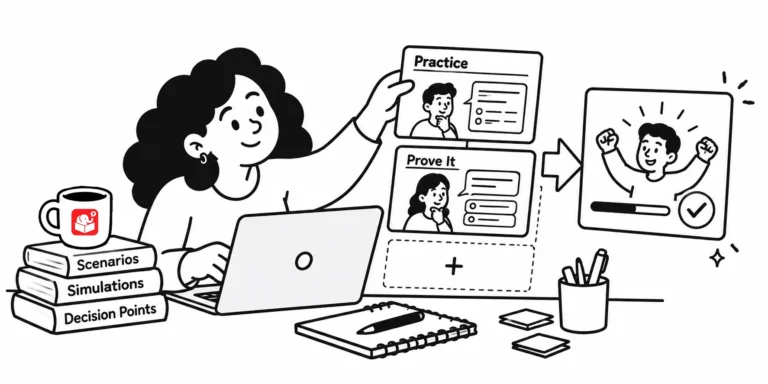
If your course has performance expectations, learners need more than content. They need to practice and prove they can apply it. You can build that inside the course or as part of a broader learning experience.
I asked a group of people to describe their training experiences. The same words kept appearing: boring, irrelevant, and a waste of time. That response is uncomfortable, but it's also a roadmap.
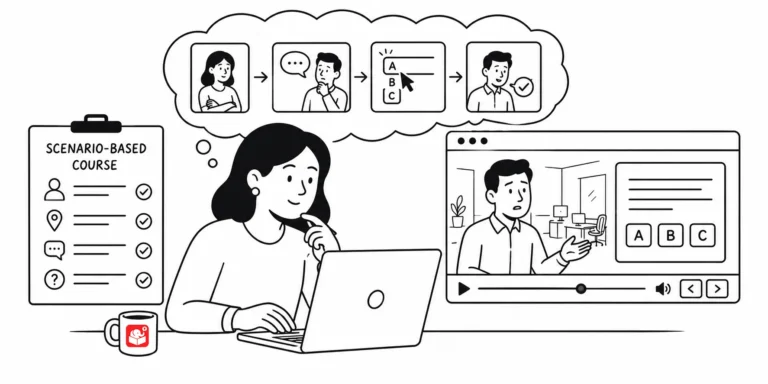
Most e-learning falls flat because it presents information and hopes something sticks. Scenario-based learning works because it gives learners a reason to need the content. Here's how to build one that works.

Learners don't want a long course. They want the point, fast. Here's how to cut the bloat, ditch the distracting links, and build only what the situation actually calls for.
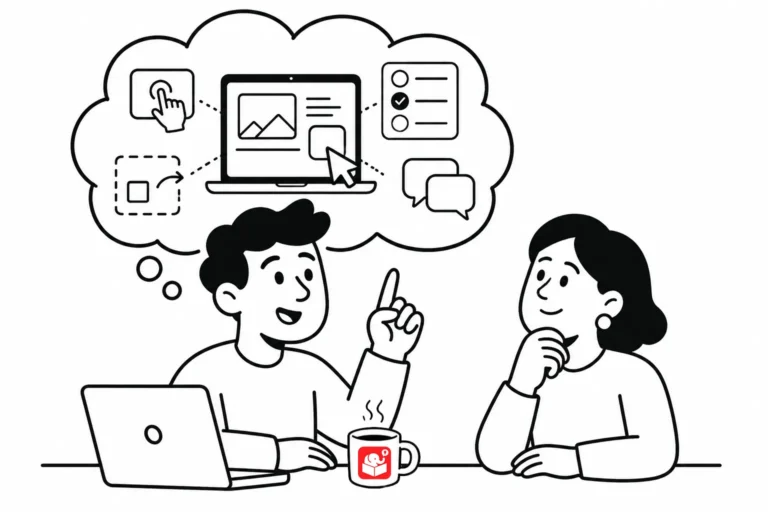
The most common e-learning courses follow a simple pattern: present information, click next. That's not learning. Three design shifts move courses away from click-and-forget content toward experiences where learners actually have to think.
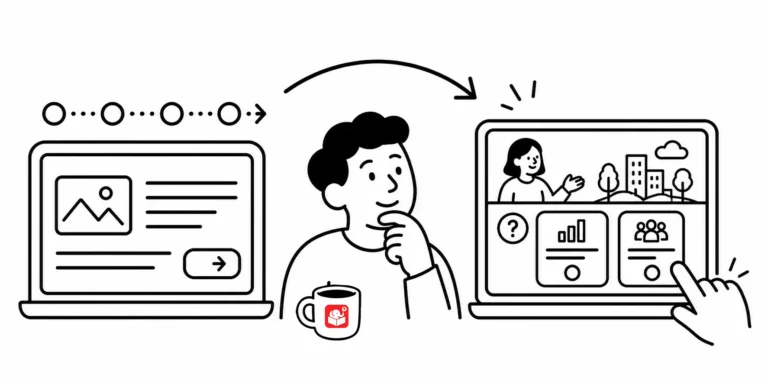
Making content interactive isn't the same as teaching people to make good decisions. Here's why so many e-learning courses stop short of the real work, and what it actually takes to build decision-making practice into your training.
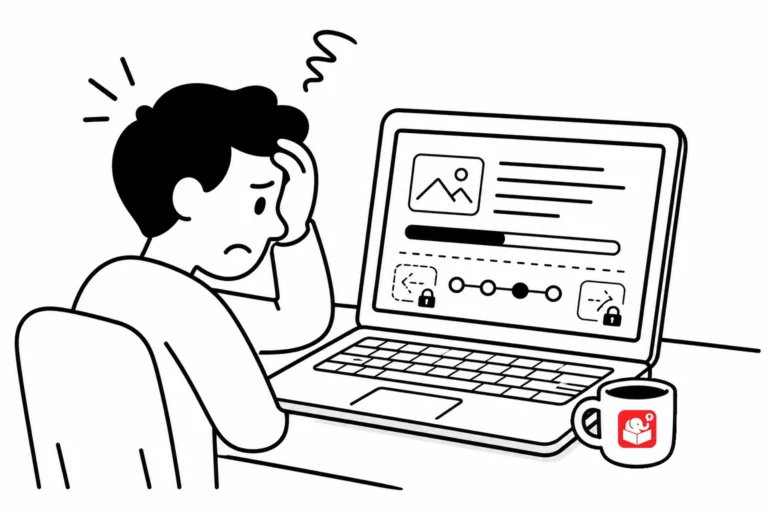
The instinct to lock every screen in a course is understandable. If learners can skip freely, how do you know they learned anything? The answer is in the assessment, not the navigation.
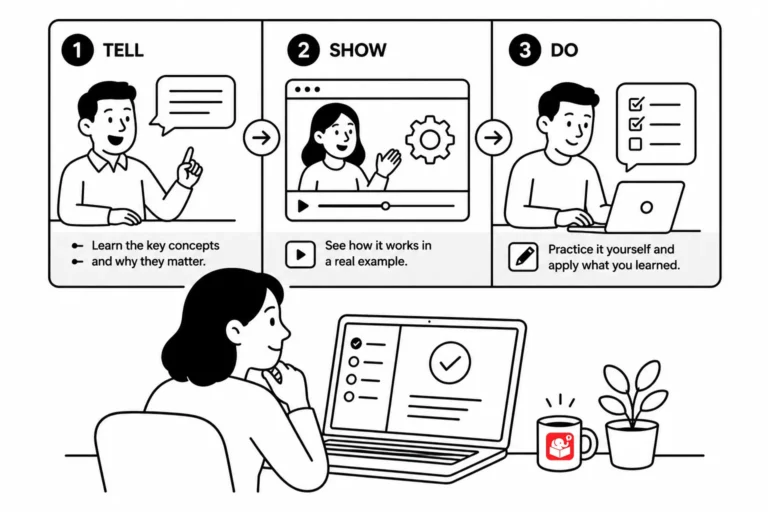
Three structured approaches that move learners from information to applied skill A lot of online courses are still mostly linear. That’s fine for annual compliance content with no real performance objective attached. But if you want real behavior change, you…

Learn how to build a zoomable, interactive course using a single image and Storyline 360's zoom region feature. This tutorial walks you through the full process with a working example and free resources.
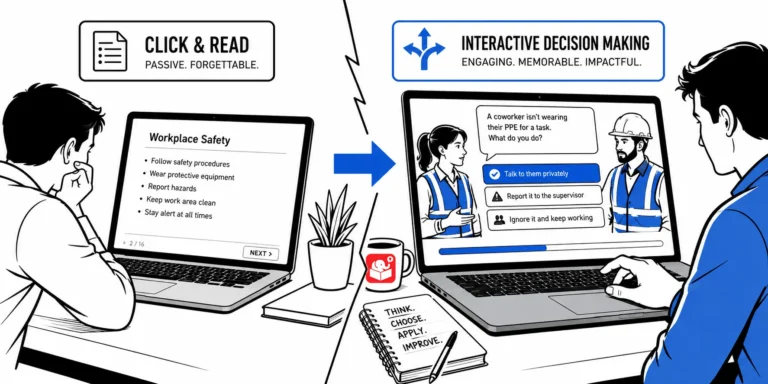
Most e-learning courses push information and call it training. The 3C model exists to fix that. It's a simple structure for building scenarios that put learners in real situations and let them practice making decisions.
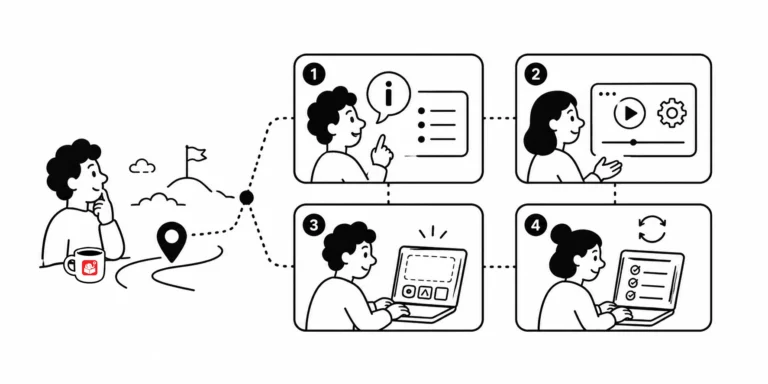
Most e-learning stops at content delivery. The Tell, Show, Do model helps steer courses toward action, but the real gains come from adding deliberate practice and structured review. Each stage builds on the last, giving you a stronger framework for course design.