Physical Address
304 North Cardinal St.
Dorchester Center, MA 02124
Physical Address
304 North Cardinal St.
Dorchester Center, MA 02124
Helpful ideas. Squeaky value.
Helpful ideas. Squeaky value.
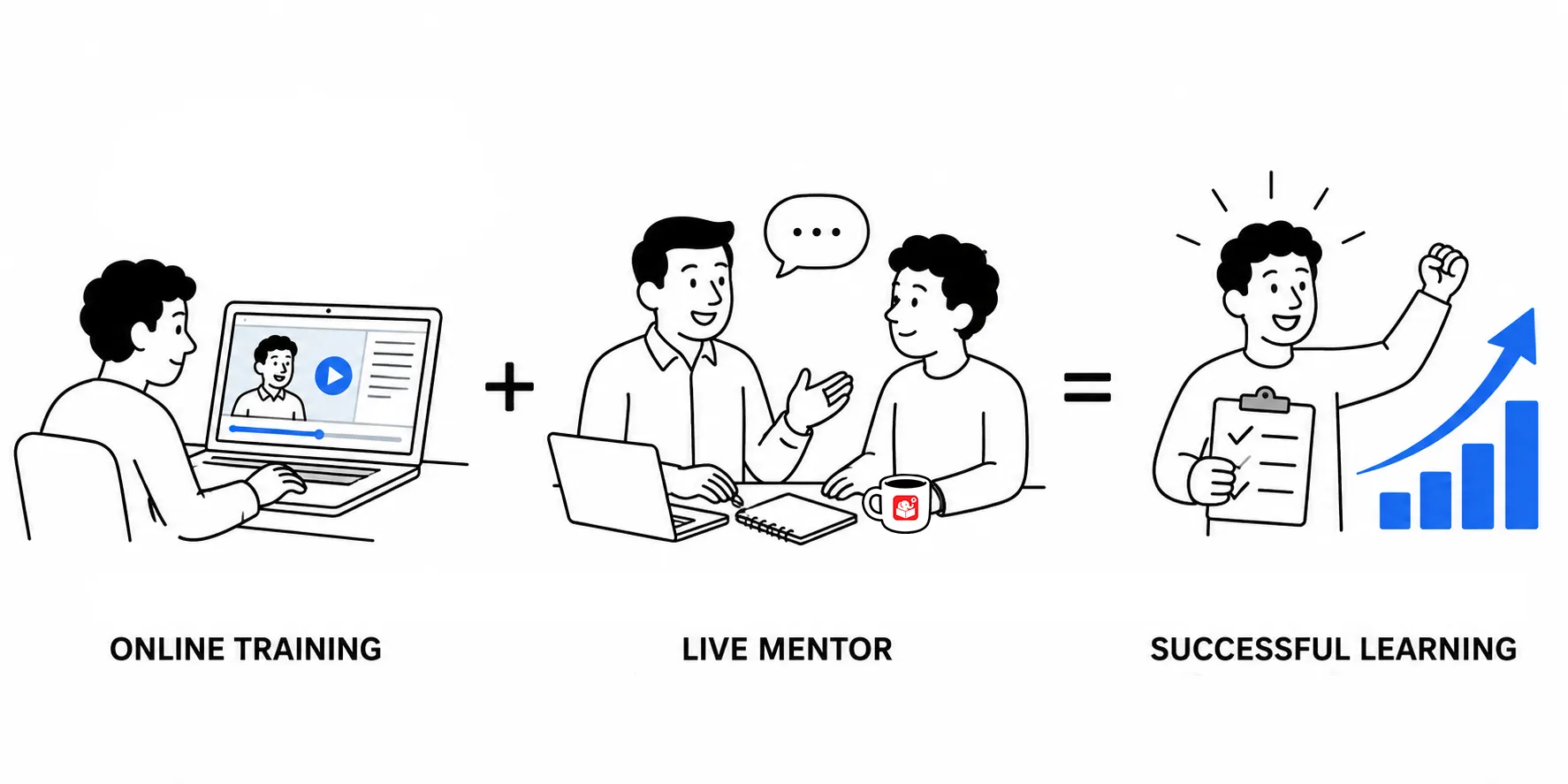
Many organizations use e-learning to onboard new hires, but courses alone rarely stick. However, a well designed blended learning program that includes online training with a peer coach program adds hands-on guidance. But without structure, that relationship can stall.
Pairing an online course with a peer coach and a learning journal creates a complete training system. I’ll walk through the basics and share something from a past project and how we implemented it.
A new employee in a complex role needs more than slides and quizzes. Sure, the course can cover the content. But real competence comes from practice and working alongside someone who already knows the job.
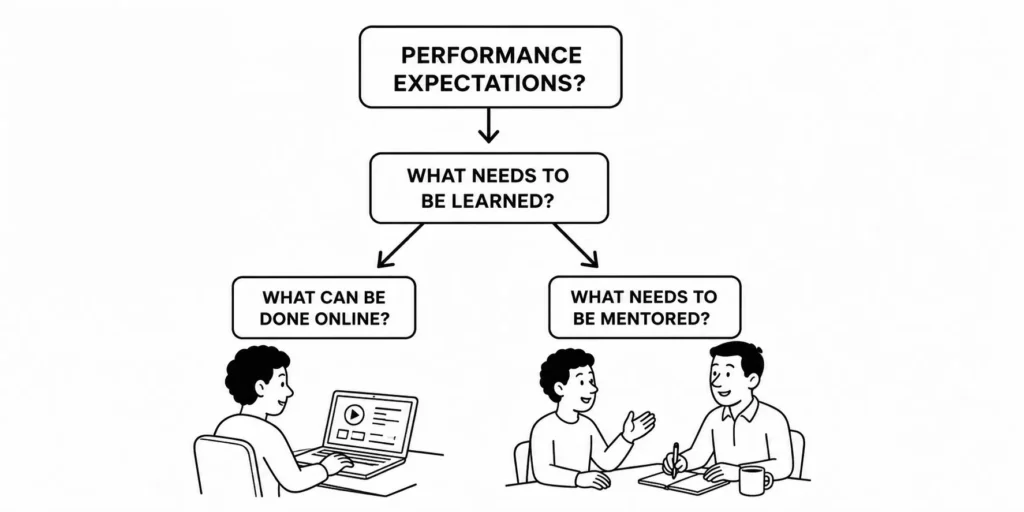
But, without a plan for that hands-on piece, learning often fades before it has a chance to transfer. That’s what we’ll look at today.
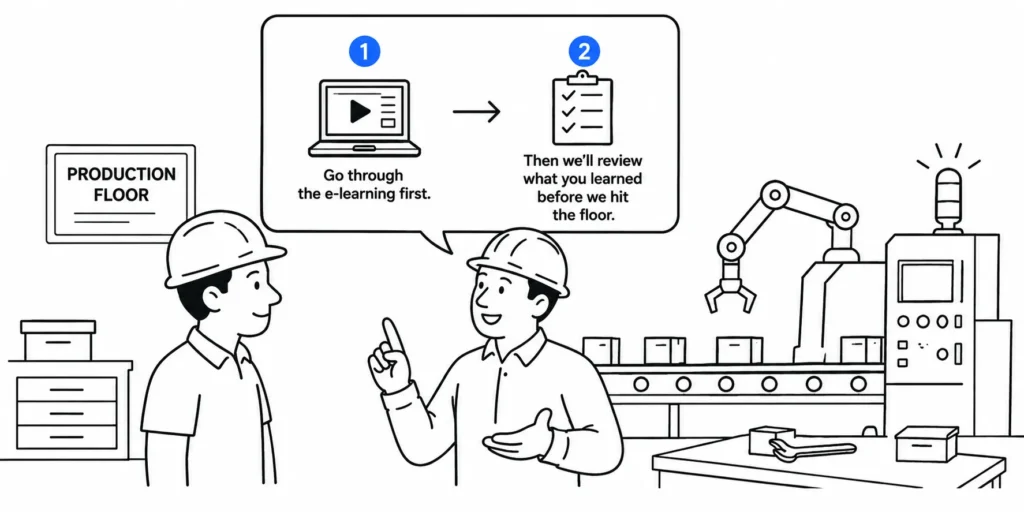
I was teaching machine operators to use machine (hence their job title). When I review the training program, they were assigned a peer coach. But the peer coach also was doing their own job. Some peer coaches were good. Some weren’t. And the floor was loud and hectic.
A peer coach is someone on the team who guides a new hire through the early weeks. Their role is to turn course content into real-world practice. They observe, answer questions, and assign activities tied to what the learner just studied.
The challenge is giving the peer coach a clear structure to work from. Without that structure, peer coaching tends to drift into casual conversation or skip key steps entirely.
A learning journal solves that. It gives both the learner and the peer coach a shared map for the whole program.
The learning journal is a simple document that travels with the learner from day one. It outlines the overall program, explains how the e-learning and peer coaching connect, and sets expectations upfront. Here’s what to include:
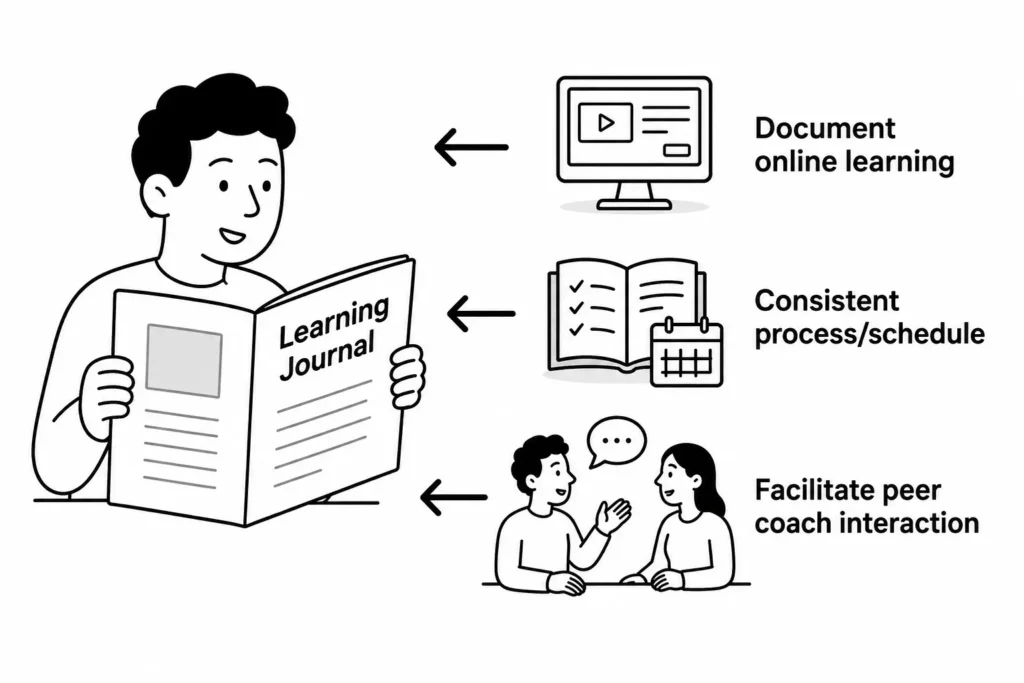
A training program is a solution that helps you meet your training objective. The goal is proficiency. The goal isn’t to complete training. We often focus so much on the process that we lose sight of that.
You want a program that’s consistent and effective, but it also has to work with the learner as an individual. The last thing you want is a rigid process that ignores how the trainee is actually doing.
The peer coach plays a key role here, assessing the person’s progress and understanding. Clear proficiency metrics help keep the process from becoming bureaucratic. Don’t get caught up in completed paperwork over the person’s ability to meet performance goals.
If you’re designing onboarding for complex roles, ask whether your current program bridges the gap between knowing and doing. This approach doesn’t require rebuilding your courses from scratch. Start by identifying one module where real-world practice matters most and build a learning journal around that first.