Physical Address
304 North Cardinal St.
Dorchester Center, MA 02124
Physical Address
304 North Cardinal St.
Dorchester Center, MA 02124
Helpful ideas. Squeaky value.
Helpful ideas. Squeaky value.
A few years back I was going to help my son build a computer game using Kodu. I like the app because it’s a simple way to introduce visual programming. and it’s fun and engaging to play with.
I was prepared to sit down with him, watch some tutorials, and then practice. But by the tiem I was ready, he was already messing around with the application. Impressed with what he had done I asked if he had already watched the tutorials. He told me he didn’t know what he was doing. He just started “clicking around” and was figuring it out.
No tutorials. No formal training. He just jumped in and starting building. Funny thing about the young ones, they have no problems jumping in and messing around.
Adult learners aren’t always so willing to do that. It’s probably because we are so conditioned to avoid failure that it makes us guarded and reluctant to step out a bit.
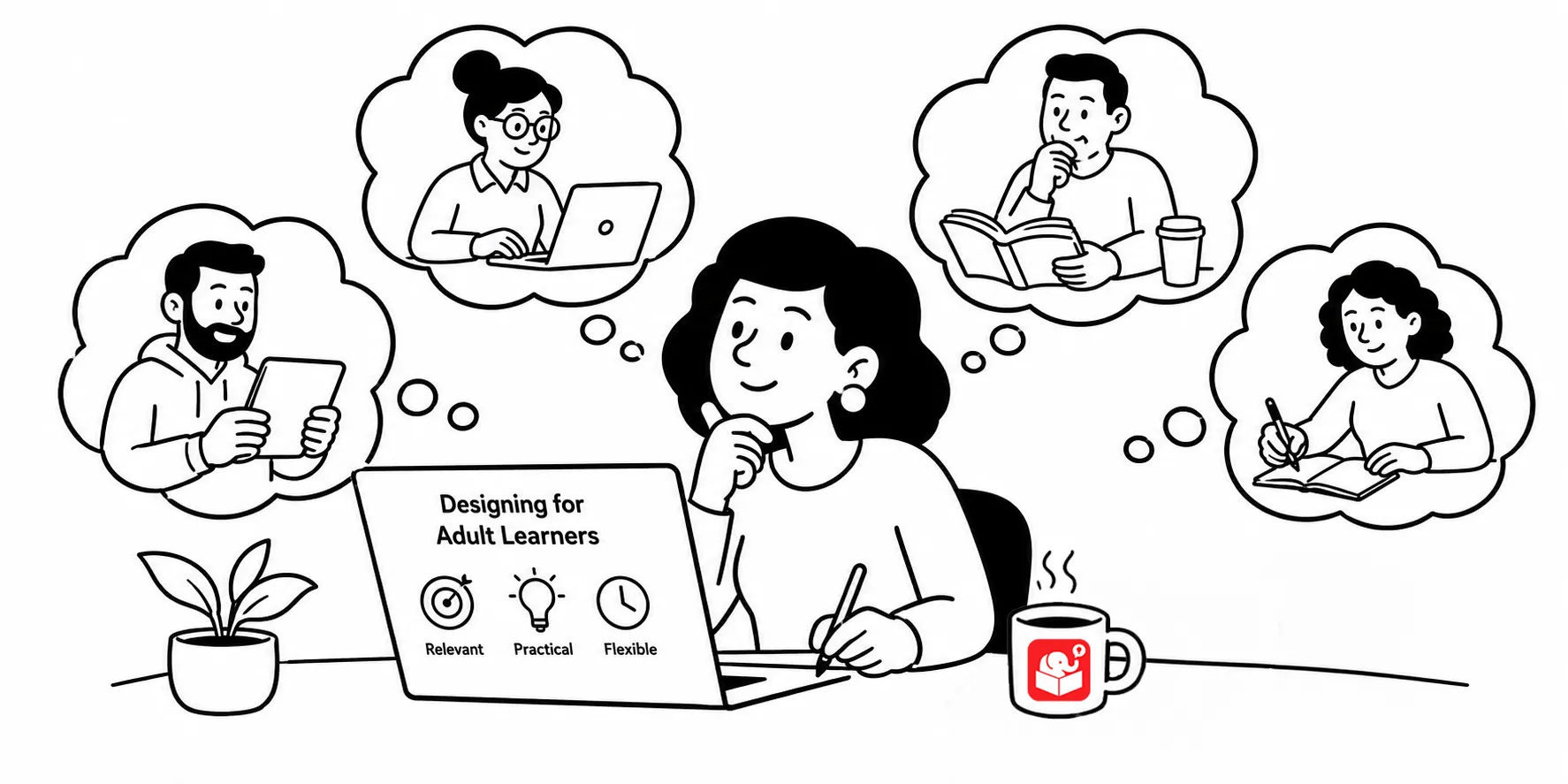
Here are a few quick thoughts on how to engage adult learners
Adults have limited time and even less patience for content that doesn’t connect to their work. If a course isn’t tied to something real, they’ll disengage quickly. Even a compliance course can be framed around a meaningful scenario that shows why the information matters. That single shift makes the difference between something learners ignore and something they actually use.
Most people taking the course have already seen some version of this content. They don’t all need to start at the beginning. A short pre-assessment lets learners show what they know and jump in at the right point. If someone can test out of a section they’ve already mastered, let them. That’s not cheating; that’s respecting their time.
Many courses track every click and report it all to the LMS. That kind of monitoring can make learners feel watched rather than helped. A safer environment, where someone can explore and make a wrong choice without consequence, encourages real learning. Turn off some of that tracking and create decision-making activities where learners can practice without fear.
Information without context doesn’t stick. Create real-world decision points where learners have to assess a situation and choose a path. The feedback they receive should reflect how consequences actually work in real life. Consequences aren’t always immediate; sometimes they compound or show up later. Design feedback that mirrors that reality.
Adults like to scan content, find what’s relevant, and move around freely. Locking navigation removes that control and signals that you don’t trust them. Let learners move freely and use decision-based checkpoints to confirm understanding. If the course is genuinely useful, make it available after completion and don’t treat it as a one-time event.
These principles point toward the same goal: courses that respect adult learners tend to produce better outcomes. As you plan your next project, think about where you can hand more control to the learner. What would change if you designed courses learners want to use rather than courses they’re required to finish?