Physical Address
304 North Cardinal St.
Dorchester Center, MA 02124
Physical Address
304 North Cardinal St.
Dorchester Center, MA 02124
Helpful ideas. Squeaky value.
Helpful ideas. Squeaky value.
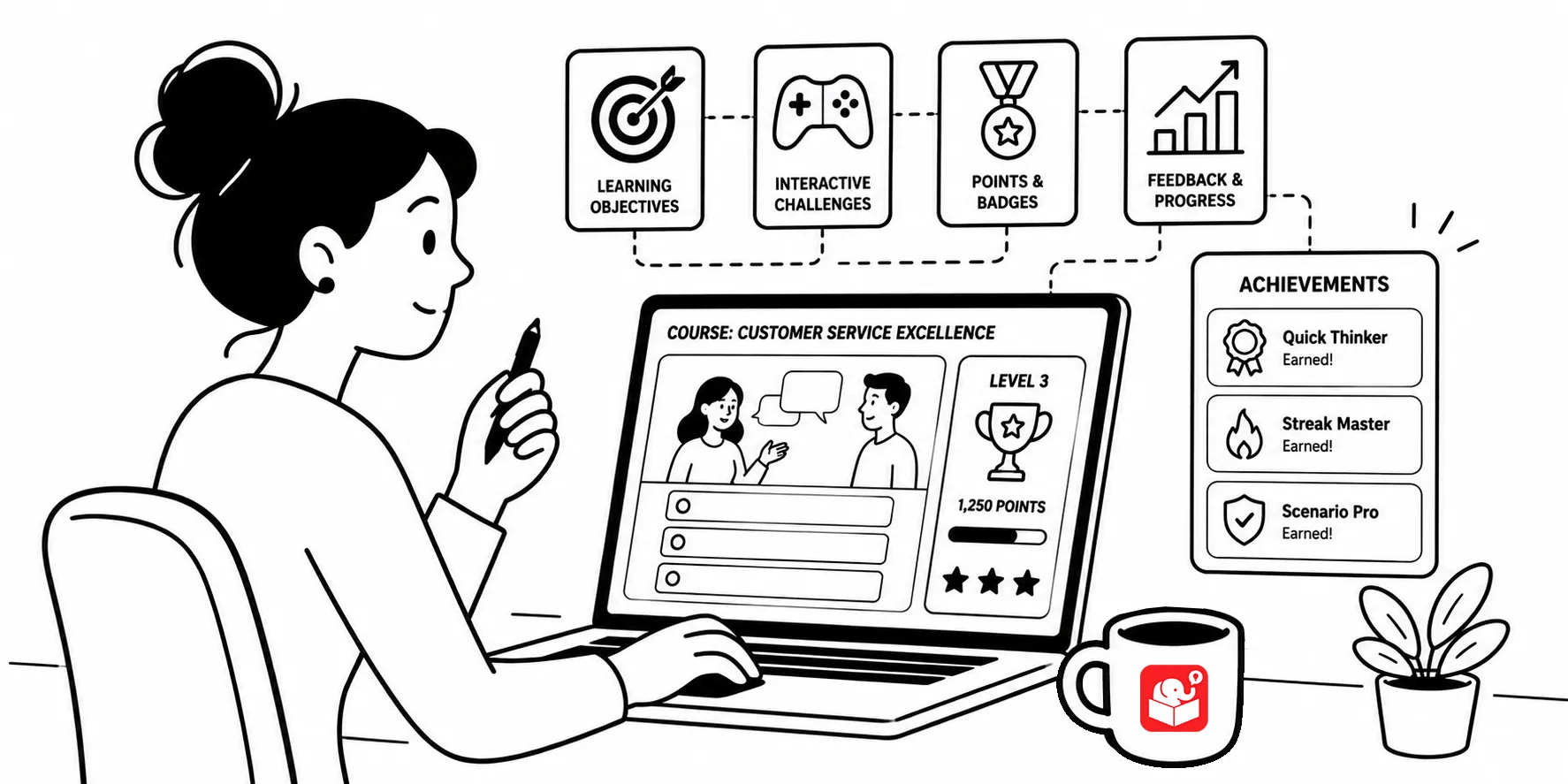
In e-learning, a lot of people talk about gamification as if it means building a Jeopardy-style interaction. That’s a game-based activity, which has it’s own value. But it’s not really gamification.
At it’s core, Jeopardy is a quiz which offeres categories, points, and timed buzzer pressure. It is good for reviewing facts or testing a person’s recall.
Gamification is more than that. It’s bigger. When you gamifiy your course, you take game concepts and apply them to a non-game context. Points, progress tracking, rewards, and narrative tension are examples. The goal isn’t to make a game. It’s to use game psychology to change how learners feel about the experience.
Jeopardy is one type of interaction. Gamification is a strategy that can wrap around the entire course, and a Jeopardy game could easily be one small piece of it. You can download a template here.
If you’re building gamified courses in an authoring tool like Storyline, you need to understand how to use variables. Variables let you track what a learner does, score their actions, and respond with personalized feedback or rewards. They’re the engine behind timers, progress meters, token systems, and scoring. Once you’re comfortable with variables, most gamification mechanics become buildable. Start there.
Working inside an authoring tool you can build compelling course element to gamify the experience. Here’s what’s within reach:
These mechanics can make a course feel more engaging. But the mechanics alone won’t make it good. The harder work is building a narrative that creates the right tension between boredom and challenge.
Here are some cool examples:
Most people find that building gamification mechanics is the easy part. The hard part is designing something worth playing through. What makes a game compelling? Why do players keep going? Those questions matter as much as the technical ones.
A good starting point is studying games you enjoy. Notice what creates motivation. Notice what creates frustration. Then look for those same principles in your course design.
I like to add activities where I challenge them to make decisions and then create a means for them to explore and collect the content they need to make the decision.
If you want to go deeper, these three books are good starting points. They cover both the theory and application of game principles in learning contexts.
You don’t need to build a full game to start applying gamification principles. Pick one mechanic, learn the variable work behind it, and add it to your next course. Have you tried adding game elements to a course? Share what worked in the comments.