Physical Address
304 North Cardinal St.
Dorchester Center, MA 02124
Physical Address
304 North Cardinal St.
Dorchester Center, MA 02124
Helpful ideas. Squeaky value.
Helpful ideas. Squeaky value.
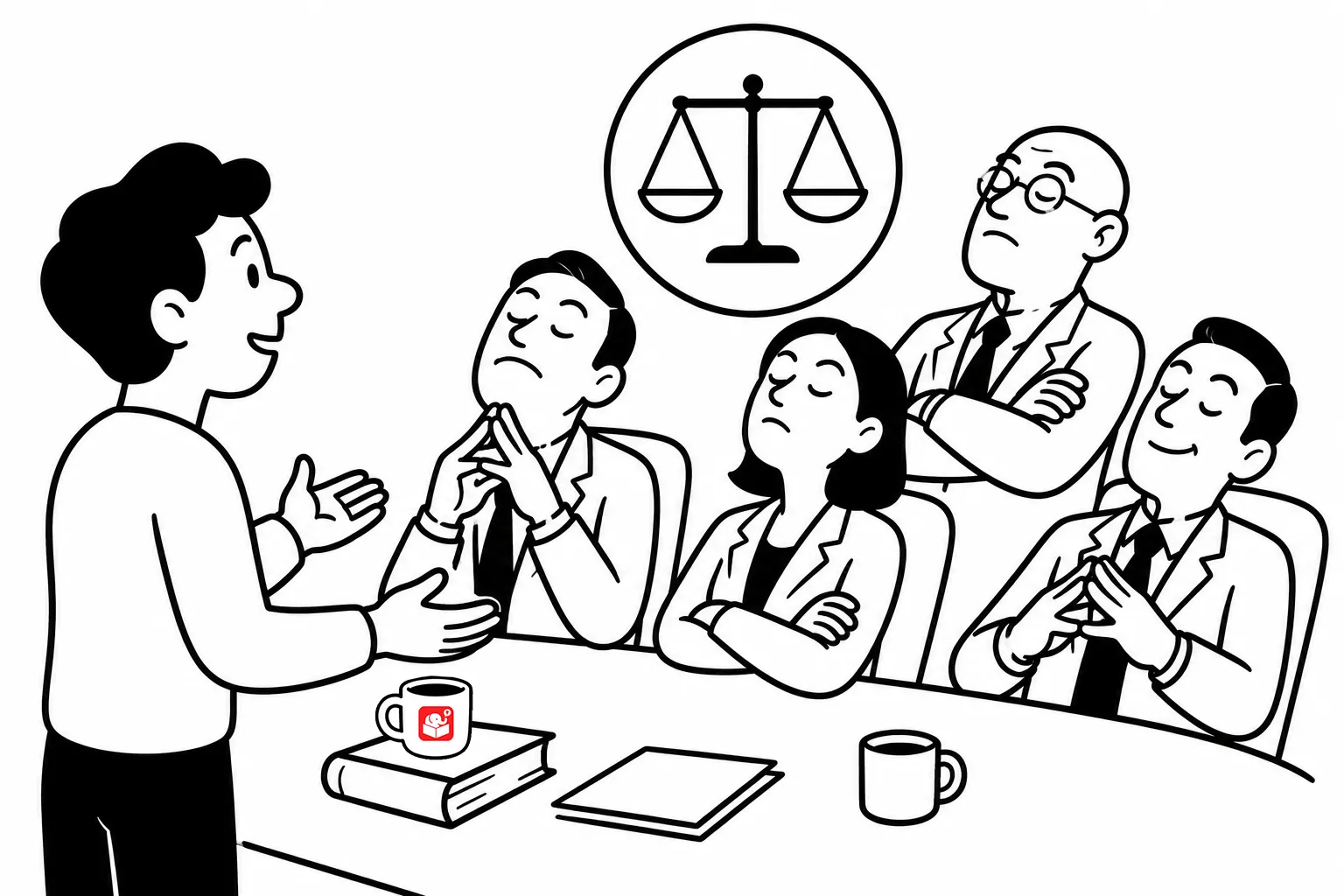
A lot of compliance training is built on regulatory urban legends. For example, I’ve worked on compliance training and the subject matter expert says that it needs to be two hours long, or that every policy statement must appear on screen, or that learners can’t skip anything. That assumption gets baked into the design, and the result is a bloated course that wastes time for people who already know the content.
I always challenge this assumption. Show me where it says that. If it doesn’t we’ll be more creative with how we build our courses and make them more effective and less painful for the learner. If it does, then it does and that’s that.
If you run into this, ask what the regulations actually require. Not what someone heard. What the regulation says. Then build training around those real requirements, nothing more. The ideal compliance course meets certification needs while also identifying genuine gaps in knowledge and addressing them. Everything else is overhead.
The most efficient change you can make to any compliance course is to put the assessment at the beginning instead of the end. If a learner passes the upfront test, they jump directly to certification. If they don’t pass, they move through the course content for remediation.
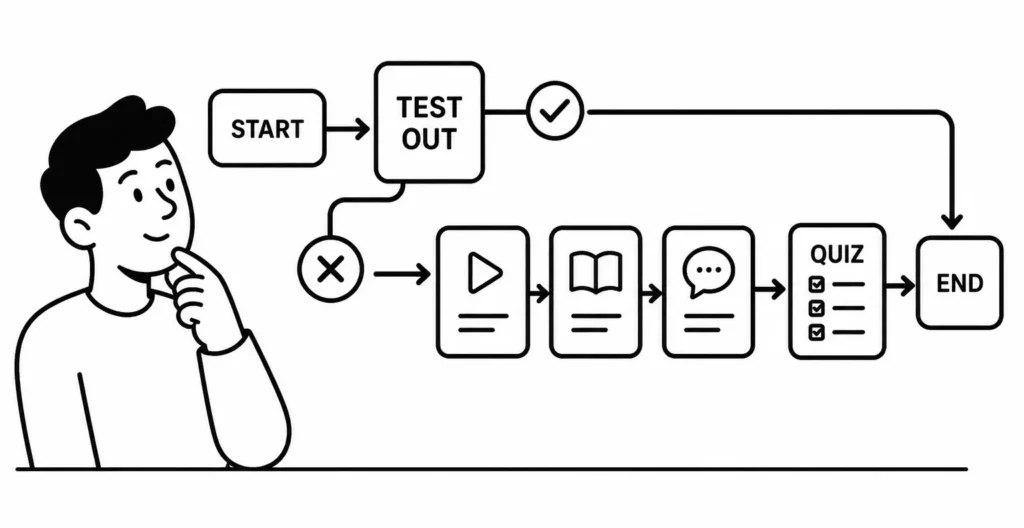
This approach is honest about what compliance training is usually doing. For most employees, a compliance course isn’t teaching them something new. It’s verifying that they already know it. The pre-assessment gives that reality a structure that works for everyone.
The assessment doesn’t have to be a traditional multiple-choice quiz. A series of case studies or realistic scenarios can work just as well and often do a better job of testing actual judgment rather than just recall.
If starting with a mandatory pre-assessment feels too abrupt, give learners a choice instead. Tell them they can go through the course first or jump straight to the assessment whenever they feel ready. Unlock the navigation so they can browse the content the way you’d browse a book before deciding whether you need to read the whole thing.
Most experienced learners will skim the content, identify the one or two sections they’re less certain about, review those, and then take the assessment. That’s efficient. That’s also how confident adults approach any certification process.
Locking the navigation forces people who already know the material to sit through content they don’t need, which breeds resentment and encourages mindless clicking rather than actual engagement.
Some organizations still need a formal course structure. Stakeholders aren’t comfortable with free navigation, or the compliance requirement genuinely calls for a more structured experience.
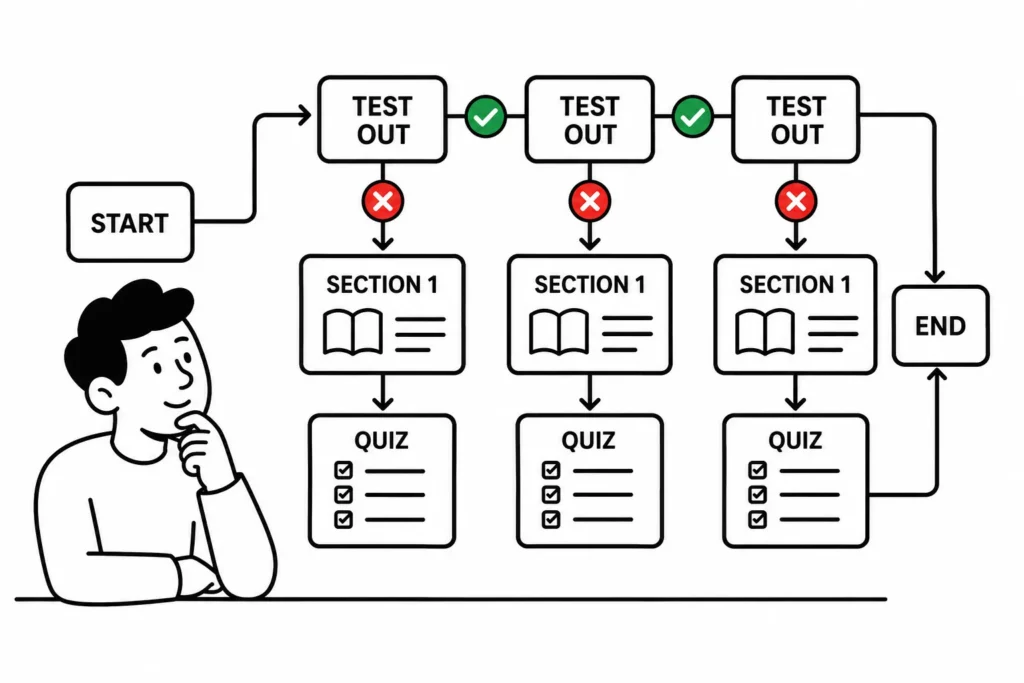
In those situations, break the content into distinct sections and give learners a choice at the start of each one: go through the section or take a section-level assessment and test out. Run a final comprehensive assessment at the end.
This approach preserves the structure stakeholders want while still rewarding knowledge. It also produces more useful data. A single end-of-course quiz that someone passes at 80% tells you they passed. A section-by-section approach can reveal that a particular learner aced ten sections and struggled with one specific topic. That’s the kind of insight that actually informs follow-up.
Find out what your compliance training is actually legally required to accomplish, then build only that. Use pre-assessments to let knowledgeable employees demonstrate their expertise rather than sit through content they’ve already mastered. And design the course structure to reward knowledge rather than punish efficiency. These three changes won’t compromise your compliance record. They’ll make your training more defensible and your learners significantly less resentful of it.