Physical Address
304 North Cardinal St.
Dorchester Center, MA 02124
Physical Address
304 North Cardinal St.
Dorchester Center, MA 02124
Helpful ideas. Squeaky value.
Helpful ideas. Squeaky value.
Here’s a common scenario: you’re ten minutes into an e-learning course. You’ve clicked through eight slides. Yet, you have no idea what you’re supposed to do differently when you’re done.
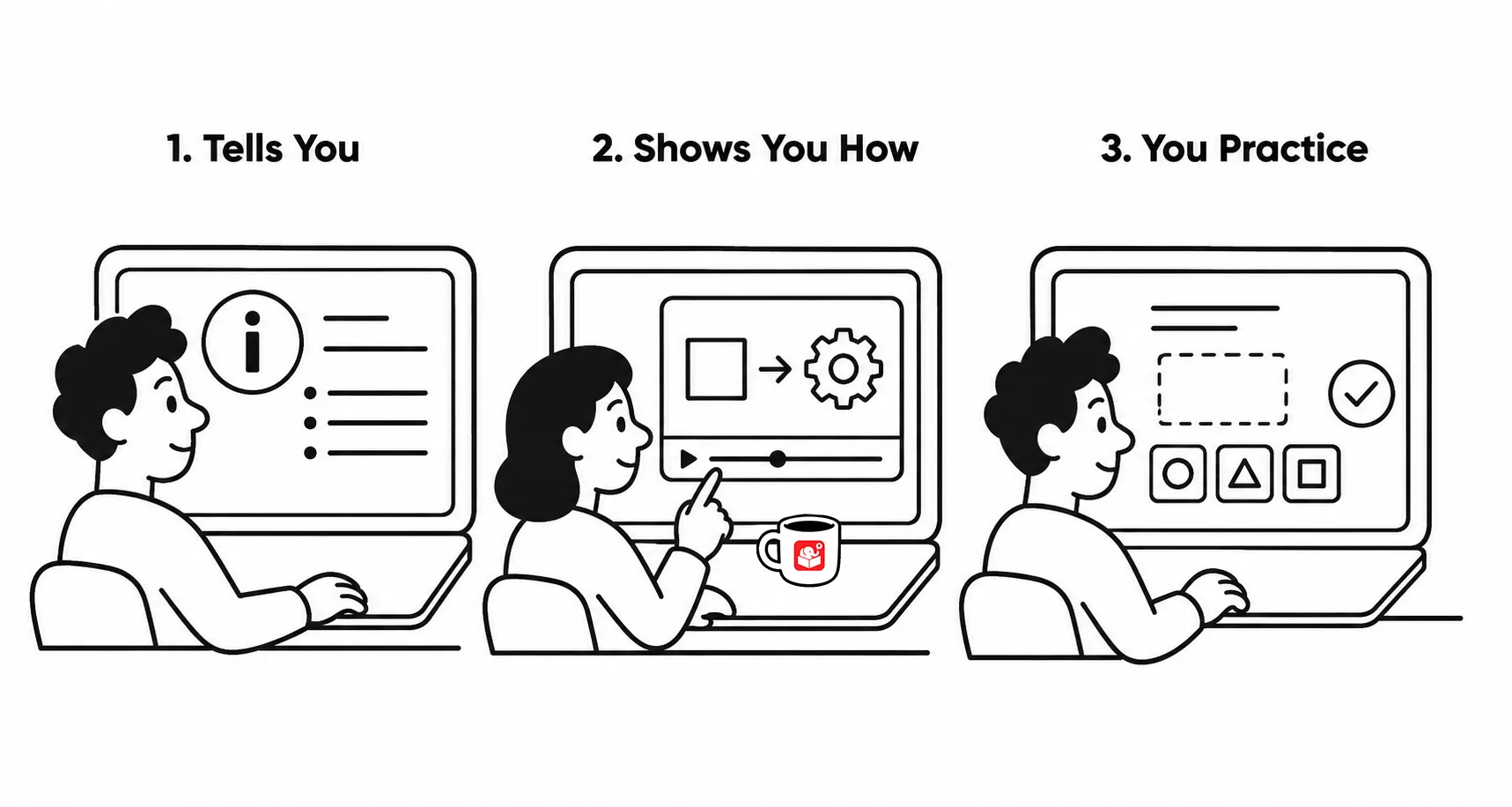
The reason this happens is because most courses are explainer type courses and follow an assembly line process of content ,content, and more content. There’s little offered past that. However, the tell-show-do approach is a common structure that works well for e-learning, especially if you want them to do something different than what they do now.
The Tell phase is about establishing context and expectations. What do learners need to know, and why does it matter? The goal is to curate and package content in a way that prepares them for what comes next.
Telling isn’t just dumping information. It’s organizing content around what learners will need to do with it. Good telling creates a framework for the rest of the learning experience. Ultimately, you’re trying to present information in a relevant perspective so they understand what needs to happen.
Knowing something and doing it are different skills. The Show phase bridges that gap. It takes the content from the Tell phase and demonstrates what applying it looks like in practice.
This phase is about modeling the desired behavior or process. Document the steps, show the decisions involved, and make the path clear. Focus on what right looks like, not what wrong looks like. It’s also a way to add more than the details. You can add context and color to the content.
Most e-learning never makes it here. The Tell and Show phases tend to eat up all the time and budget. But the Do step is where learning actually happens.
This is where learners apply what they’ve been told and shown. They make decisions, get feedback, and practice the behavior. In an ideal world, you can build activities into the course that require them to do the thing, not just read about it. But this isn’t always possible.
If so, you can take the doing offline. Create a way for them to practice outside the course. For example, when I want to learn something in Photoshop, I search for content. I’ve established context and that usually leads to some articles and tutorials. Those combine the telling and showing. But I open Photoshop and then practice what I learn from the other content.
That example is more informal than corporate training but it demonstrates what is true to a lot of people who learn new things. They consume content and then they practice. The main point for course designers is to figure out how to build the practice opportunities whether in the course or outside it.
The Tell, Show, and Do model works because it pushes course design toward performance rather than information delivery. Start applying it by asking one question on your next project: is there a Do step in this course? If not, that’s your design brief. Build the Do, and the Tell and Show will get sharper too.