Physical Address
304 North Cardinal St.
Dorchester Center, MA 02124
Physical Address
304 North Cardinal St.
Dorchester Center, MA 02124
Helpful ideas. Squeaky value.
Helpful ideas. Squeaky value.
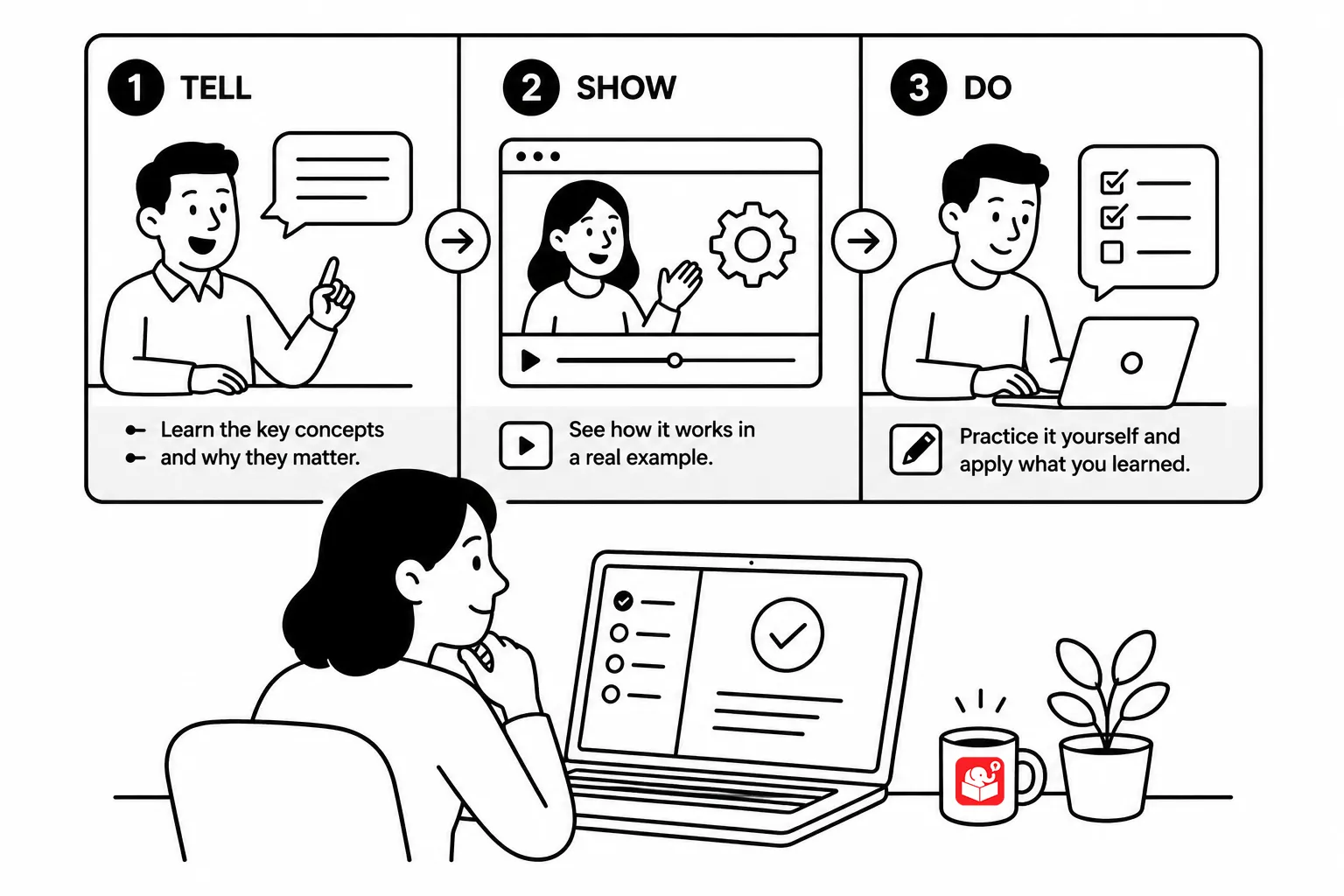
A lot of online courses are still mostly linear. That’s fine for annual compliance content with no real performance objective attached. But if you want real behavior change, you need structure that supports practice, feedback, and application. Here are three techniques that do exactly that.
Tell, Show, Do is one of the most common instructional patterns in e-learning, and for good reason. It covers the essentials in a logical order.
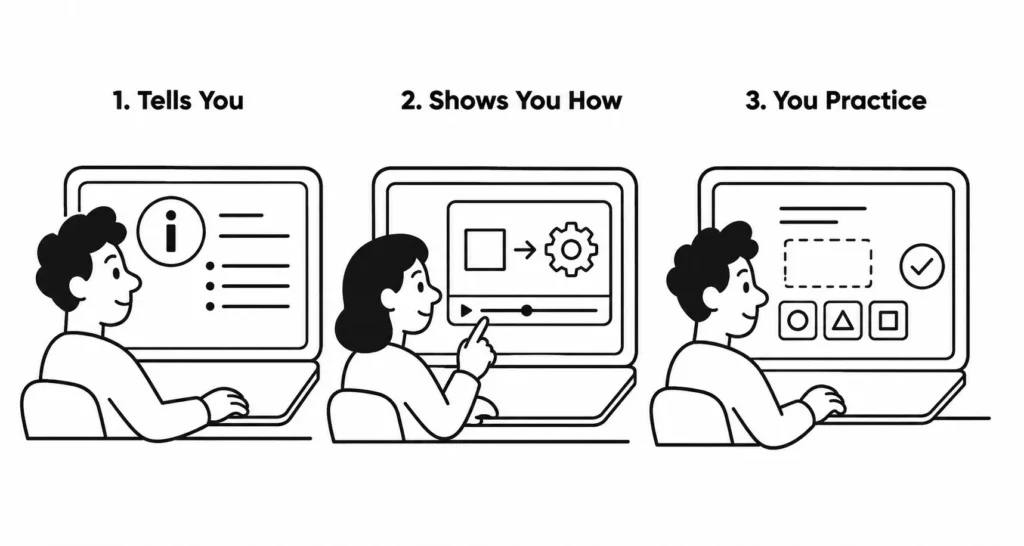
My first manager put it simply: the instructor does the Tell and Show, and the learner does the Do and Apply.
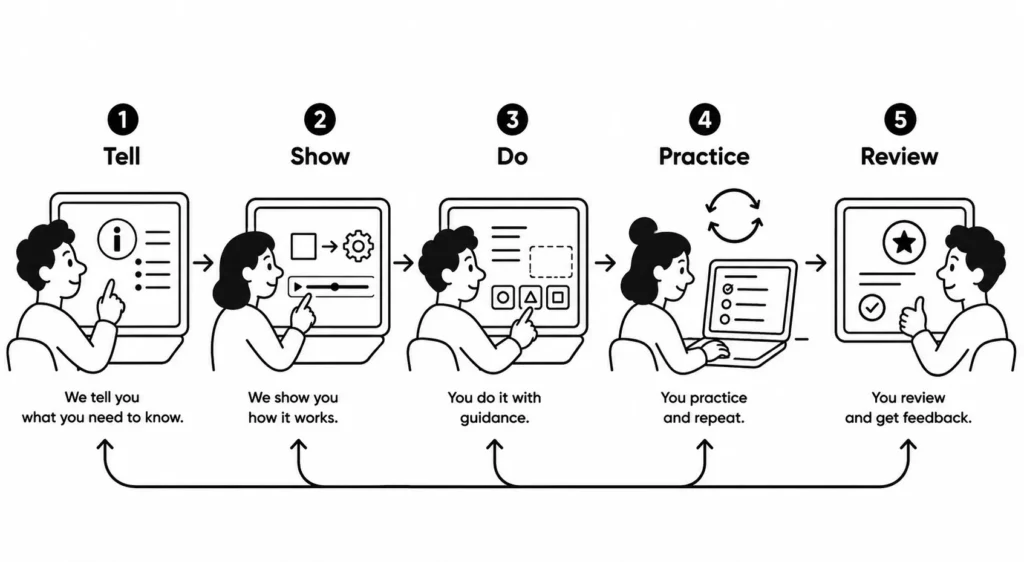
This version adds two more stages, and those additions matter. It’s a stronger model for building skill over time.
This approach flips the sequence. Instead of building context before the activity, you start with the activity itself.
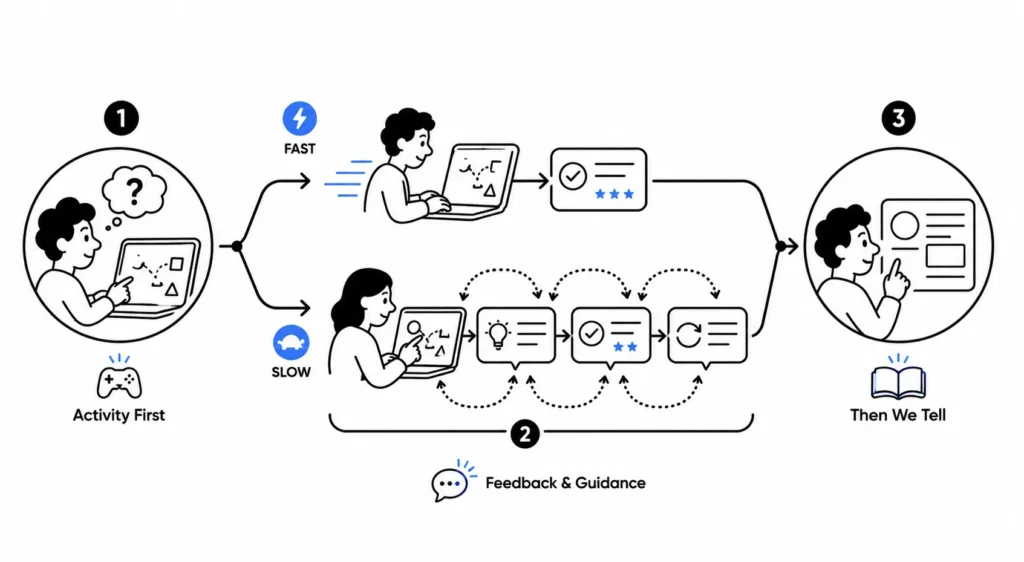
The hands-on activity comes first. Learners work with the content before you’ve told them much about it. They play, test things out, and start forming their own questions. More experienced learners can move through faster. Newer learners slow down and notice their gaps.
After the activity, you provide advice and feedback. You can do this during the activity as a guided process, or wait until they’re finished and debrief what happened. Either way, it surfaces the gaps and gives you the opening to fill them.
Then you tell. Now that learners have worked through the content themselves, the additional context lands differently. They know what they struggled with, so they’re ready for the instruction. This approach takes more time to design well, and some clients prefer the more familiar Tell, Show, Do structure. But starting with the activity gets learners thinking and constructing their own understanding from the start.
Any of these three frameworks can improve your course design. The common thread is practice. Whatever model you choose, make sure learners get a real chance to apply what you’ve taught them. That’s how you move past information-sharing toward training that changes behavior. Try the activity-first approach on your next course and see how learners respond.