Physical Address
304 North Cardinal St.
Dorchester Center, MA 02124
Physical Address
304 North Cardinal St.
Dorchester Center, MA 02124
Helpful ideas. Squeaky value.
Helpful ideas. Squeaky value.
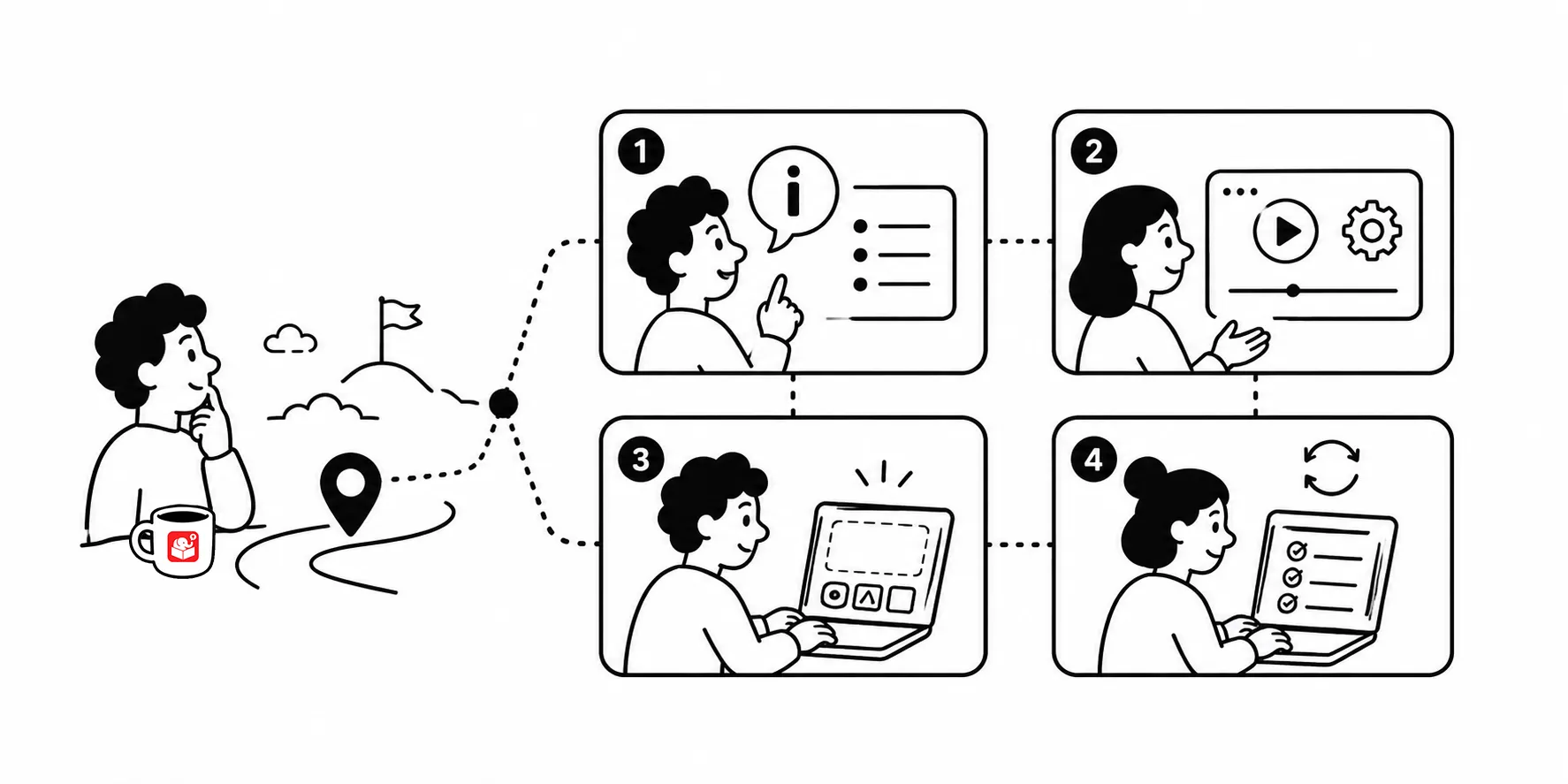
A lot of e-learning falls short of real behavior change. This happens for good reason. Generally speaking there are explainer courses and courses that try to change behvaior. Most courses seem to lean into the explainer type, so they don’t effect change.
On the flip side, courses that require behavior change aren’t designed to do more than explain content. At best, the have a tutorial or video where they show what should happen. but rarely do they involve any practice activities.
The Tell, Show, Do model is a simple reminder for course designers. It pushes you away from the content dump and toward the action in the learning. The goal isn’t just to share information; it’s to get learners doing something with it. That shift can improve your courses.
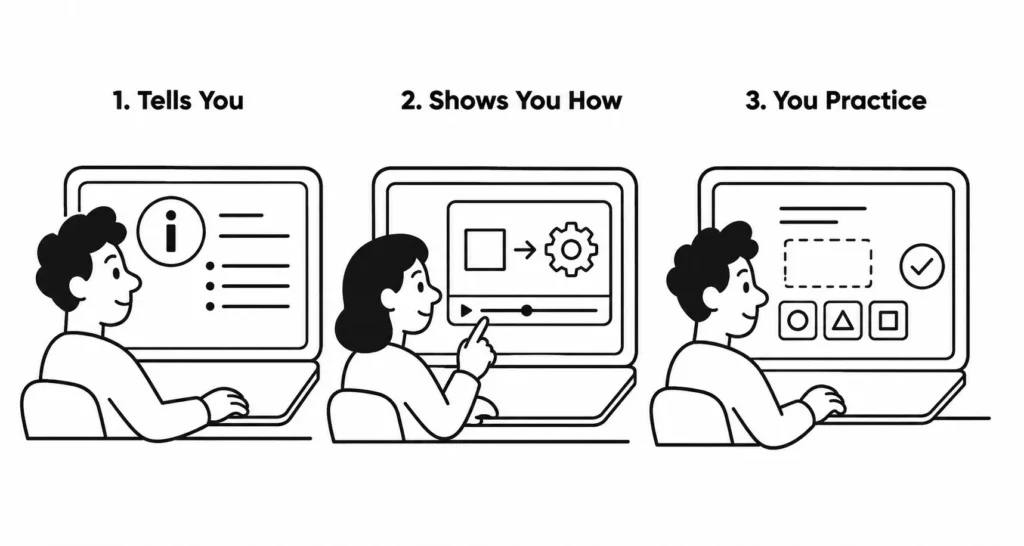
Here’s what each stage means in practice:
Tell, Show, Do is a good start. But stopping at “do” misses something important. E-learning courses are often weak on repetition, and that’s where retention lives.
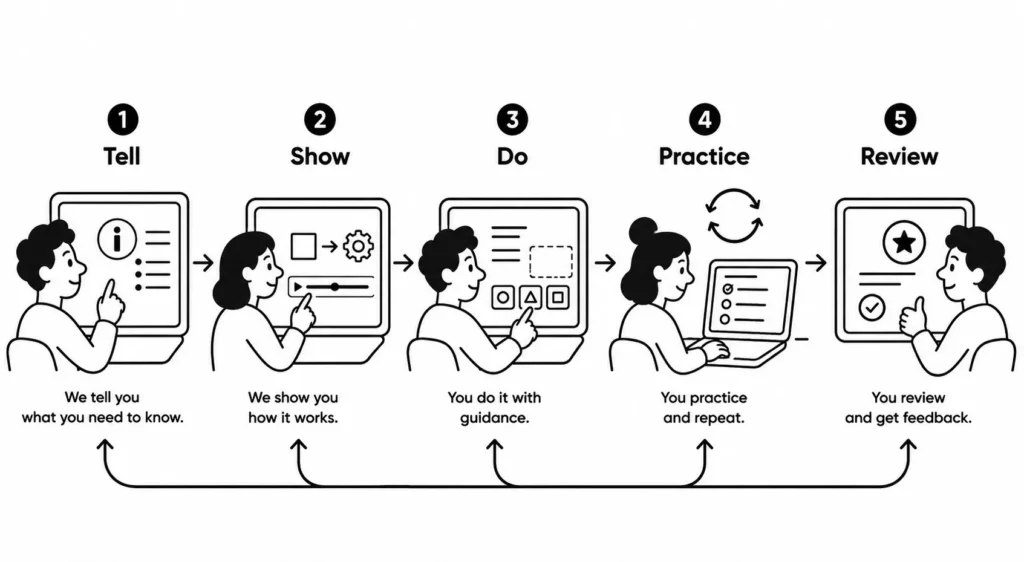
Two additions round out the model:
The expanded model is worth using as a design checkpoint before you build anything. Ask yourself whether each stage is present: the telling, the showing, the doing, the practice, and the review. When you build in deliberate practice and a consistent review process, learners and managers get the feedback loops they need. That’s how you close the gap between knowing and doing. Consider sharing this model with your subject matter experts before your next design session.