Physical Address
304 North Cardinal St.
Dorchester Center, MA 02124
Physical Address
304 North Cardinal St.
Dorchester Center, MA 02124
Helpful ideas. Squeaky value.
Helpful ideas. Squeaky value.
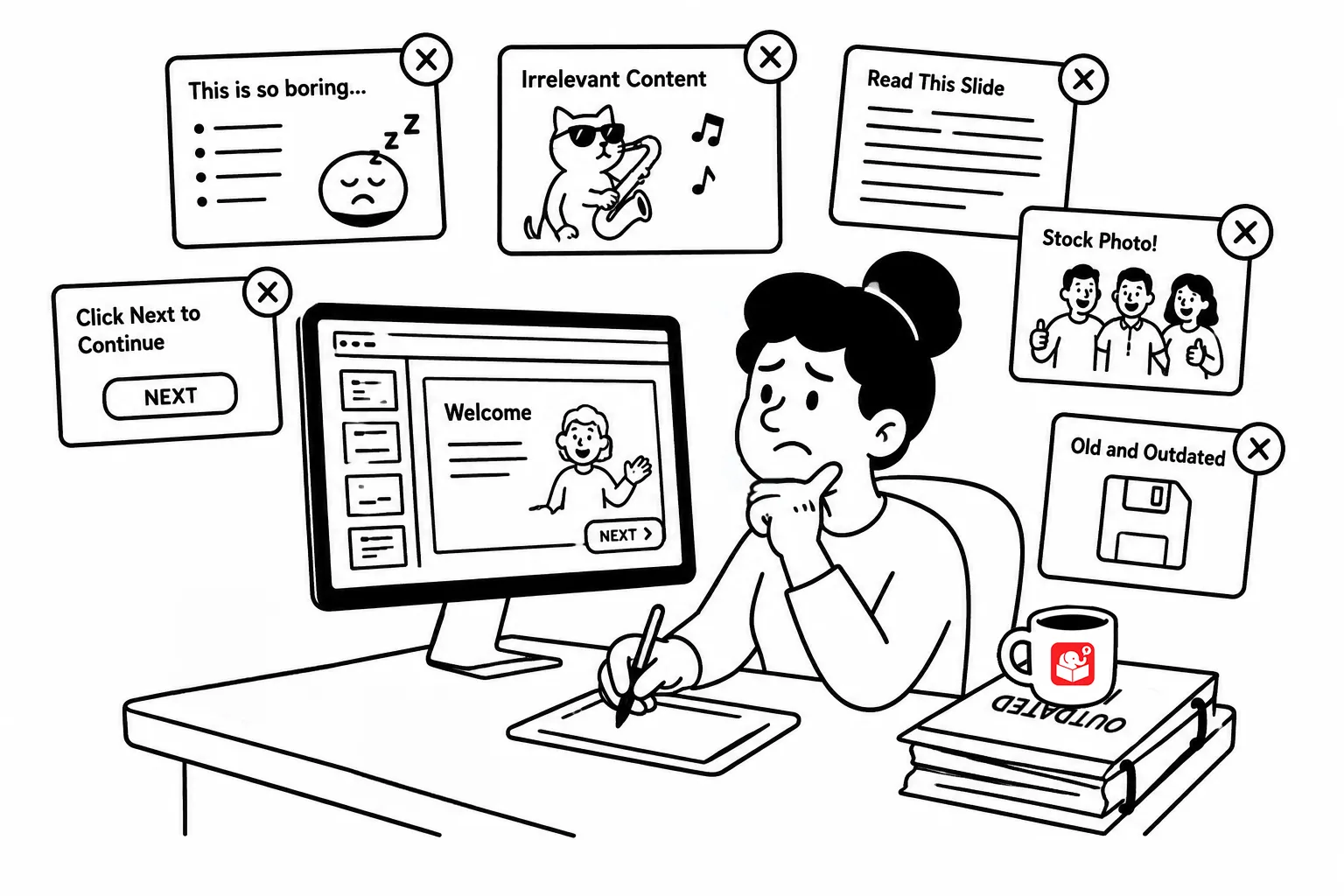
E-learning is an important part of training employees. Some organizations use it exclusively and some blend it with other learning activities. There are a lot of things you can do to create successful elearning, but here are some guaranteed ways to make sure that you don’t succeed and waste a lot of time and money in the process.
Three habits that guarantee your courses miss the mark.
One of the most common complaints I hear: “the course has nothing to do with me.”
Learners say this all the time, and they’re usually right. The course designer skipped a key question: what does this person actually need to do after this course?
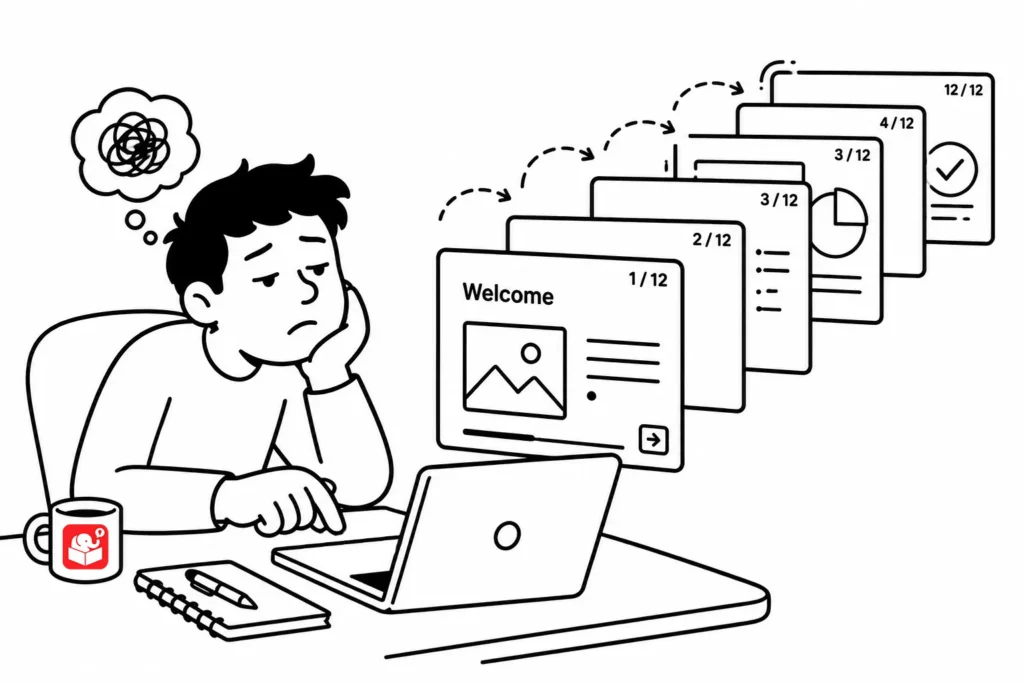
A few patterns make courses feel irrelevant:
Skip that learner’s question and it’s easy to build an information dump that checks a box but doesn’t help anyone. Information is only part of learning. Real learning happens when someone can apply the content to their actual work.
Before any project starts, I ask one question: is this an information course or a performance course? An information course certifies that someone has seen the content. A performance course changes what they actually do on the job.
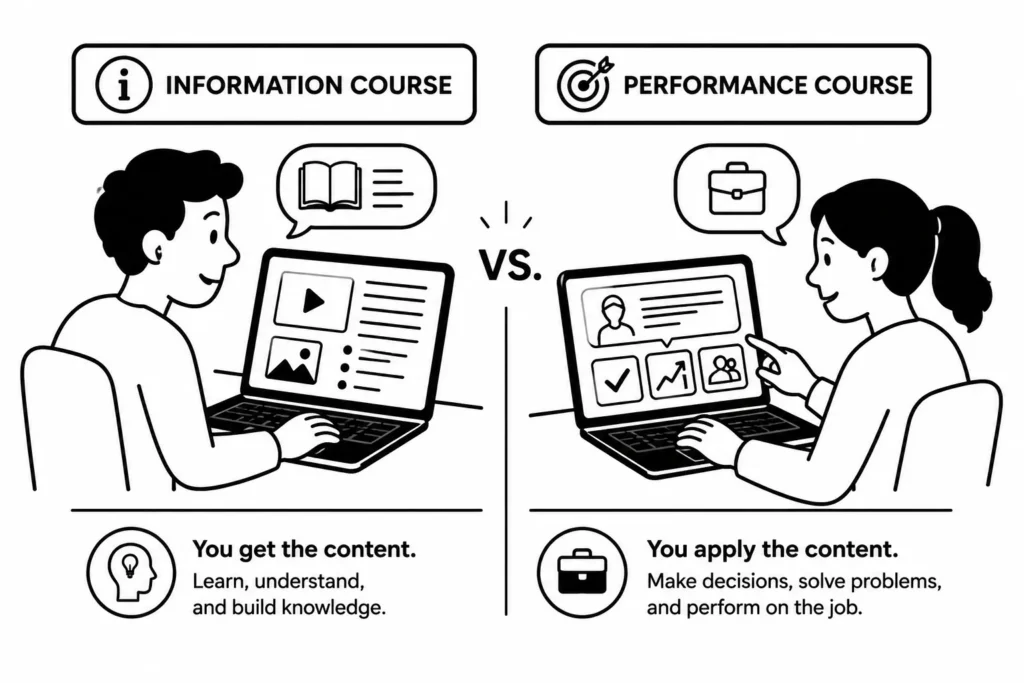
Here’s where the mismatch causes the most waste:
The first case overbuilds a simple problem. The second underpowers a serious one. The key is knowing which type fits the situation before you start building, and that means understanding what the client actually expects out of it.
Visual design matters more than people want to admit. A course that looks rough signals low quality before anyone reads a word. You don’t want your course to look like crap. 💩
But you can use the four basic principles, known by the acronym CRAP: Contrast, Repetition, Alignment, and Proximity.
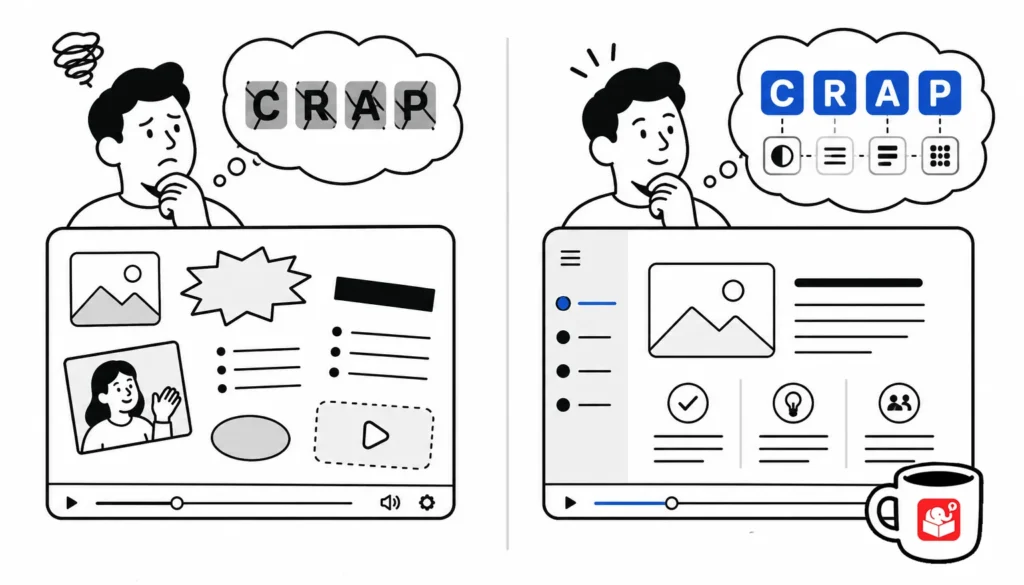
These principles do a lot of work:
Applying these principles won’t save a poorly designed course. But they’ll make a good course easier to follow and a mediocre one much more credible.
Take these three problems into your next project review. Check whether your content ties to something learners actually do. Check whether the course type matches the real goal. Then run your screens through the CRAP test.