Physical Address
304 North Cardinal St.
Dorchester Center, MA 02124
Physical Address
304 North Cardinal St.
Dorchester Center, MA 02124
Helpful ideas. Squeaky value.
Helpful ideas. Squeaky value.
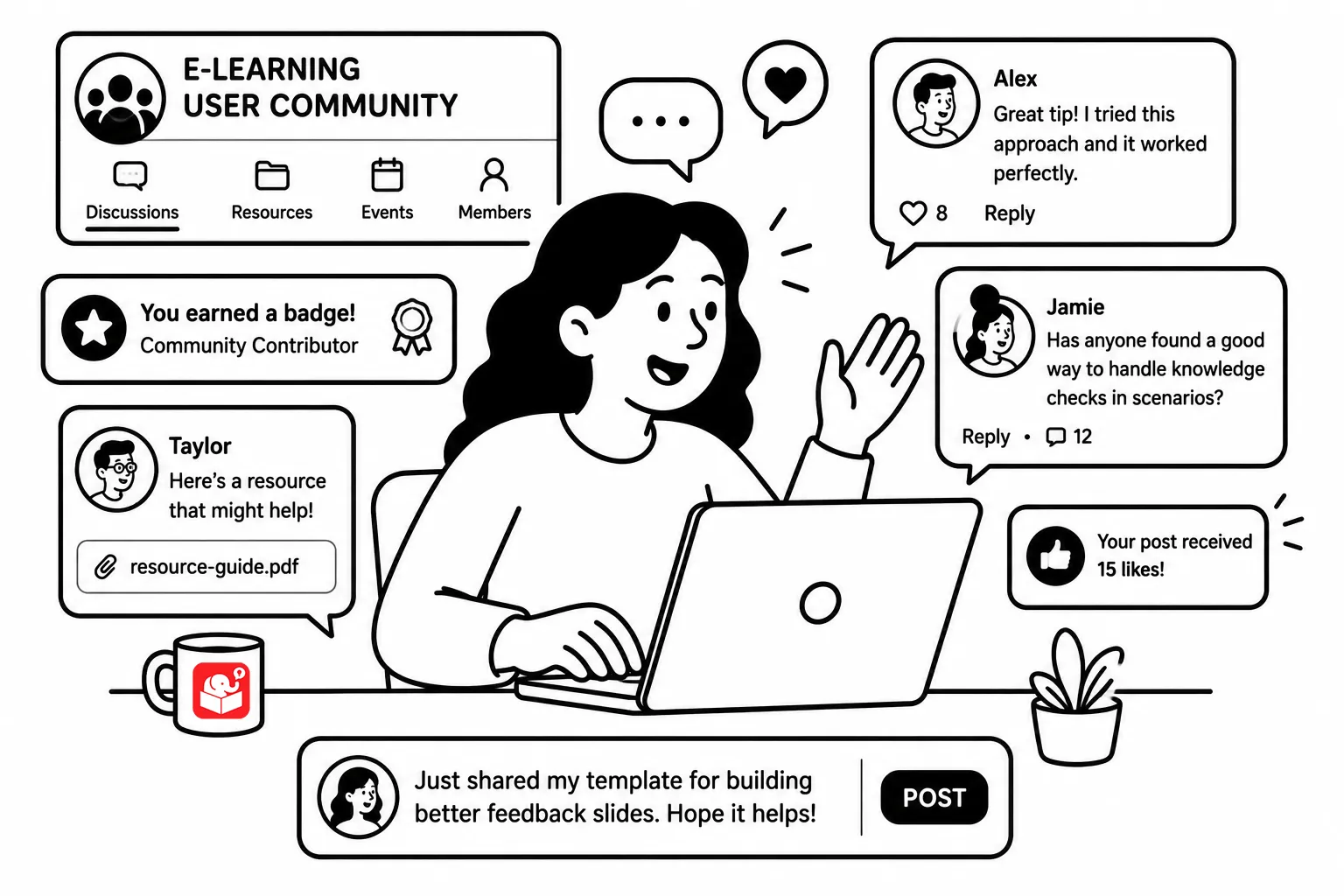
Most e-learning course designers work alone or with small teams. There’s usually no mentor nearby, no peer review, and no one to challenge the way you’ve always done things. But the people who grow fastest in this field don’t wait for their organization to fix that. They connect with other users.
The user community for your authoring tool is worth joining if you haven’t already. Forums like E-Learning Heroes give you access to people solving the same problems you are. They share techniques, templates, and ideas you can put to use right away. The software gives you features. The community gives you ideas on how to use them.
Think of the e-learning community like a cocktail party where lots of small conversations are happening at once. Most people walk from group to group and listen. They rarely jump in. That’s how people stay stuck in their old ways.
Asking questions feels risky at first. You might worry about looking uninformed. But curiosity is rewarded here, and growth tends to follow the people who stop lurking and start asking. One thing worth shifting: focus your questions on the why and the how, not just the technical fix. Instead of “how do I add audio,” ask “how do I use audio to make this course better.”
Most community members are lurkers. That’as fine. There’s nothing wrong from getting value that way. A smaller group will ask questions. Fewer still will offer answers. That gap is your opportunity.
You don’t need to know the answer immediately. If you see a question that interests you, try to figure it out and post what you find. You’ll learn alongside the person who asked, and you’ll start building a reputation for being helpful. That reputation opens doors.
Want a faster path to building authority? Try answering five questions a day. You’ll become a frequent contributor and develop credibility in the community. Once people see you as someone who knows things, the opportunities follow.
Everyone in e-learning tends to build similar things: button graphics, character images, slide backgrounds, navigation layouts. If you’ve built something useful, share it. You don’t need to give away anything proprietary or specific to your organization.
Communities that share assets actively tend to give back. When you put your templates and graphics out there, others do the same. You start to benefit from a pool of resources you didn’t have to build from scratch.
The most productive conversations in a community go beyond “how do I fix this” and move into “how do I build this better.” That kind of discussion takes the community from a support channel to a learning space. It raises everyone’s thinking, including yours.
Try writing a short post after finishing a project. What worked? What would you change? What surprised you? These reflections invite real responses and push you to think more critically about your own process.
Pick one practice from this list and start this week. If you’re not in a user forum yet, create an account today and post something. If you have a PowerPoint template or graphics on your drive, share them in the community. Small consistent contributions compound over time. Your skills improve faster, your network grows, and people start coming to you.