Physical Address
304 North Cardinal St.
Dorchester Center, MA 02124
Physical Address
304 North Cardinal St.
Dorchester Center, MA 02124
Helpful ideas. Squeaky value.
Helpful ideas. Squeaky value.
Think about the last course you took that changed how you do your job. If you’re struggling to name one, you’re not alone. Most e-learning is built to push content, not build capability. This is typical of compliance training.
And even for performance-based courses, many organizations lean into sharing a lot of content over building learning activities.
There’s nothing wrong with content. We read textbooks and watch videos all the time and learn from them. YouTube is one of the largest search engines. I use it all the time when I need to learn.
But exposure to content isn’t the same as learning. Learning requires content, practice, and feedback working together in some meaningful way.
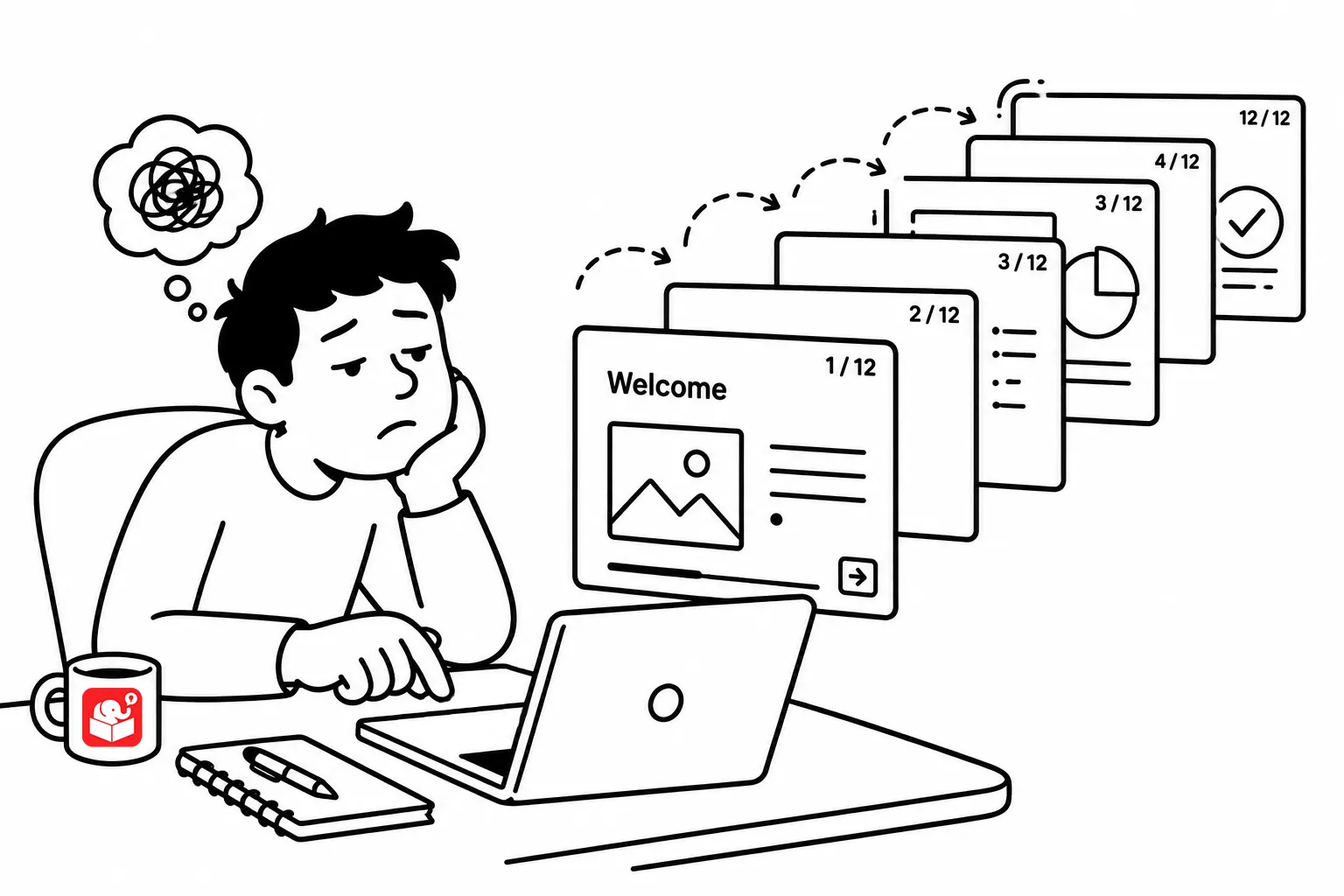
Many courses include some interactivity. Tabs, labeled images, pop-ups. Those are just different wrappers for the same content. Clicking a tab to reveal a bullet point isn’t practice. It’s still reading.
This doesn’t mean a tabs interaction is bad. There’s still value because it’s an easy way to chunk content and avoid overdoing information. It slows things down and makes it easier to consume. But it’s still not a learning experience. And the only activity is clicking the next tab.
Instructional design is about crafting an experience where people acquire information and learn to use it. They should be able to demonstrate their understanding in a real-world context. That’s the goal. As always this assumes we’re looking at a course designed to help someone do something.
Thus, there should be some sort of coupling of content to activity.
Here’s where it gets uncomfortable. Some organizations don’t really care about learning. Perhaps it’s not just some, perhaps it’s honest to say most. If that wasn’t true wouldn’t we see them invest in better e-learning?
Generally, they want a course with a final quiz so they can certify completion and say they provided training. In that environment, it’s easy to copy and paste content into slides and call it done. That’s most of what we see and experience and it’s about all the organization really commits to.
That’s not good e-learning. It’s not effective training either. Substituting content dumping for a real learning experience wastes everyone’s time and budget.
The problem is that many people outside of training think that anyone can build training. That’s why their investment usually stops with the authoring tools. Our job is to demonstrate a difference, to prove them wrong.
Tom Kuhlmann
Instructional designers have more influence than they often use. When someone arrives with a 40-slide deck and says “make this a course,” that’s an opening. Ask what people should be able to do after finishing it.
A course should be more than screen after screen of information. When someone finishes it, they should be able to demonstrate a level of understanding that goes beyond simple quiz questions. That’s a bar worth holding to.
The problem is that many people outside of training think that anyone can build training. That’s why their investment usually stops with the authoring tools. Our job is to demonstrate a difference, to prove them wrong.
Create a before and after course from some typical content. The before shows the typical, linear click and read. The after is reworked with a focus on the performance objective. It includes practice activities and the assessment is an prove-it experience and not just a quiz.
The shift starts with one question: what should people be able to do after this course? Ask it before your next project begins. Build in one practice opportunity before you’d normally drop in a quiz. Start small, and you’ll start changing the conversation about what a course is actually for.