Physical Address
304 North Cardinal St.
Dorchester Center, MA 02124
Physical Address
304 North Cardinal St.
Dorchester Center, MA 02124
Helpful ideas. Squeaky value.
Helpful ideas. Squeaky value.
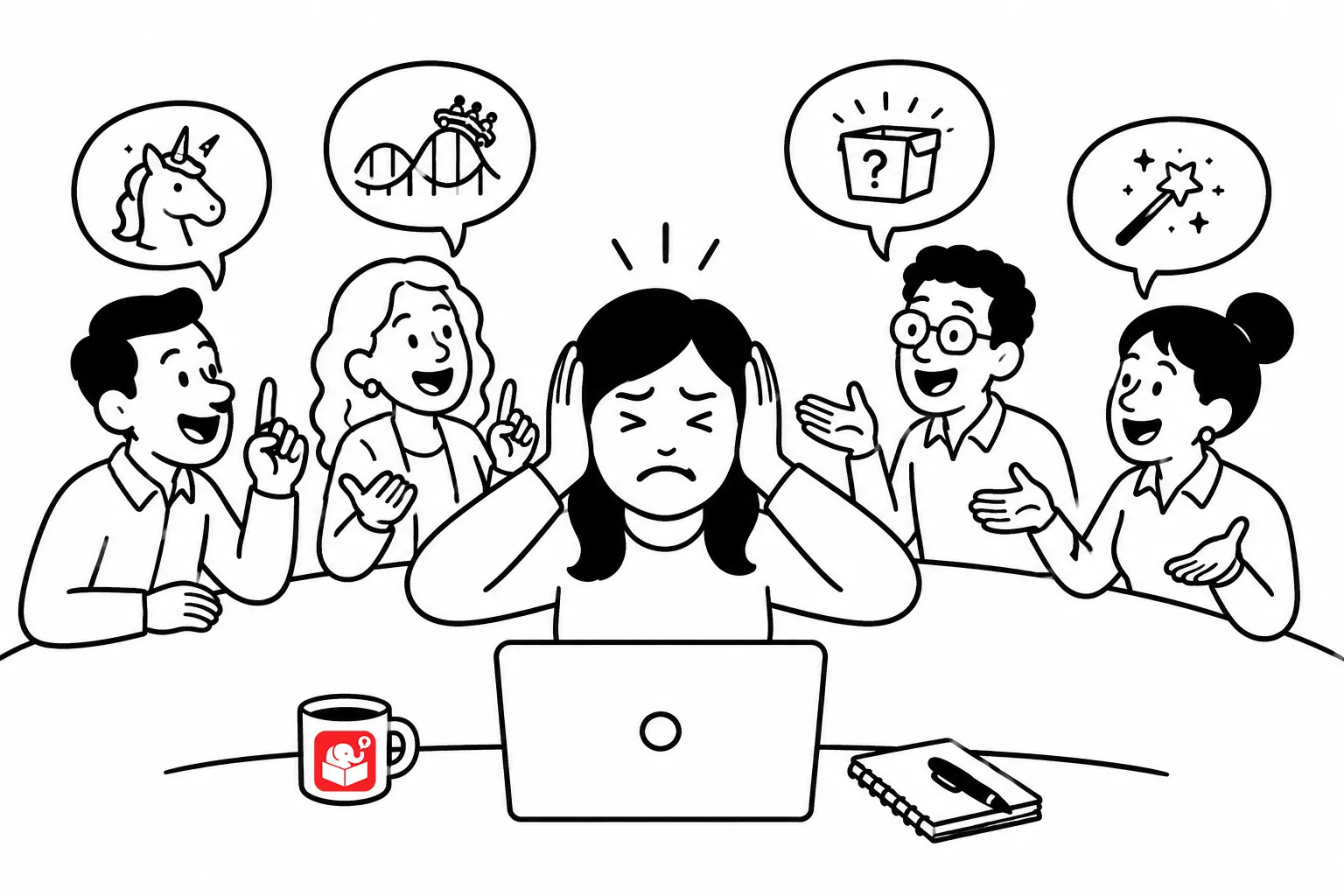
Some phrases are just red flags in disguise. Every instructional designer has heard it. A stakeholder says something that sounds reasonable on the surface, but you know from experience it means trouble.
These are the phrases that make seasoned designers quietly brace themselves and how to deal with them.
This one shows up early and sets the tone for everything that follows. I think a lot of clients think they’ve already done the analysis, that’s why they came to you to build a course. And if we’re being honest, training teams have a reputation of taking too long to deliver results.
Skipping the analysis means building a course before anyone has confirmed what the actual problem is. You might end up with a polished module that solves the wrong thing. It’s faster to ask the right questions first than to redesign later.
Ask three quick questions about what learners should be able to do differently after the course, and get the answers in writing before you start building.
Subject matter experts know their content deeply. That’s not the problem. The problem is that depth of knowledge doesn’t always translate to clarity about what learners actually need. Your job is to advocate for the learner’s time. Not every fact a SME knows belongs in the course.
Ask the SME to identify the handful of things a learner absolutely can’t get wrong on the job, and build around those instead of everything they know.
Recorded lectures and Zoom presentations aren’t useless. But they’re often a sign that the requester wants a training checkbox, not actual learning. Passive video watching produces passive learners. If the goal is behavior change, you need activities that get people to think and practice. Redirect toward something that makes the learner do something.
Offer to turn one section into a quick decision point or activity instead of passive playback, and show them the difference in a small prototype.
Tight timelines are real. They don’t disappear just because they’re unreasonable. What changes is what you can deliver within them. A short, focused module with a clear objective is better than a rushed, bloated one. Let the timeline shape the scope, not the quality.
Narrow the objective to the one thing that matters most and tell them what you’re cutting, rather than cramming everything into a rushed course.
This is the one that requires the most diplomatic honesty. Shorter and comprehensive are usually in conflict. You can fit more in a course or cover it well, but rarely both at once. The conversation you need to have is about what learners actually need to walk away with. That’s where the cuts become obvious.
Ask them to pick the three things learners must walk away with, and use that list to justify every cut you make.
These phrases come with the job. The good news is that each one is a chance to have a better conversation. Pick the phrase that gives you the most trouble and work out a response that redirects without shutting things down. The more you practice those redirects, the more confident you’ll feel when the next one comes up. What’s the phrase you hear most often?