Physical Address
304 North Cardinal St.
Dorchester Center, MA 02124
Physical Address
304 North Cardinal St.
Dorchester Center, MA 02124
Helpful ideas. Squeaky value.
Helpful ideas. Squeaky value.
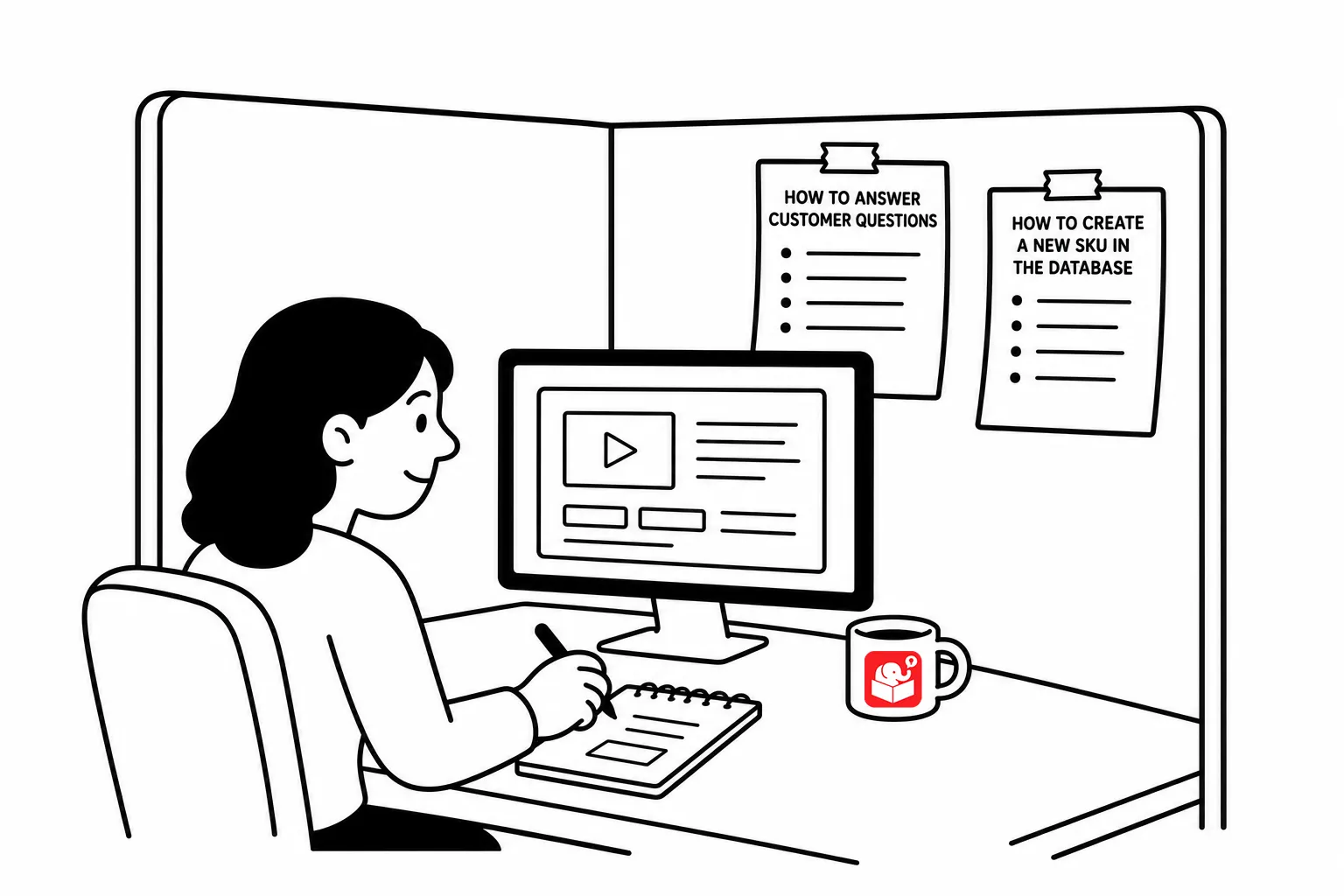
A few years back, I spent months building an enterprise-wide training program for our IT team. When the rollout day came, I walked around the facility to see how the training worked out. I found that many of the people had made their own cheat sheets and passed them to every others in their departements. Their crude, Comic-Sans-formatted notes had done in a couple of hours what our team had spent months building.
Who do these people think they are? They didn’t know a thing about adult learning principles or instructional design. And yet they built something more useful than we did. That’s not nothing.
When learners make their own job aids, they’re filtering everything they learned and keeping only what they need to do their job. That’s actually a useful signal.
Look at what someone writes on a cheat sheet. It’s not “here’s the history of this regulation” but “here’s the three steps to complete this form.” The question on their mind isn’t “What do I need to know?” but “What do I need to do?” That distinction is the whole design problem for a lot of training.
Here’s how this plays out in practice. A financial services employee needs to know how to fill out a lending form. Her co-worker could walk her through it in five minutes.
An e-learning course might start with the history of lending. It works through every regulation and covers all the context before she ever sees the form. By the time it gets there, she’s been at her desk for sixty minutes. The form gets maybe ten slides at the end.
Less context isn’t always worse. Sometimes a course that teaches exactly one thing is more useful than one that teaches everything. The five-minute explanation from a colleague beats sixty minutes of background content.
Sometimes a course that teaches exactly one thing is more useful than one that teaches everything.
Assuming this is a performance-based course, the goal of e-learning is to change behavior, not to share everything you know. When you keep that in mind, the design gets a lot simpler.
Try this: ask what a learner would write on a cheat sheet based on what you’ve built. That usually tells you what the course should actually contain. Everything else is context, and context only belongs when it changes what the learner does.
Here’s a basic structure that helps:
One useful filter: a mentor once told me to imagine you only have one sheet of paper. What goes on that page and still lets you meet your goals? It’s a good forcing function. This is especially true in the world of AI where it seems more is better. You can always link out to deeper resources for learners who want more.
Start your next course design by asking what your learners would write on a cheat sheet. If you can answer that clearly, you probably know what the course needs to contain. Build from “what do learners need to do” first, and add context only when it genuinely changes what they’ll be able to do. If something wouldn’t survive the one-page test, it probably doesn’t belong in the course.