Physical Address
304 North Cardinal St.
Dorchester Center, MA 02124
Physical Address
304 North Cardinal St.
Dorchester Center, MA 02124
Helpful ideas. Squeaky value.
Helpful ideas. Squeaky value.
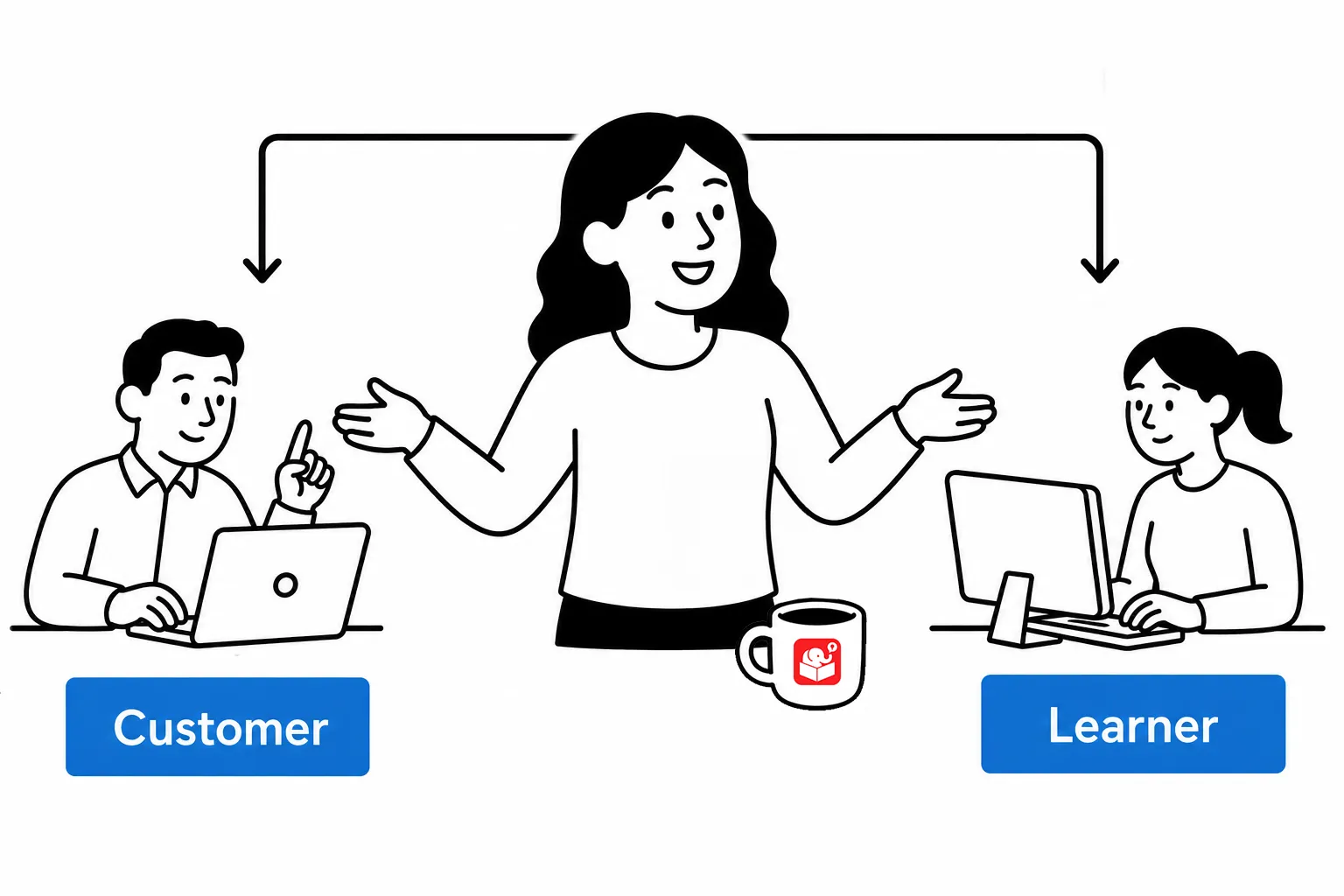
The problem with most e-learning is that the course doesn’t match real life for the people who take the course. There are all sorts of reasons why this is the case. We’ll look at that and some ideas on how to make courses more meaningful and ultimately more effective.
Not all courses are created equal. Some exist to share information and certify awareness. That’s what most compliance courses are. Others need to change behavior and hit a specific metric. Knowing which one you’re building helps you decide how much to invest.
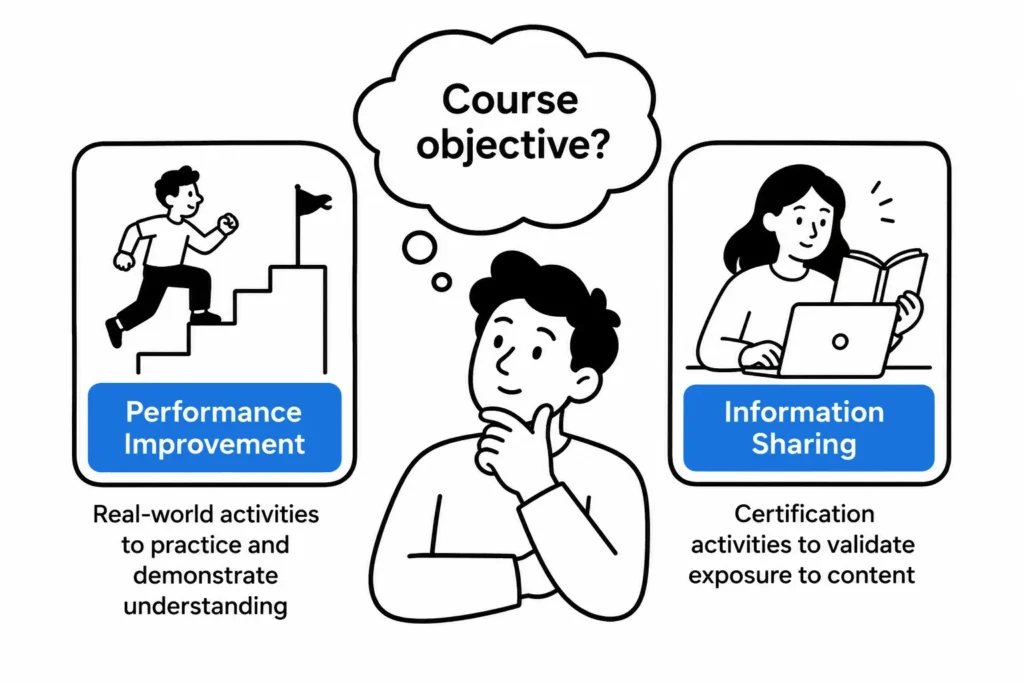
Even for information-only courses, the content should still feel relevant to the learner. Compliance doesn’t have to be abstract. Framing it around real situations boosts both comprehension and follow-through.
Before you write a single lesson, spend time with the learners. Watch them work. Ask what their day looks like. The routines they follow are often different from what managers or subject matter experts expect.
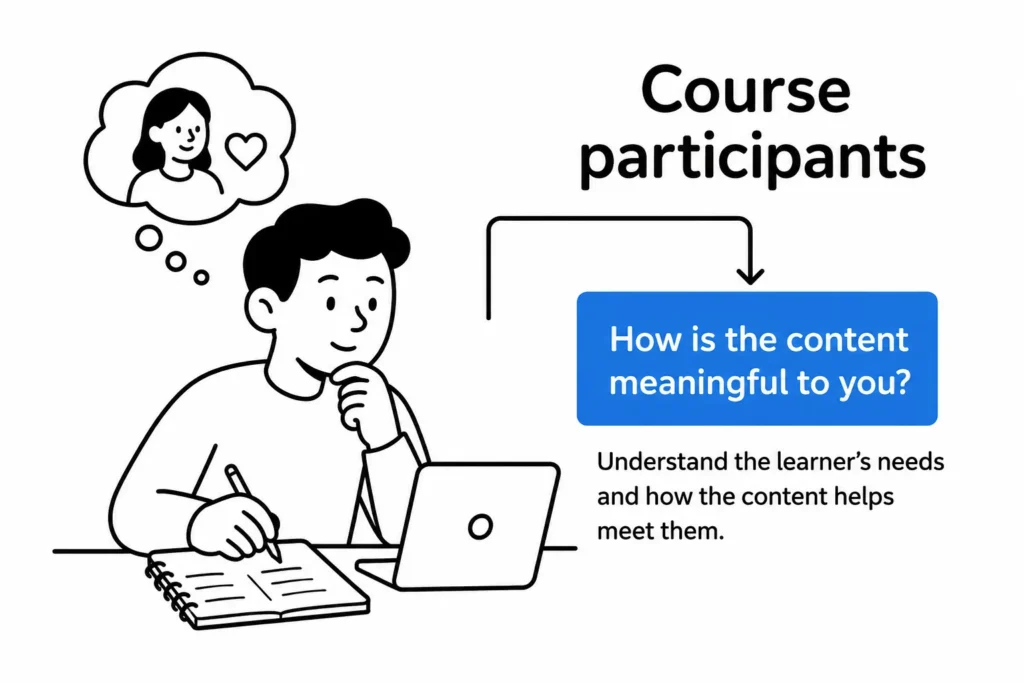
Once you understand their world, share the course objectives with them. Ask how the required content plays out in their day-to-day work. They’ll give you case studies and scenarios you couldn’t have invented on your own.
The people who commission training and the people who take it rarely share the same goals. A compliance officer wants to certify policy awareness. A frontline worker wants to know what this means for their actual job. Your role is to serve both.
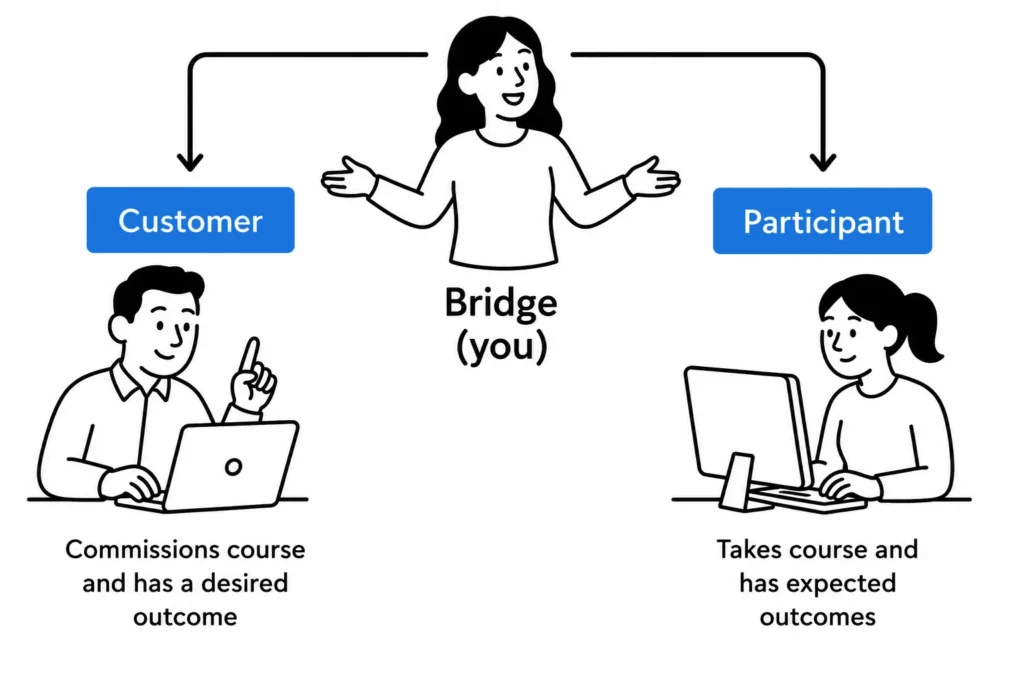
Get learners involved early in the development process. They’ll build awareness of the training and often surface insights the content owner never considered. That input shapes more grounded, believable scenarios.
Online learning is harder to engage than a live session. There’s no back-and-forth, no discussion, no shared moment. But you can create some of that engagement with the right framing.
Two approaches work well here:
Even when the content is mandatory and not learner-chosen, a relevant context can pull someone through it without tuning out.
These three approaches work together. Knowing your learners, bridging the stakeholder gap, and framing content in context are habits that build over time. The next compliance course you build is a chance to try all three. What do your learners say when you ask them about their day?