Physical Address
304 North Cardinal St.
Dorchester Center, MA 02124
Physical Address
304 North Cardinal St.
Dorchester Center, MA 02124
Helpful ideas. Squeaky value.
Helpful ideas. Squeaky value.
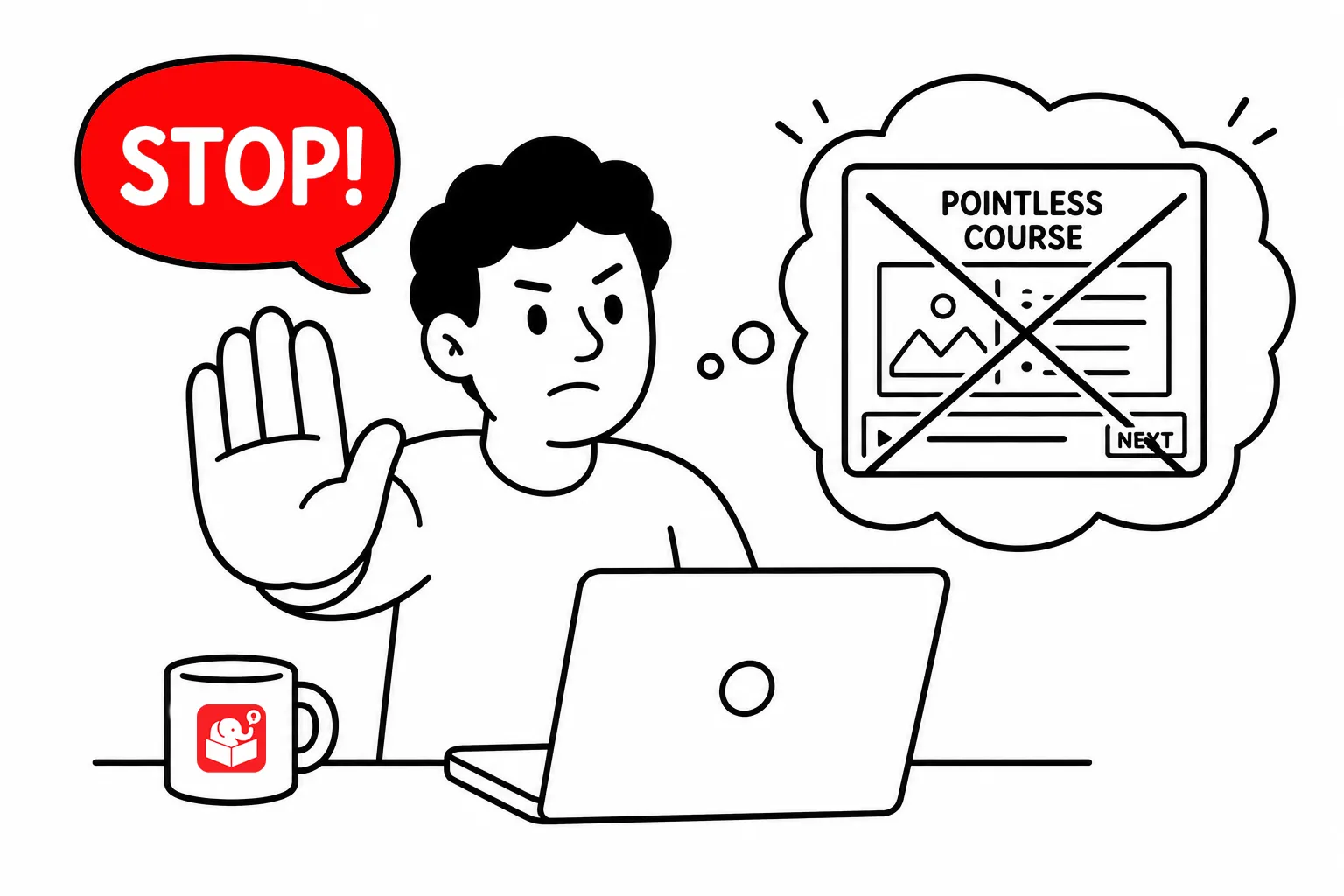
A department head walks in and asks for a new training course. There’s plenty of content and the course isn’t really going to do more than convert that content into a course framework. Is a course the right solution? Maybe. Maybe not.
What tends to happen is the course gets built because it’s pretty easy to build them with e-learning software. And even if you push back, someone else can build something viable with vibe-coded AI.
The single biggest way to save time on e-learning is to not build it at all. Training isn’t always the right solution. Poor performance can come from unclear processes, the wrong tools, or a lack of feedback. A course won’t fix any of those.
Before you accept a request, ask what outcome the organization is trying to reach. If a job aid, a short video, or a process update would do the job, say so. Every course you push back on is time and budget you protect for the work that actually needs a course.
When you do build, start with the most efficient tool available. Don’t jump to a custom interaction when a form-based course will do the job. This principle is worth making explicit across your team.
I have a hierarchy where I go from simple to complex. The default is always to start with what’s easiest and least expensive.
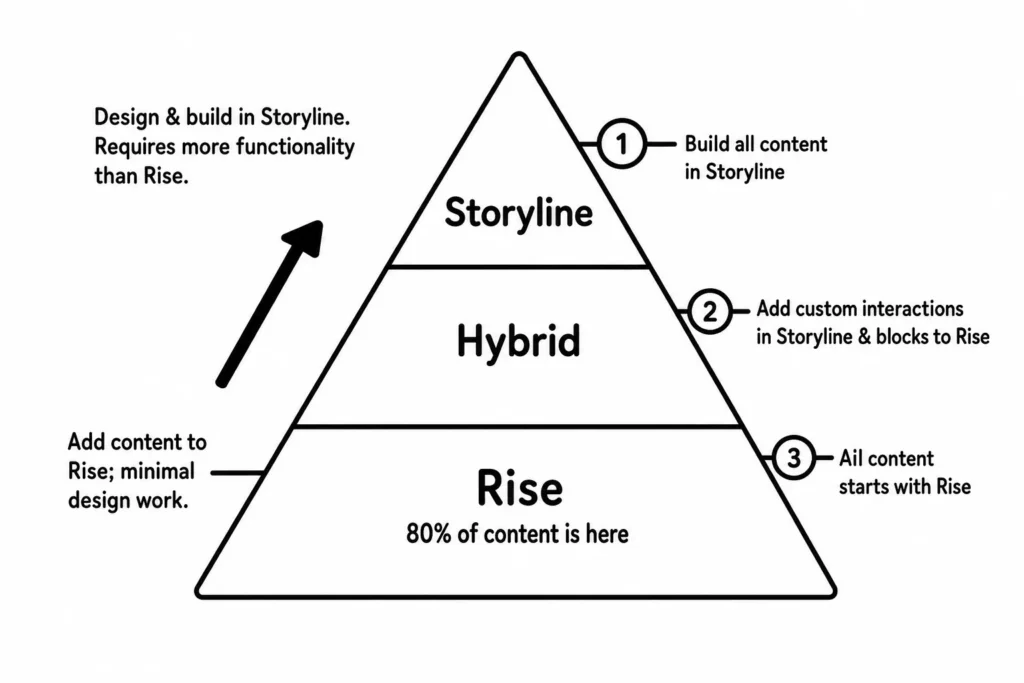
Articulate’s Rise handles most e-learning content well. It’s fast to build in, easy to update, and covers the majority of explainer-style training. Add a Storyline block when you need a specific interaction. Move to Storyline-only when the content requires freeform authoring that Rise can’t support.
The hierarchy isn’t about avoiding good work. It’s about matching the tool to the task. You don’t need three days on something a one-day approach handles just as well.
When content already exists in a policy document, a help center, or a shared drive, avoid copying it into a course for the sake of having “training.” Instead, build a course that teaches people how to find and use that content instead. Teach them how to self-serve the resources already available.
Set up a short scenario where a learner has to locate the right resource to make a correct decision. This approach keeps your course lightweight. When the source content changes, you update the source and the course stays intact.
These three points share a common thread: do less, but do it with purpose. Every unnecessary course you prevent frees up time. Every redundant content build you skip protects budget for work that deserves real attention.