Physical Address
304 North Cardinal St.
Dorchester Center, MA 02124
Physical Address
304 North Cardinal St.
Dorchester Center, MA 02124
Helpful ideas. Squeaky value.
Helpful ideas. Squeaky value.
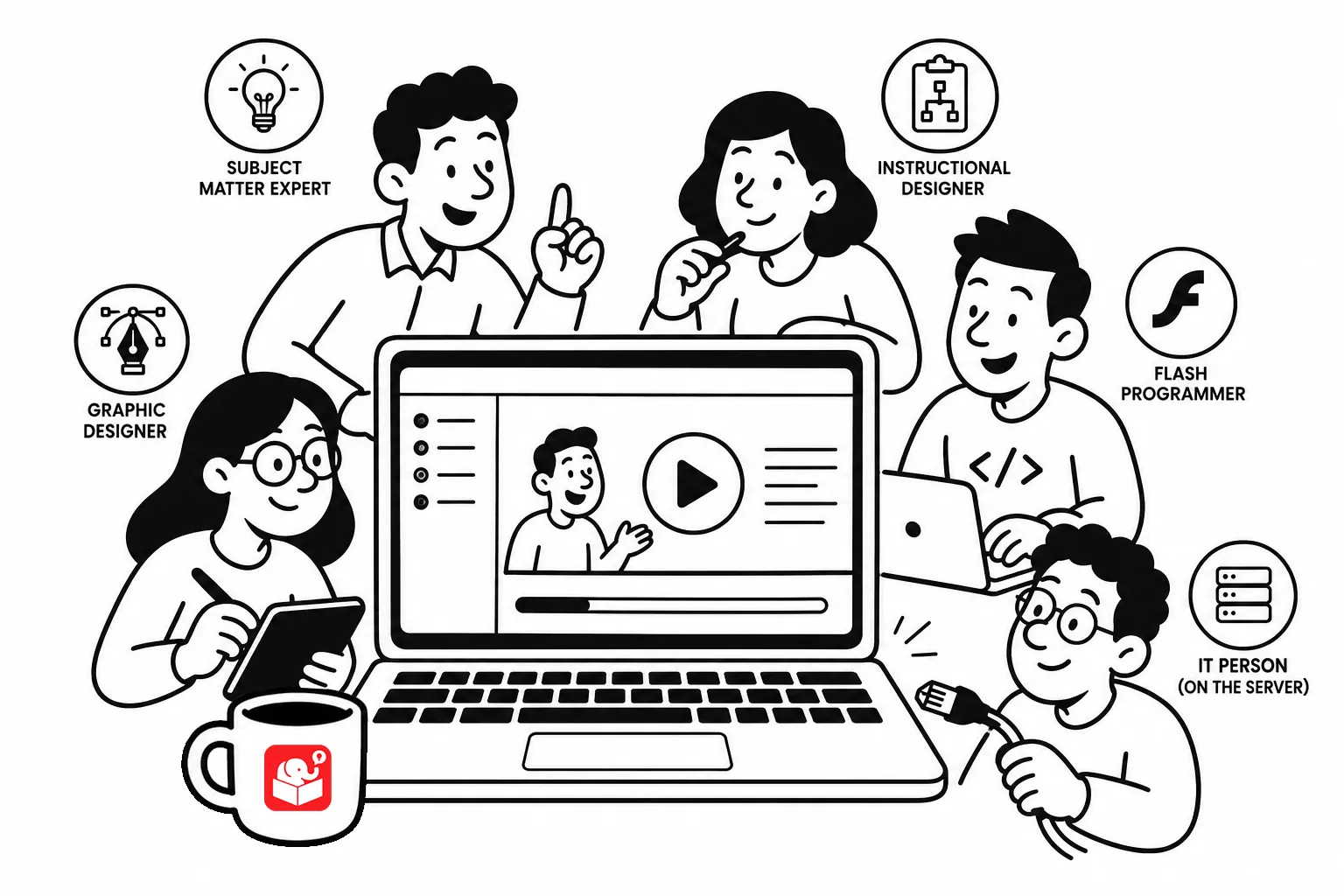
Back in the early days of e-learning, it took a small army to ship a course. You had the subject matter expert, an instructional designer, a graphic designer, a Flash programmer, and an IT person to get the thing on a server. Five people, minimum. Sometimes more.
Today you might be all of those people. And honestly, with the right tools, that’s not as crazy as it sounds.
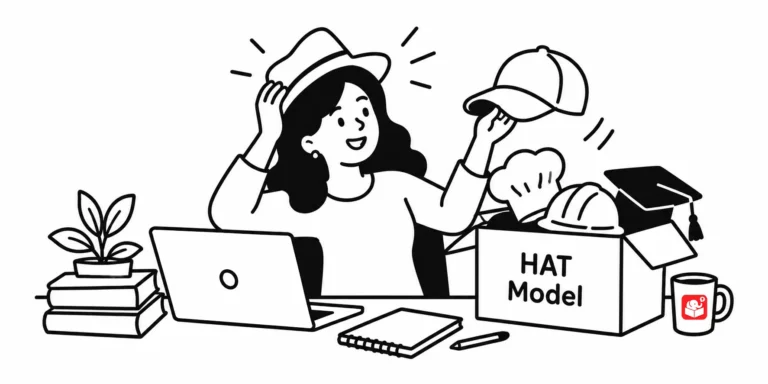
But the roles still exist — even if one person is filling all of them. So let’s break down what each role actually does, because knowing what hat you’re wearing at any given moment makes the whole process a lot less chaotic.
E-learning courses involve more contributors (or considerations) than most people expect. Some are obvious, like the client and subject matter experts. Others, like IT and marketing, often get overlooked until something goes wrong.
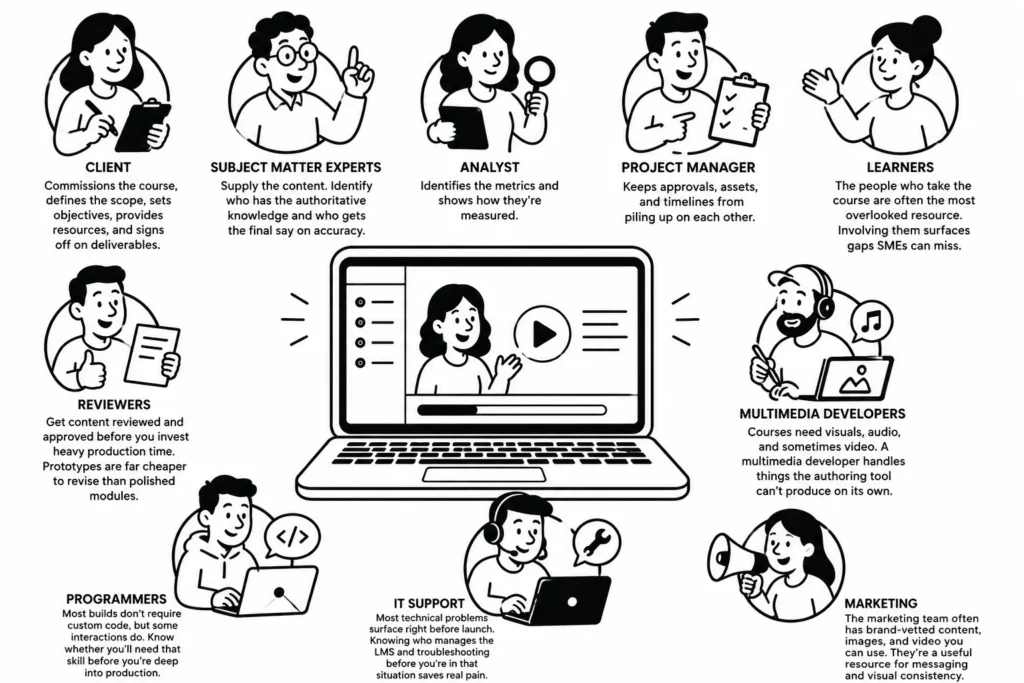
The roles haven’t changed much since those early multi-person teams. What has changed is who fills them — and sometimes that’s one person wearing a lot of hats. Here’s what to think through before you start building.
Every course has a client — someone who defined the need, controls the scope, and has final sign-off. Get clear on who that is early. Knowing who makes decisions saves a lot of back-and-forth later.
You need a subject matter expert, and you need to know who has the final say on accuracy. Those aren’t always the same person. Also worth asking: are you the SME? That’s more common than people think.
If nobody’s tracking outcomes, the course is just content delivery with no feedback loop. Someone needs to own the metrics — what gets measured, how, and where the data lives.
Courses have a lot of moving parts that depend on each other. Content approval, asset handoffs, review cycles, LMS testing. If nobody’s managing that flow, things pile up fast.
The people taking the course are your best gut check. Newer learners especially — they’ll catch gaps that a seasoned SME has long forgotten were confusing.
Get content reviewed before you build, not after. A rough prototype is cheap to revise. A polished module isn’t. Know who’s reviewing, and lock in that process before you’re deep in production.
Most courses don’t. But some interactions do require programming beyond what an authoring tool can handle. Know that before you’re stuck mid-build.
The authoring tool handles a lot, but not everything. If you need custom graphics, recorded video, or polished audio, that’s a different skill set. Plan for it.
LMS issues almost always show up at the worst time. Know who manages your LMS, how courses get published, and who to call when something breaks before launch day.
They might not be involved in your course at all — but they often have vetted brand assets, approved messaging, and media you can actually use. Worth a conversation before you start building from scratch.
That’s quite the list and unless you’re some sort of course production company, it’s not a reality for you.
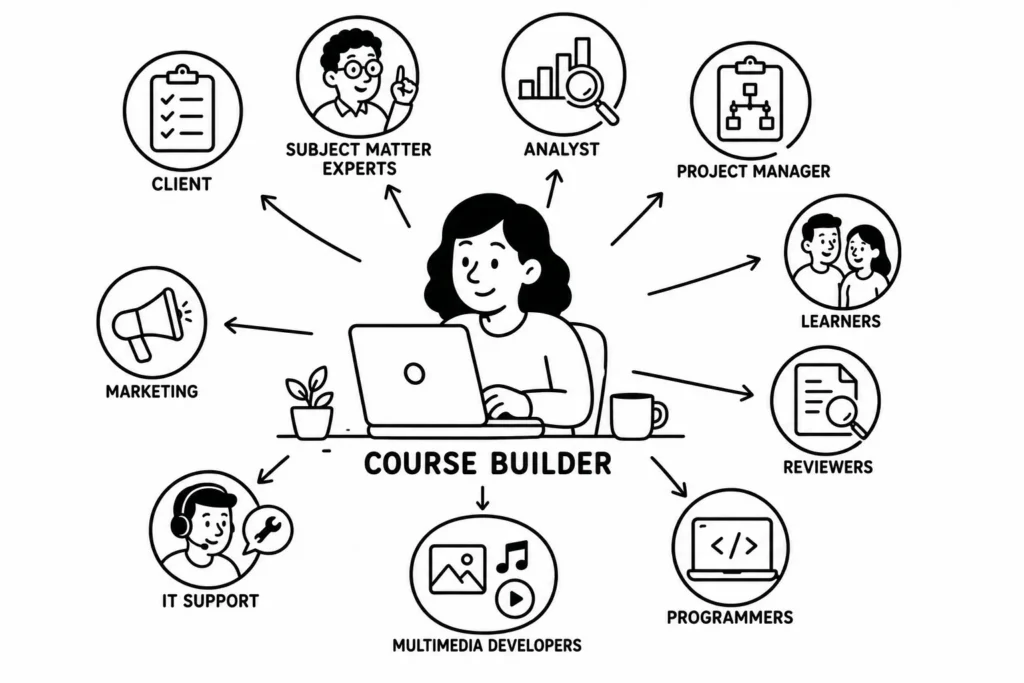
Many e-learning developers cover all of these roles solo. That’s common and workable, but the considerations don’t go away. They just get smaller. You still need to track objectives, manage timelines, review your own work, and handle technical issues.
Since you don’t have a person filling each role, treat each role as a checklist that keeps you from skipping something important.
The team behind an e-learning course shifts with every project. But the roles themselves stay consistent. Building relationships with reliable SMEs, multimedia developers, and IT contacts pays dividends on every future project. The best developers build those relationships long before they need them. How many of these roles do you typically handle on your own?