Physical Address
304 North Cardinal St.
Dorchester Center, MA 02124
Physical Address
304 North Cardinal St.
Dorchester Center, MA 02124
Helpful ideas. Squeaky value.
Helpful ideas. Squeaky value.
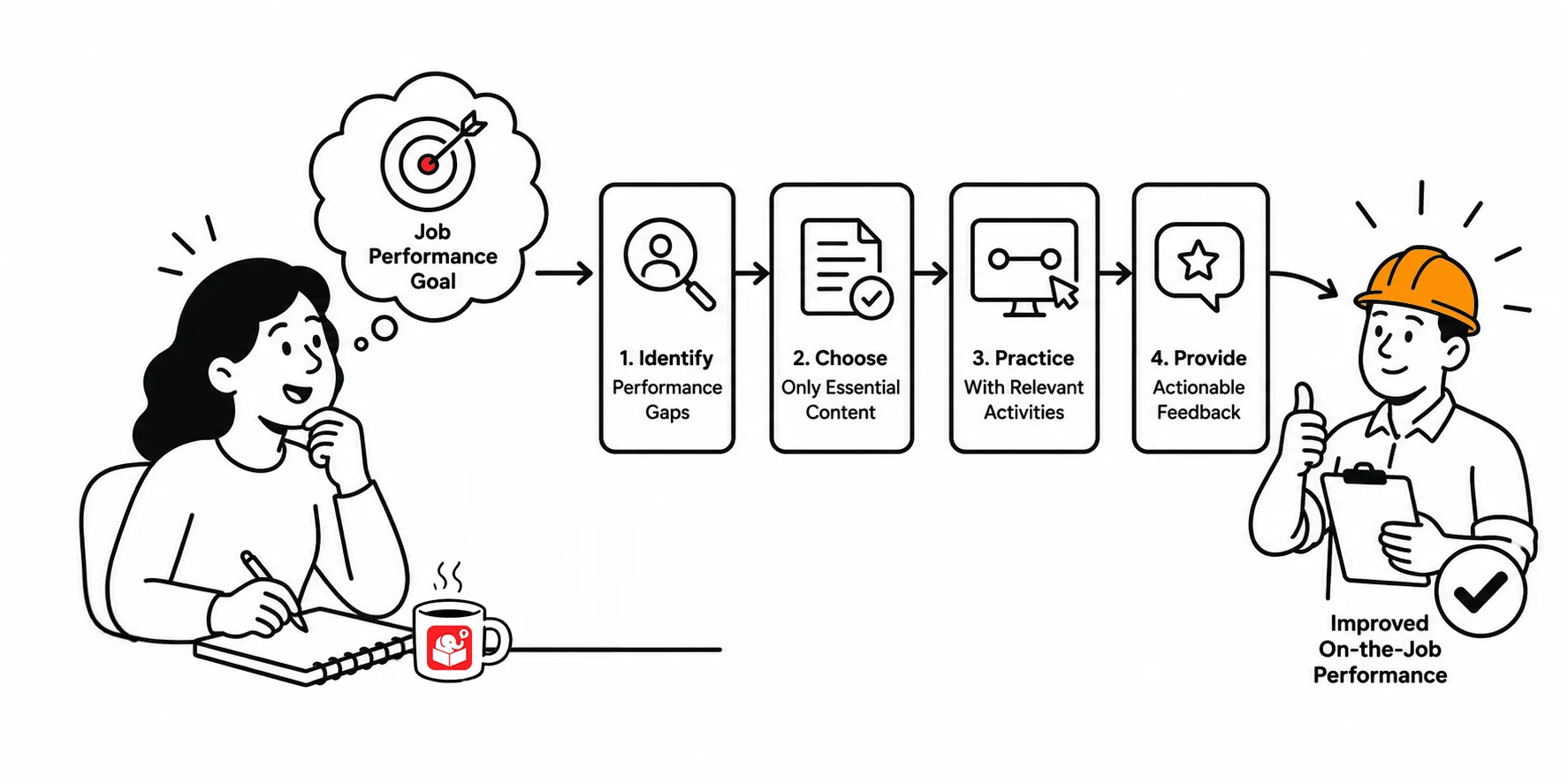
A compliance course tells employees what the rules are. A performance-based course gets them doing something they couldn’t do before. Those two types of courses call for completely different design approaches.
Most e-learning exists to inform people. They’re explainer content. Compliance training is the most common example. The goal isn’t to create better performers. It’s to certify that employees know the policy and agree to follow it.
That’s a valid purpose, but it’s not the same as changing behavior. There’s nothing wrong with information-based courses. The mistake is treating every course as if information delivery is the point. Desired performance improvements need performance-based solutions.
Performance-based courses exist to take learners from point A to point B. They’re built around a skill gap or a behavior change. Before you build a single screen, you need to answer a few honest questions.
These questions aren’t just warm-up questions. They shape every design decision you make.
Once you know what learners need to do, build the course around doing it. Think about the decisions they face on the job. Then create activities that put them in the same situation during the course.
For example, I once trained managers on various policies. The customer wanted to build courses to explain the policies. I convinced to design the course that put the managers into various situations that they might encounter. Then we had them work through solving the issues.
This moves content into the background where it belongs. Learners encounter information when they need it to make a decision. That’s better than reading five screens of policy before anything meaningful happens.
A performance-based course that doesn’t measure outcomes is just a well-designed information dump. Define what success looks like before you build. Determine who you will measure that they can meet the objectives. If learners can’t demonstrate the skill, the course design needs another look.
Performance-based design starts with a clear picture of what learners should do differently after the course ends. If you can answer that question, you can build activities to practice it and feedback to reinforce it. What behavior do you want to see change after your next course? Start there, and the design will follow.