Physical Address
304 North Cardinal St.
Dorchester Center, MA 02124
Physical Address
304 North Cardinal St.
Dorchester Center, MA 02124
Helpful ideas. Squeaky value.
Helpful ideas. Squeaky value.
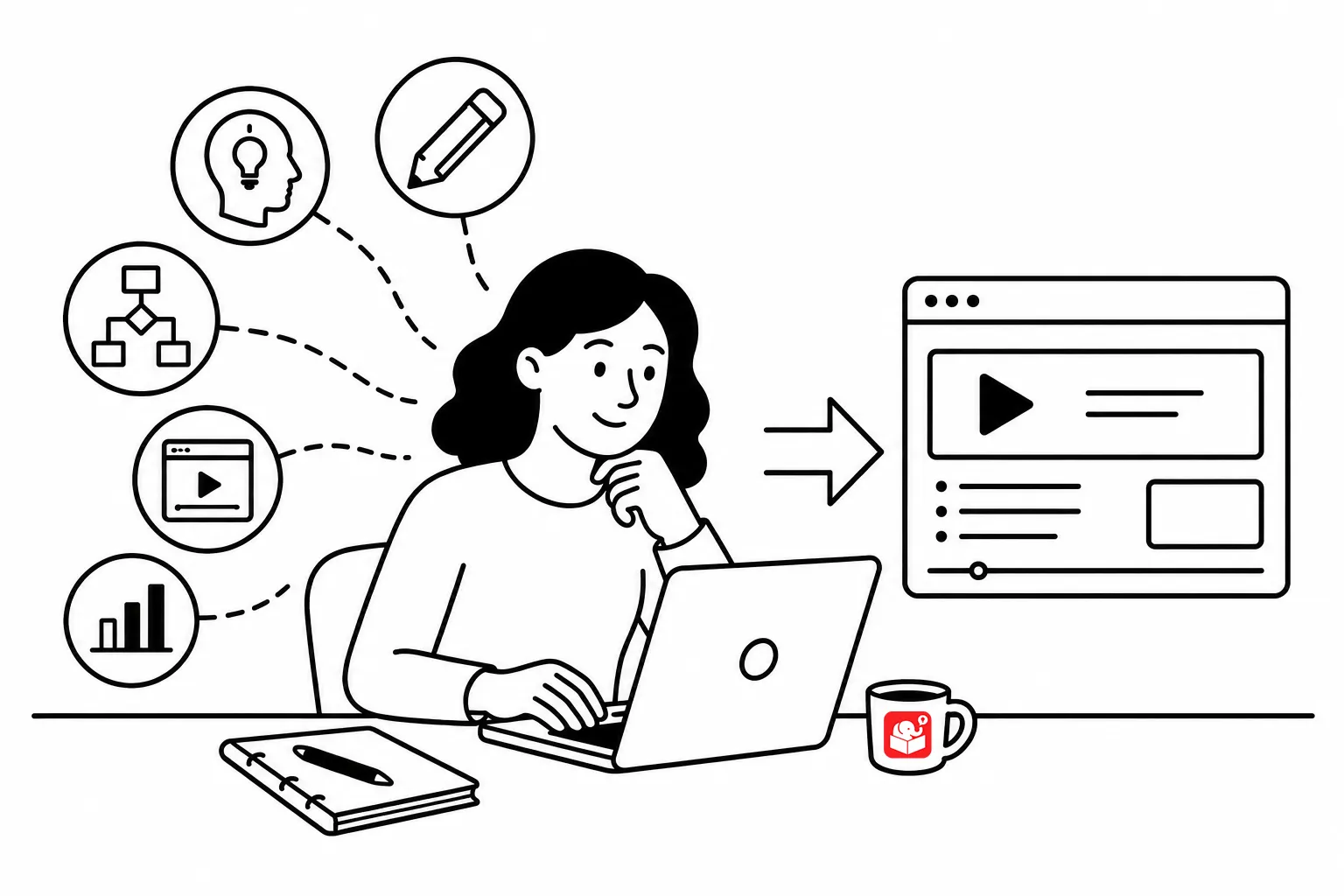
Someone drops a project in your lap and says it needs to be done in two weeks. You open your authoring tool, stare at a blank slide, and realize you’re not prepared. The course gets built, but it takes longer than it should and looks rougher than you’d like.
The tool you use shapes how quickly you can work. A tool that fits your workflow and your organization’s needs removes friction. One that doesn’t match either will slow you down no matter how fast you try to move.
You need one that lets you do the work your projects require without a steep learning curve. There are a lot on the market, I prefer Articulate, because it’s good and the tool most companies and jobs look for. You can’t go wrong.
Having to find new graphics, icons, and images for every project wastes time. Your authoring tools usually come with all sorts of assets and with AI you can often prompt what you need.
A small, organized library of reusable assets makes a big difference. Even a basic set of photos, icons, and a few character images gets you started faster. You can find a bunch of free downloads here, especially usable character packs and templates.
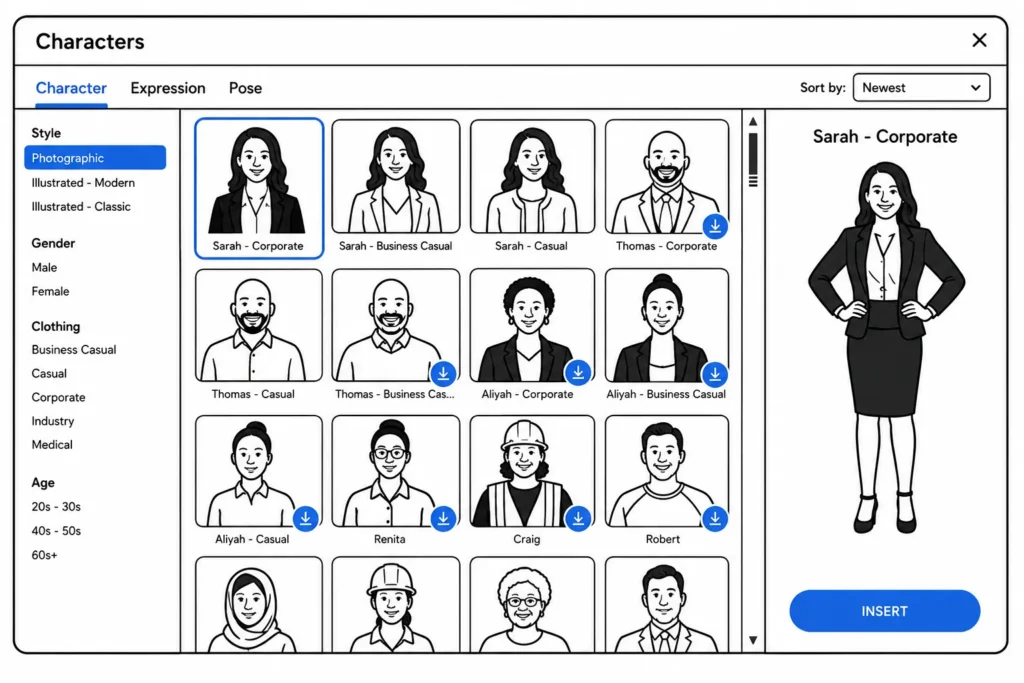
Low-cost or free stock resources work well here. You don’t need custom illustrations for every course. A consistent visual style applied to affordable assets will look more polished than a mix of expensive one-offs. But again, you can build a lot of that with AI now.
This is where a lot of e-learning developers leave time on the table. If you redesign your course navigation, layout, and flow from scratch every time, you’re doing work you’ve already done. A reusable template or shell speeds things up without sacrificing quality.
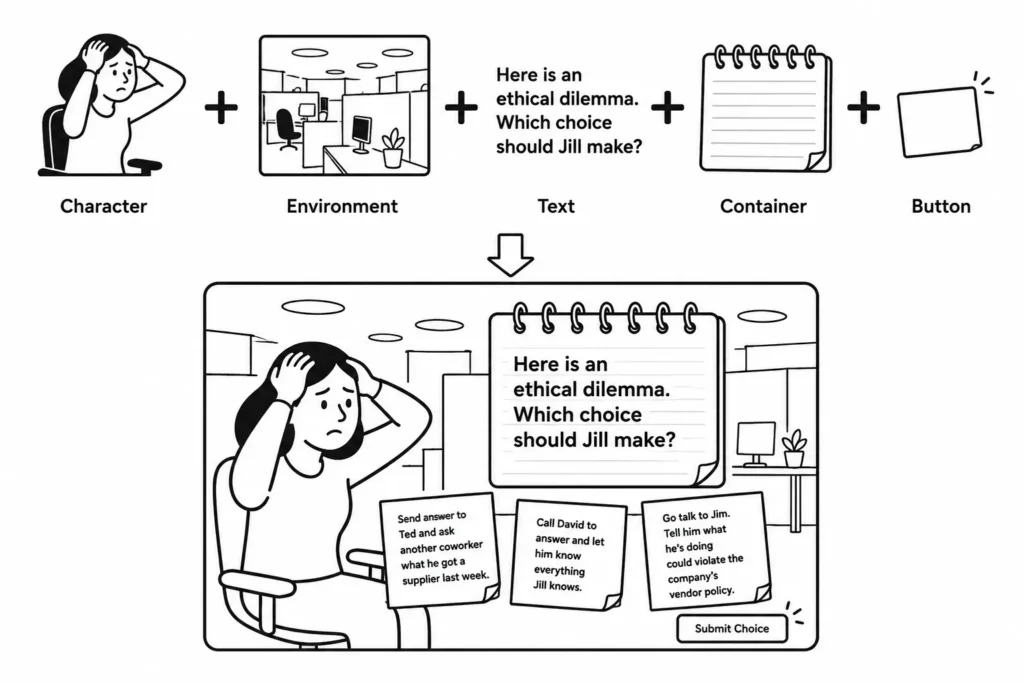
You don’t need a formal instructional design background to use a predefined structure. Basic models, like a simple intro, objectives, content, practice, and summary flow, give you a repeatable starting point. You fill in the content; the structure is already figured out.
And if you are a seasoned instructional designer, you can build some templated design concepts that can be applied to your courses.
The designers who get consistently good results with rapid e-learning aren’t moving faster than everyone else. They’ve set up systems so each new project starts from a better position. Take stock of your current setup. Do you have a tool you trust, assets you can grab quickly, and a course structure you can reuse? If not, that’s worth fixing before the next request comes in.