Physical Address
304 North Cardinal St.
Dorchester Center, MA 02124
Physical Address
304 North Cardinal St.
Dorchester Center, MA 02124
Helpful ideas. Squeaky value.
Helpful ideas. Squeaky value.
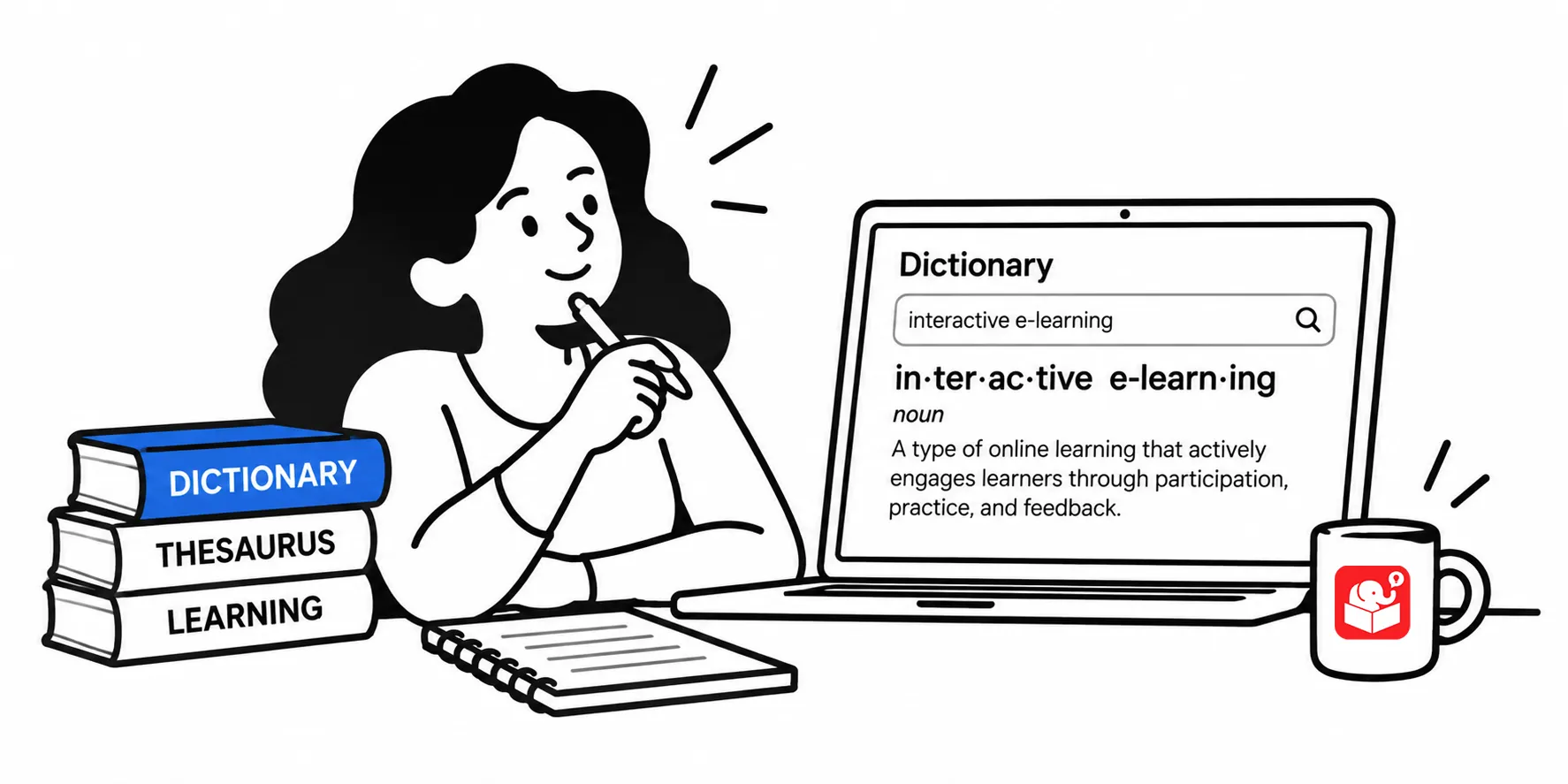
“Make it more interactive” is probably the most common piece of feedback e-learning developers get. It almost never comes with a definition. And without a definition, it’s impossible to know whether you’re solving the right problem.
Interactive can mean a lot of different things. A course can be visually dynamic with novel interactions. It can let learners explore content freely. Or it can require learners to engage with information because it’s directly relevant to their work. These are three distinct things. They require different design decisions, different development time, and they serve different learning goals.
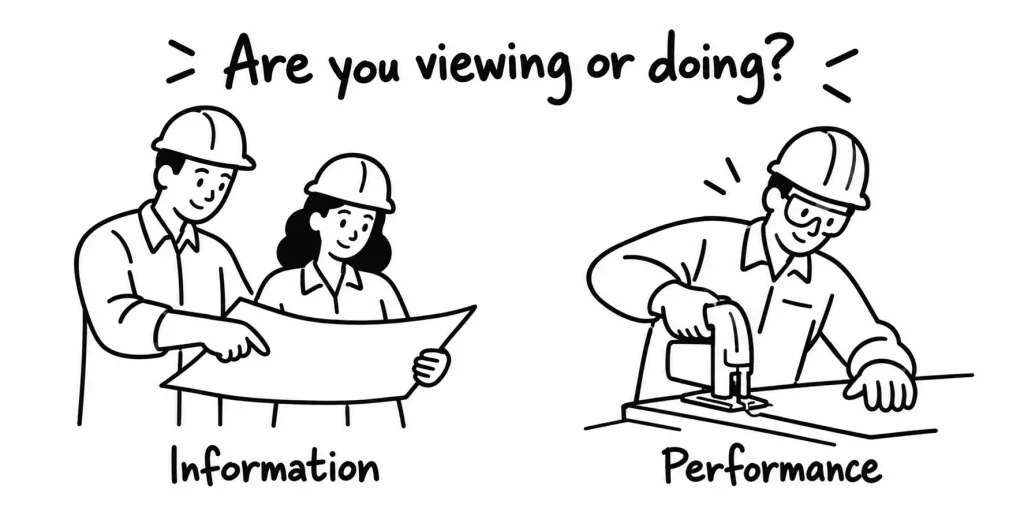
The first type of interactivity is visual and interface-based. A course that has smooth transitions, well-designed screens, custom graphics, hover states, and a polished UI feels interactive even if the underlying content is linear.
This kind of interactivity has real value. Learners are more likely to engage with content that looks and behaves like a modern application than content that looks like a slide deck someone built on a Friday afternoon. First impressions matter. A course that feels designed communicates care and credibility before a single word of content is read.
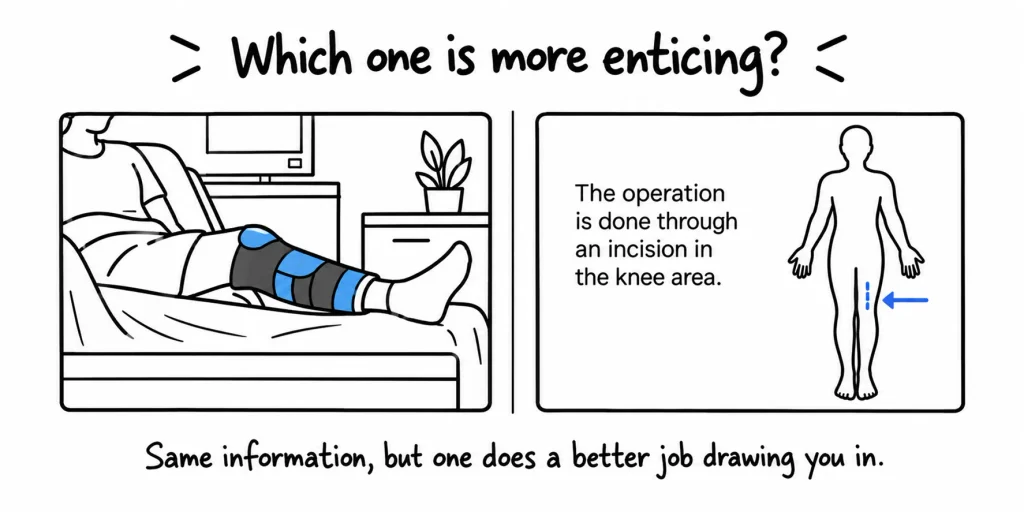
This is also the type of interactivity that doesn’t require a content redesign. If the course already covers what it needs to cover, improving the visual and interface treatment can significantly change how learners experience it.
The second type is structural. It lets learners navigate the content on their own terms. Instead of a locked linear path, learners can explore topics in any order, revisit sections they care about, and skip content they’ve already mastered.
This approach respects that learners often know more than we assume. Locking linear navigation through content that a learner has already encountered in their job isn’t respectful of their time. Giving them control over where they go and how long they spend signals that the course was built with their experience in mind.
It also changes learning outcomes. When learners have to make a navigation decision, they have to think about what they actually want to know. That’s a more active mental state than clicking Next.
The third type is the hardest to build and the most valuable: giving learners a real reason to use the information. This is where scenarios come in.
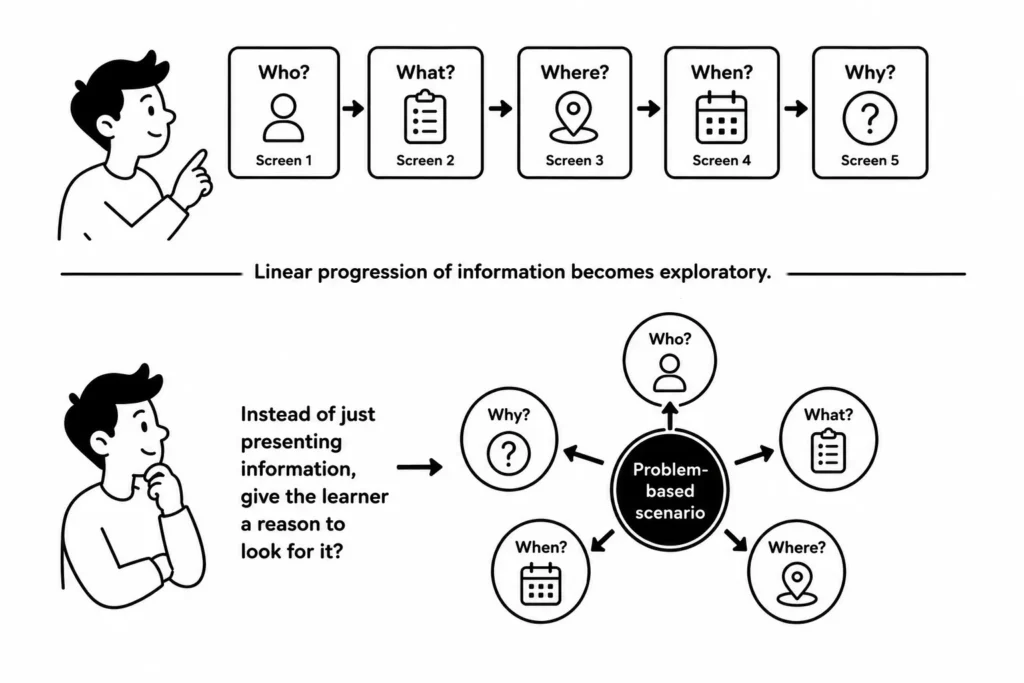
A scenario puts the learner in a situation where the information matters. They have to make a decision. There are consequences. The right answer isn’t obvious. When a learner works through a branching scenario, they’re not just reading about what to do. They’re practicing what it feels like to use that information under realistic pressure.
This is the difference between a course about customer service principles and a course where the learner has to handle an angry customer who has a legitimate complaint. Both can cover the same content. Only one of them makes the learner think.
Not every course needs the third type of interactivity. Some courses exist to share information that learners just need access to. For those, the first or second type may be exactly right.
But if a course is supposed to change what learners do on the job, not just what they know, relevance-based interactivity is the most direct path to that outcome. The constraint isn’t the tool. The constraint is creativity.
The next time someone asks for “more interactivity,” ask what they mean. Then use that conversation to identify which of these three approaches actually fits the learning goal.