Physical Address
304 North Cardinal St.
Dorchester Center, MA 02124
Physical Address
304 North Cardinal St.
Dorchester Center, MA 02124
Helpful ideas. Squeaky value.
Helpful ideas. Squeaky value.
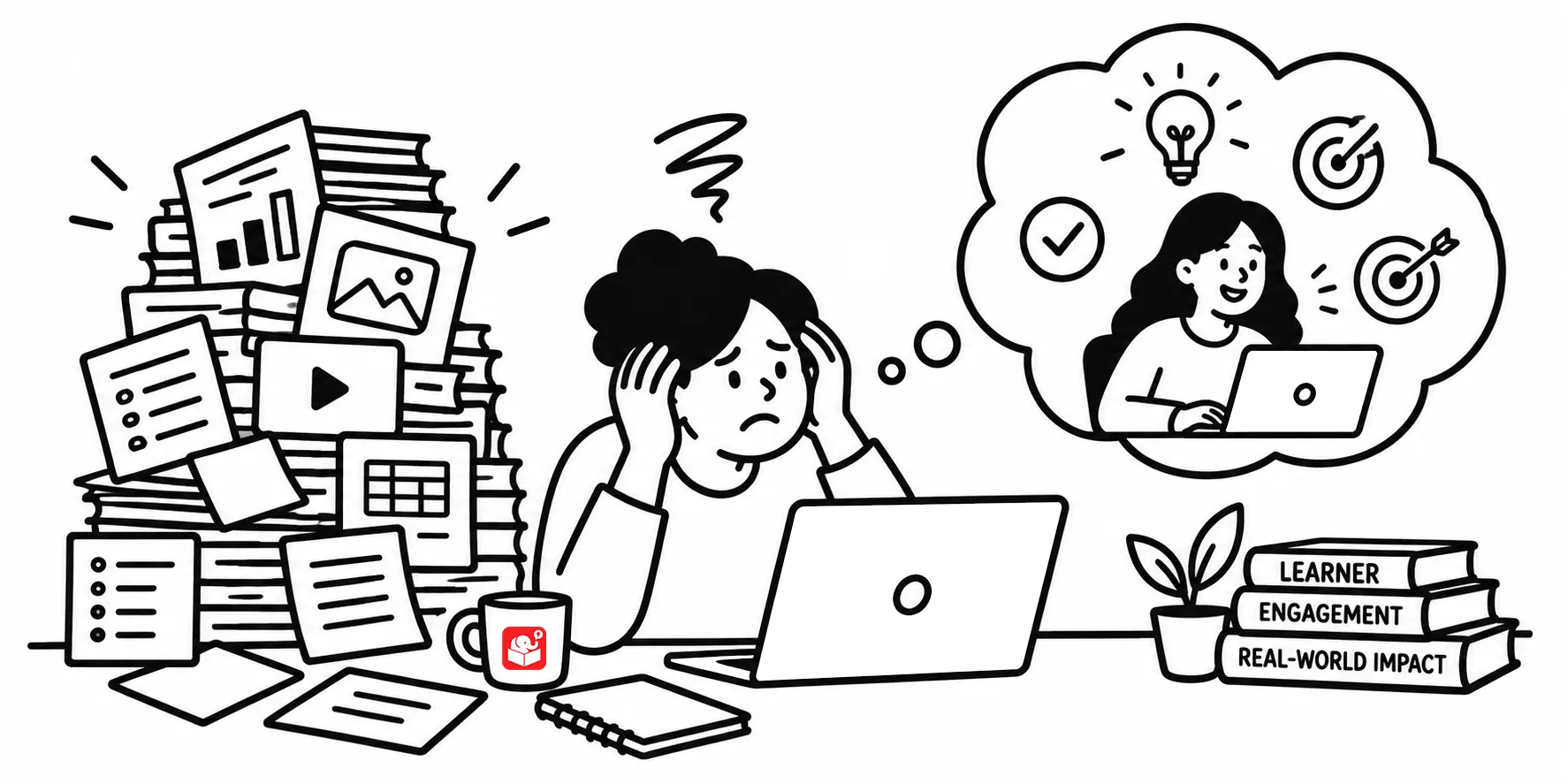
Most courses get built around content structure. Start with clear objectives, then break things down topic by topic, section by section, block by block. It’s efficient. It’s manageable. AI generation only makes this tendency stronger, since it’s really good at chopping content into tidy chunks.
But organizing information well doesn’t guarantee anyone understands it, remembers it, or uses it. That’s the gap most e-learning never closes.
A policy course that lists the five rules of expense reporting gives learners information. That’s fine. A course that shows what goes wrong when those rules get ignored, and what the gray-area decisions actually look like, gives learners meaning. The second one takes more work to build. It’s also the one that changes behavior.
Here’s a quick gut check for your own content: ask what each piece of information is asking the learner to do with it. If the honest answer is “know it,” that’s probably not enough. Design toward application instead.
That gap between information and meaning doesn’t close on its own. It closes when you stop treating the course as the whole learning event and start treating your design choices as deliberate ones.
Learners don’t come to a course as blank slates. They arrive with existing knowledge, habits, and frameworks for understanding the world. Good course design connects new content to what people already know.
It also means your course exists in a larger learning environment. Learners are picking up information from their managers, their colleagues, and their daily work. Your course isn’t the whole picture. When you treat it as if it is, you end up front-loading everything and leaving no room for the learning that happens everywhere else.
Think of your course as one input into an ongoing process rather than a standalone event.
Every element in a course sends a signal. The way you use color, the type of interactions you build, the way you structure feedback, all of it communicates something about what matters and what doesn’t.
Intentional design means every choice has a reason. You’re not using an interaction because it looks good. You’re using it because it reinforces something specific about how the content should be understood. The design serves as a bridge between the content and the learner’s comprehension of it.
When you can explain why you made a specific design decision, you’re building intentionally. When the answer is “it was the default” or “it looked fine,” there’s room to improve.
Take your current project and apply one of these three questions to a section that isn’t working the way you want. Ask whether you’re teaching information or meaning. Ask whether you’re treating your course as a standalone event or part of a larger process. Ask whether your design choices have defensible reasons. Any one of those questions, applied seriously, will improve what you build.