Physical Address
304 North Cardinal St.
Dorchester Center, MA 02124
Physical Address
304 North Cardinal St.
Dorchester Center, MA 02124
Helpful ideas. Squeaky value.
Helpful ideas. Squeaky value.
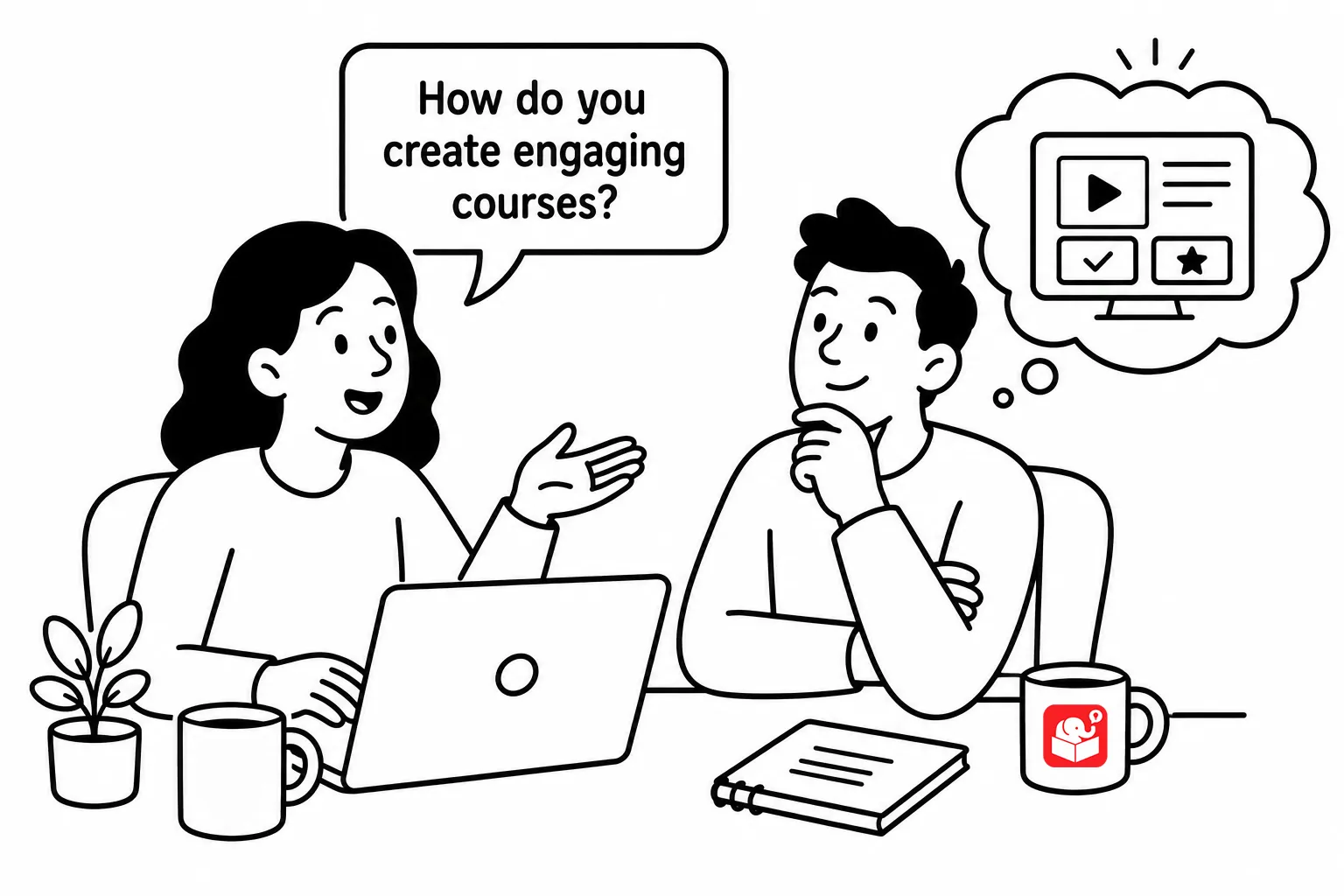
A learner sits down to take your course. They want to know one thing: does this have anything to do with my actual job? If the answer is no, you’ve lost them by slide three. And the reality is that a lot of e-learning is mostly pointless to the learner.
There’s plenty of instructional design theory to read. But one idea shows up at the core of every effective course: the content has to mean something to the person taking it.
A lot of compliance and annual training misses this. The goal isn’t really learning. It’s tracking completion. Because the audience is broad, the content stays very generic and non-specific. It ends up being specific enough for no one.
When you do have control over the course design, start with context. Don’t lead with information. Lead with the situation. Put learners in the place where they need the content. Let them practice the actions before you explain the rules.
A traditional course structure isn’t the only option. Try framing the content around questions instead. Think of it like a FAQ page. Each question forces you to treat content as an answer rather than a lecture.
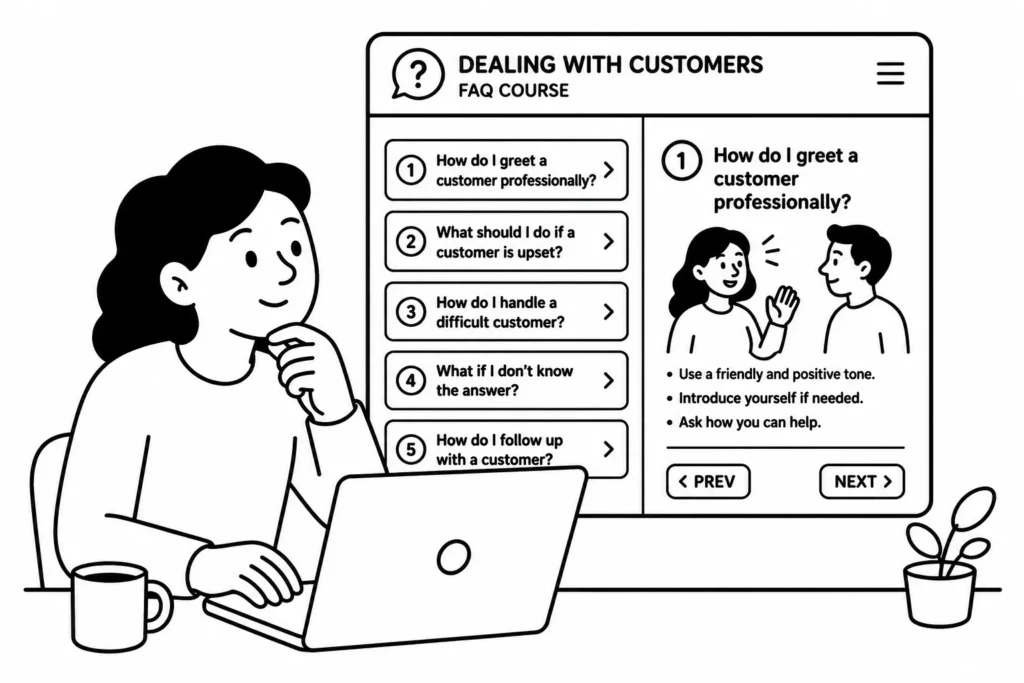
Simple scenarios work here too. You don’t need elaborate branching or complex media. A question with a few real-world choices and clear feedback is enough. The learner sees a situation, makes a call, and finds out what happens. That’s learning.
A solid e-learning course might take two hours to complete. But the work week is forty hours. Proficiency in most skills takes weeks to develop. The course is just the starting point.
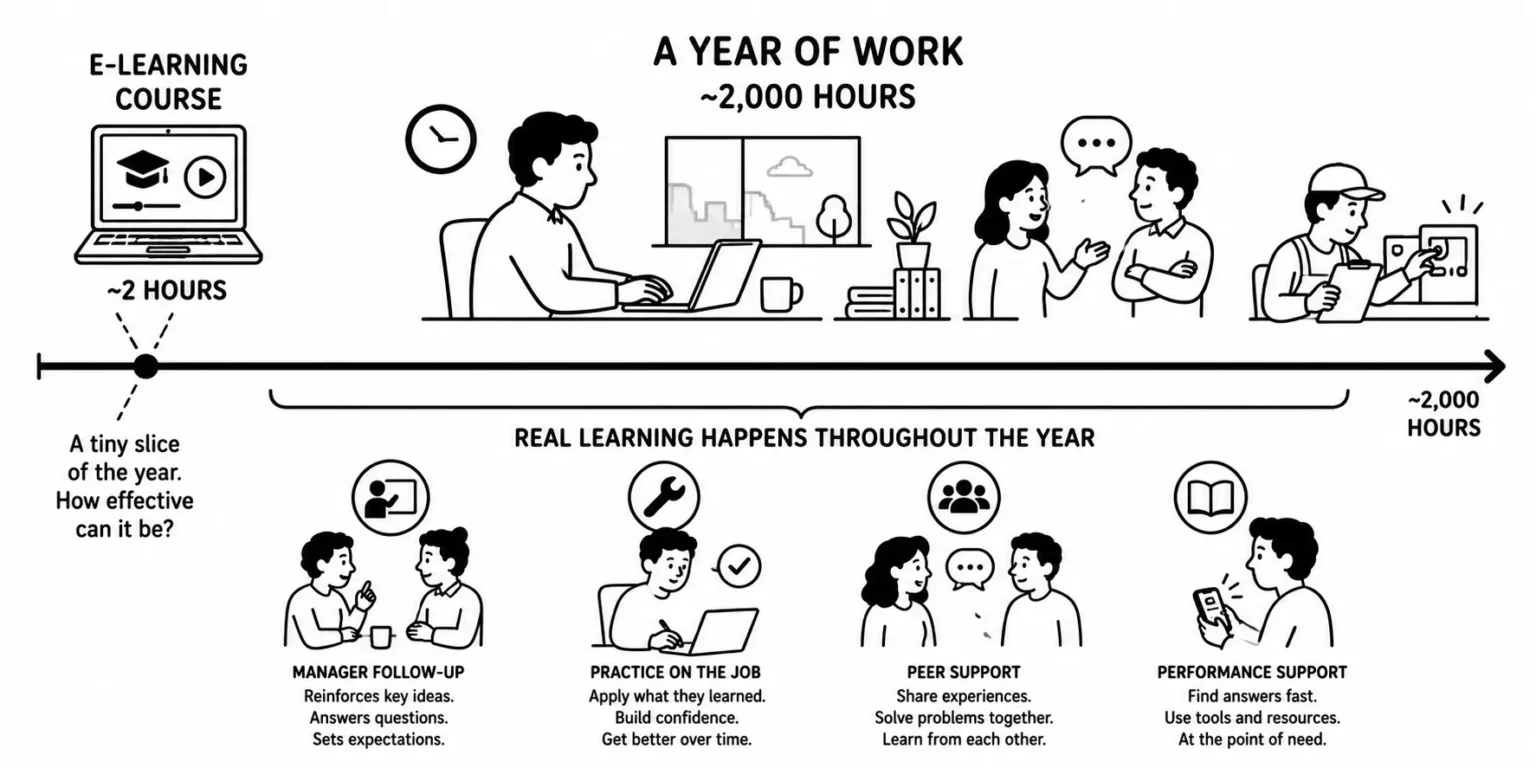
Design with that in mind. Use the online course to deliver core content consistently. Then create activities that extend the learning into real work. Learning journals and peer coaches are easy to add. A short list of tasks that require practice gives learners something to do after they close the browser.
The course is a means to an end. The goal isn’t to complete a course. The goal is that the course leads to better decisions and real results on the job.
Plan your next course by identifying the situations where learners will need to apply the content. Design around those first. Then think about what happens after the course ends. The most effective training doesn’t stop at the last screen. It sets learners up to keep growing through the work they do every day.