Physical Address
304 North Cardinal St.
Dorchester Center, MA 02124
Physical Address
304 North Cardinal St.
Dorchester Center, MA 02124
Helpful ideas. Squeaky value.
Helpful ideas. Squeaky value.
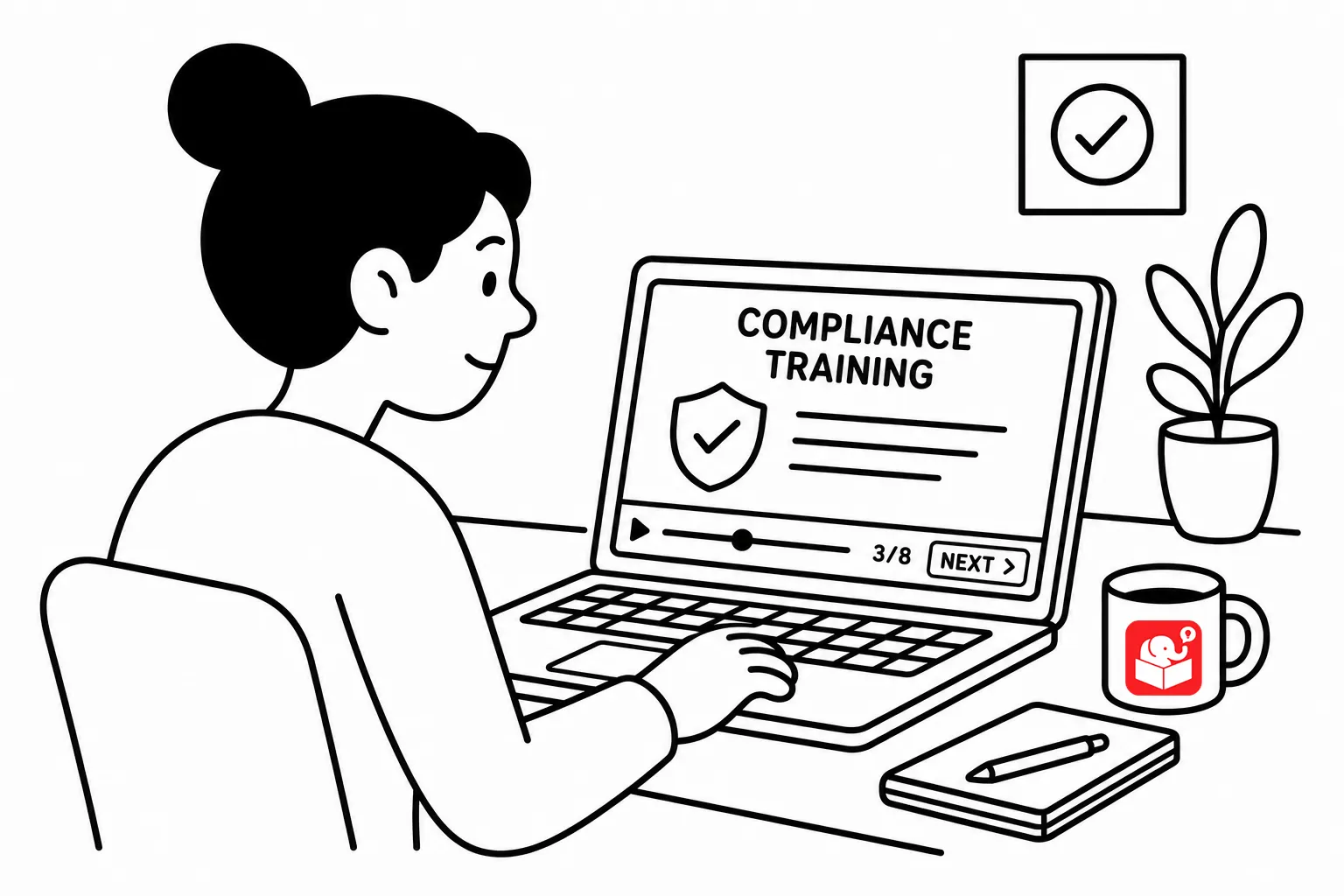
I one worked with a healthcare group that was running their annual training program. All of the nurses spent the week going through the training. They weren’t new nurses. They already knew every policy. The goal wasn’t necessarily learning; it was certification that they’d reviewed the new content.
Not all compliance training serves the same purpose. Some courses exist purely to certify that people have seen the content. This is typically what most of us have to endure. Others carry real performance expectations. Getting clear on which type you’re building changes your design approach from the start.
The certification type is what most people picture when they hear “compliance training.” Think ethics courses, annual safety refreshers, or policy acknowledgments. You’re not trying to change behavior from the ground up. You’re documenting that people know the organization’s position and expectations. It doesn’t mean there isn’t a performance expectation implied in the training, surely we need to comply with policies. But the measurable outcome of the training isn’t any metric other than successful completion.
For this type, simplicity is the goal. Learners want to get through it, and that’s okay. Making certification training unnecessarily long or complex doesn’t help anyone.
Keep it tight. Cover the key content, add a simple quiz, and let people move on. Your job is to respect their time while still meeting the compliance requirement.
The more interesting challenge is compliance training with a real performance expectation. Ethics training is a good example. We don’t hire unethical people and then train them to be ethical. We do train people to recognize unethical behavior and know what to do when they see it.
That distinction matters. “Recognize unethical behavior” and “know what to do” are performance objectives. They lead to scenarios, decision points, and assessments that go beyond a multiple-choice quiz at the end.
I worked at a company where in our ethics training, we covered dealing with bribes. Sitting in my cubicle no one ever bribed me. I had no performance expectation. However, we did have international sales teams that did run into bribery. Their training did have performance expectations.
Scenarios that mirror real situations give learners practice before they face the real thing. Spot the performance angle, and you have something worth designing around.
The two compliance types aren’t better or worse than each other. They just serve different purposes. Get clear on which type you’re building before you start designing. When learners practice making decisions in realistic contexts, they’re better prepared to handle those situations on the job. What’s the biggest challenge you face when designing compliance training?