Physical Address
304 North Cardinal St.
Dorchester Center, MA 02124
Physical Address
304 North Cardinal St.
Dorchester Center, MA 02124
Helpful ideas. Squeaky value.
Helpful ideas. Squeaky value.
How often have you gotten an email or sat in a kickoff meeting where the client says, “We need a new course”? They haven’t even told you what they’re trying to accomplish yet.
This happens all the time. If there’s a problem, then often the default solution is “we need training…” Training is penciled in as the answer, whether or not it’s the right one.
Courses exist to meet objectives. They aren’t the objective themselves. They’re one solution among several possibilities; and they may not be the right solution.
If you commit to building training before you understand the client’s real goal, you’re gambling on whether it’ll work. And often it doesn’t.
Solutions are seductive because they feel tangible, and authoring tools make that worse. Need a course by Friday? No problem, you can have one by Wednesday. You’ll look like a rock star showing off a slick, interactive course. That’s a lot more exciting than a list of options on a whiteboard.
And it’s an option customers like.
Before you commit time and resources to a training program, get clear on the client’s objectives. What are they actually trying to accomplish? Not all problems are solved with training. Once you know that, you can weigh every solution available.
There’s another reason to step away from the solution. When we look at training as the first option and then start thinking about what we can build, we tend to get enamored with features and then work to get our objectives to meet the feature whether or not it adds real value. I have clients all the time who say they want a video and immediately all the planning focuses on that. Or perhaps they saw a cool interaction and they steer the focus that way.
We work in an information-driven culture, so the instinct to build a course makes sense. The logic goes like this: if people knew more, they’d perform better. So we push information at people and call it training. Because if they see the information, they’ll know it.
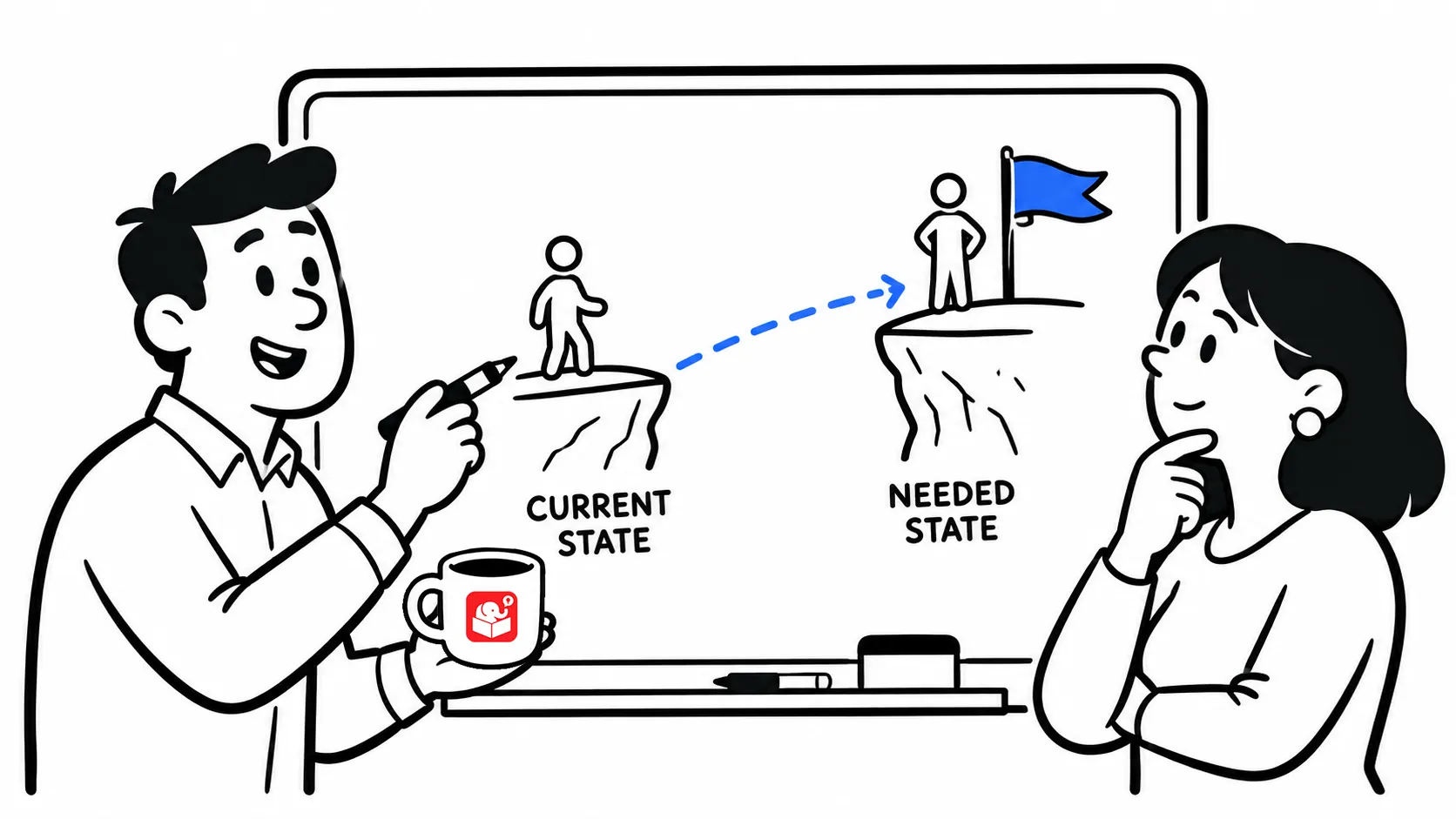
Do the “knowing more” part up front instead. What do you actually know about the objective, and why does it exist? Usually there’s a gap between where things stand now and where you want them to be.
Is the gap caused by a lack of knowledge, something training might actually fix? Or is it a resource problem? Sometimes it’s motivation, a management issue, or missing performance support. No training course will close a gap it was never built to fix.
Once you’ve named the objective, you can figure out what actually solves it. Somewhere in that process, you’ll find out if a course is part of the answer. If it’s not, you just saved your organization real time and money. If it is, you’ll build it with a clear target and a way to measure whether it worked.
Courses have a place in training. They can be the right solution to meet an objective. However, they’re just not always the right one. But, when you do decide to build a course, worry less about which features to use. Instead, focus more on what you need people to do. Then pick the features that get you there.
E-learning books don’t usually deal with this type of stuff well as they work on the assumption you are already building a course and focus on how to build the best one. But there are decisions you have to make prior to building the course. While you don’t need an MBA in business, you should be familiar with performance consulting at some level. Here are some books to consider.
Next time someone asks for a course, ask about the objective before you ask about deadlines. Bring a little performance consulting thinking into that first conversation, even informally, before anyone opens an authoring tool. What’s the last project where you started with the solution first? What would you do differently now?