Physical Address
304 North Cardinal St.
Dorchester Center, MA 02124
Physical Address
304 North Cardinal St.
Dorchester Center, MA 02124
Helpful ideas. Squeaky value.
Helpful ideas. Squeaky value.
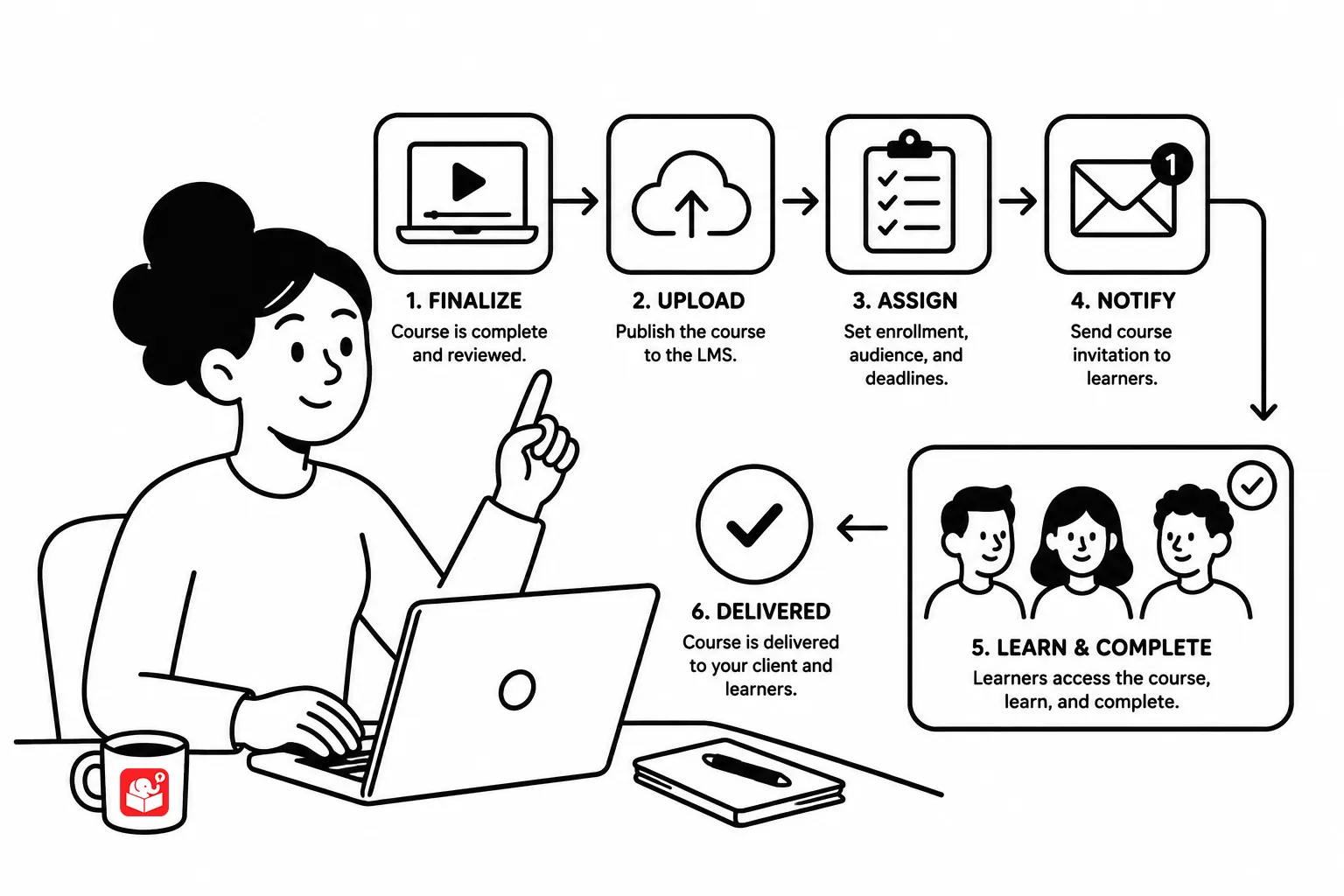
You spent weeks building the course and finally get the sign-off and now it’s uploaded. The client is happy. So that’s good. But there’s more to uploading a course.
The work that starts after you hit publish. There’s a gap between “done” and “successfully running,” and that gap is where many courses quietly fail.
After uploading and prior to launch, someone needs to know if the course is doing what it was designed to do. This doesn’t have to be complicated, but it needs to be intentional.
Work through these questions before you finalize the build:
The answers vary by course type. A compliance module might track completion. A performance-based course needs something closer to on-the-job results.
Someone has to get the course to learners. This step is often invisible to the client. And the course developer may not have access to anything related to the LMS or distribution. You almost need some sort marketing campaign to announce and deliver the course to the end-users.
Raise these questions during the build phase, not after:
Getting answers before handoff prevents scrambles after.
Courses go stale. Policies change, processes shift, products update. A course with no owner and no maintenance schedule will eventually fall apart.
Build in a maintenance agreement from the start. Decide who owns the content and set a routine review schedule. Make sure there’s a clear process for flagging needed updates. These conversations are much easier before a course ships than after.
The best-built course can still fail if no one plans for what happens after launch. As L&D teams grow more sophisticated, post-launch operations and measurement are becoming as important as the development work itself. Build launch planning in from the start, and treat effectiveness measurement as a deliverable, not an optional extra.