Physical Address
304 North Cardinal St.
Dorchester Center, MA 02124
Physical Address
304 North Cardinal St.
Dorchester Center, MA 02124
Helpful ideas. Squeaky value.
Helpful ideas. Squeaky value.
A few years back, I got a question that sounded simple: should I add background music to my e-learning course? My answer was the same one you’d give if someone asked whether to add a blue square. Depends on what it’s doing there.
There’s a version of this question that actually matters: does the audio serve the learning, or does it just fill silence? That’s the perspective worth working from. Let’s look at both sides.
The most common mistake is adding audio to a course that’s already struggling. If the content is boring, background music doesn’t fix that. It just makes the course boring but danceable.
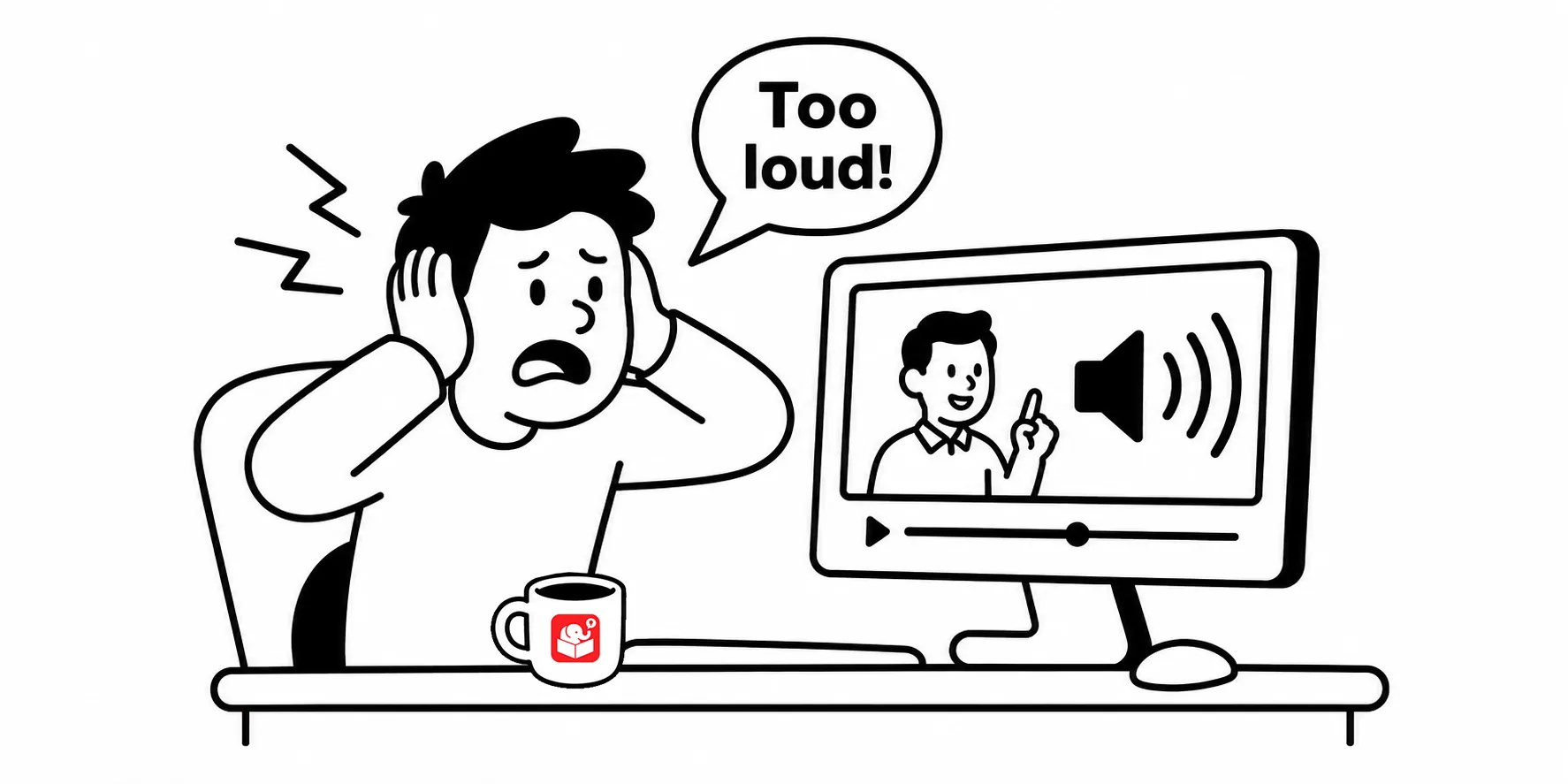
There’s also a cognitive load concern worth taking seriously. When learners are processing new or complex information, multiple audio tracks can compete with each other. Narration, ambient sound, and background music all pulling from the same limited attention is a recipe for reduced retention.
That said, cognitive load theory is a guide, not a hard rule. People are complicated, and context shapes everything. You also want to consider accessibility and if the audio track is equivelant to the decorative images we see in courses.
Ambient audio can pull a learner into a scenario in a way that visuals alone can’t. Think about a role-play set in an emergency room. Office sounds, distant announcements, background noise. That kind of audio adds texture that feels real and is probably what they encounter at work.
There’s also the emotional angle. Think about the Jaws soundtrack. By the time the shark showed up, the music had already done most of the work. You knew something was coming before you saw anything. Good background audio can do the same: set tone, signal context, prime the learner for what’s ahead.
Some research suggests certain types of music may affect how information is received. The baroque music studies from a few decades back are worth a look if you’re curious. The evidence is mixed, but the question is worth asking.
Movies, video games, and multimedia journalism all figured this out before e-learning did. None of them add audio randomly. Every sound choice is intentional, and it’s in service of the experience. That’s a useful standard to borrow.
Malcolm Gladwell wrote about a similar dynamic. When Sesame Street was being developed, scientific advisors warned the founders not to mix fantasy and reality. The founders ignored them. The show went on to be one of the most effective children’s education programs ever produced. The lesson: expert caution is worth hearing, but it doesn’t always connect to your specific situation.
Before you drop a track into your course, ask yourself a few things.
Also worth asking: what does it sound like where your learners actually work? If they’re in a quiet office, an ambient track might feel disorienting. If they’re in a noisy environment, they’re probably using headphones anyway. Bring some of that real-world sound into the course. It might do more for immersion than any stock music track.
Start by listening to one of your existing courses with fresh ears. Ask whether the audio choices, or the silence, match the context and the content. If you’re building a scenario-based course, try adding ambient audio to one scene and see how it feels. Sound is a design choice like any other. Make it on purpose.