Physical Address
304 North Cardinal St.
Dorchester Center, MA 02124
Physical Address
304 North Cardinal St.
Dorchester Center, MA 02124
Helpful ideas. Squeaky value.
Helpful ideas. Squeaky value.
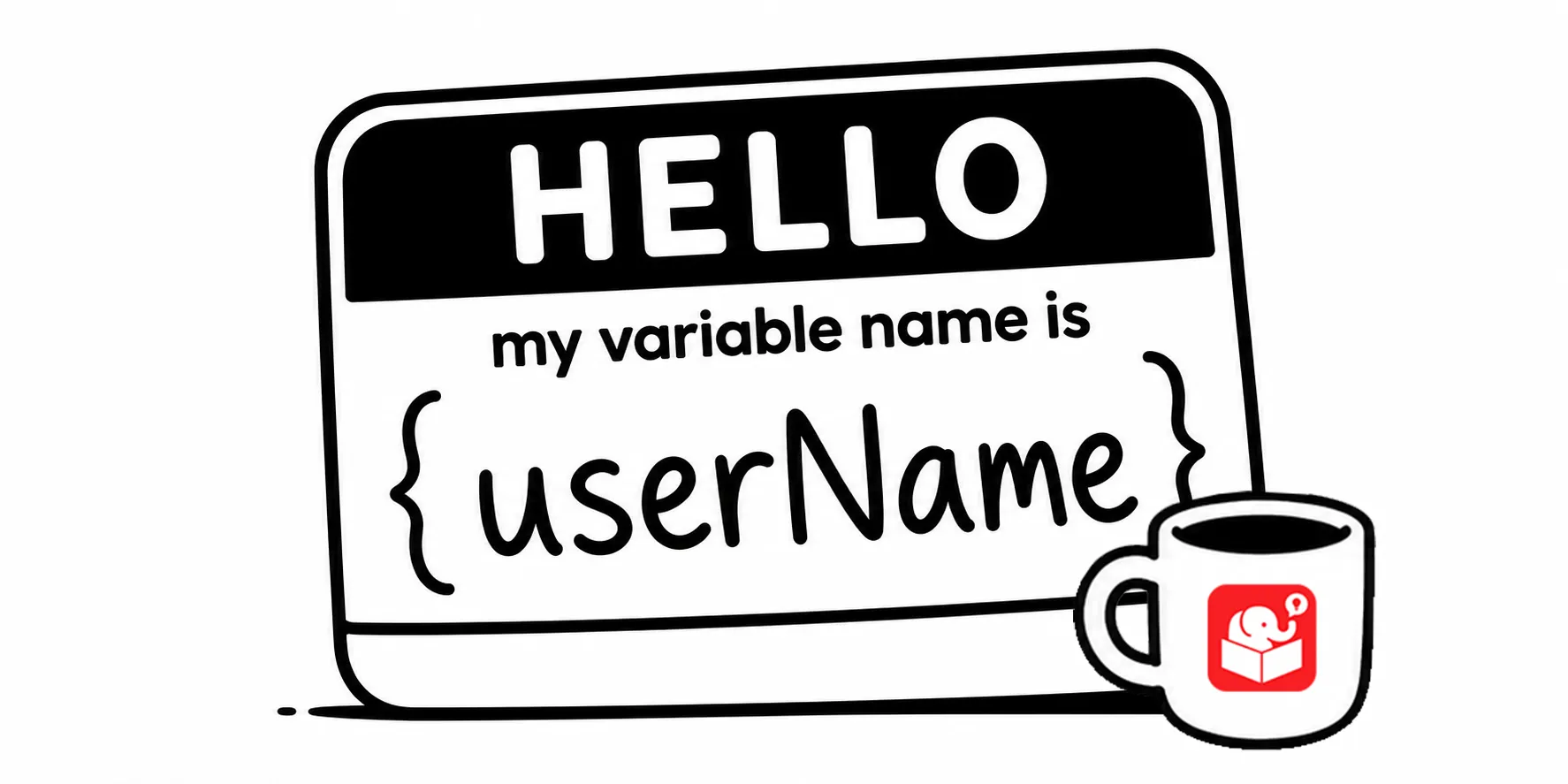
This happens quite a bit. Somebody hands you a project to update. You open the variables panel in Storyline and see a bunch of names like “Complete1” and “v2_temp_test.”
And that’s the moment you realize how much naming conventions actually matter.
Here are some simple tips to help you, especially if you’re new and haven’t worked much with variables.
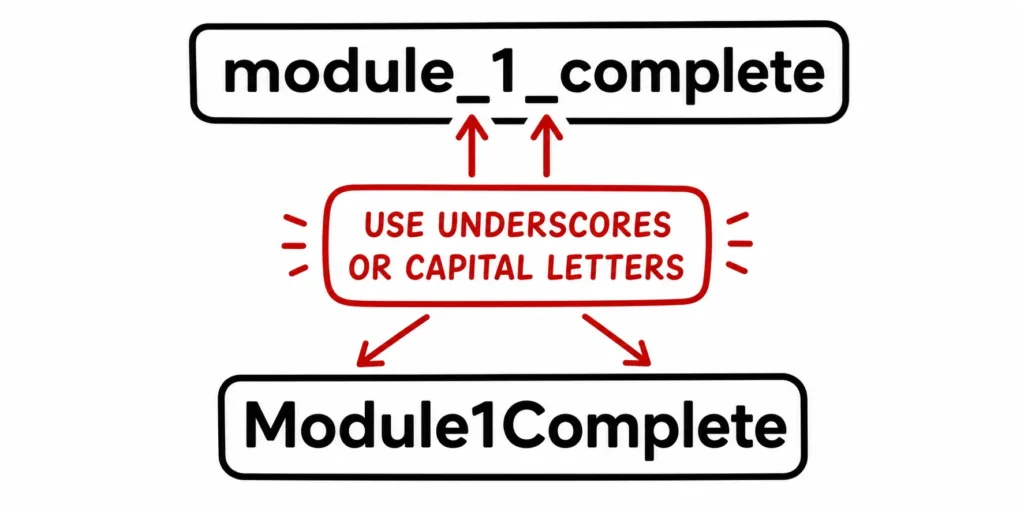
Most authoring tools, including Storyline, don’t allow spaces in variable names. So “Module 1 Complete” isn’t a valid option. You’ll need to handle the spacing another way.
Two approaches work well.
Module1_Complete) Module1Complete). I learned using the camelCase. But both are readable, so pick one and stick with it across the entire project.
A variable named Complete1 could mean anything. A variable named Module1Complete tells you exactly what it tracks. The extra characters are worth it especially when it comes time to read the triggers or troubleshoot the project.
When you’re working with a lot of variables, vague names become a real problem. You’ll spend time backtracking through triggers and layers just to figure out what a variable does.
Descriptive names cut that down.
Being descriptive doesn’t mean being long. Aim for the fewest letters that still make the purpose clear. Mod1Complete is shorter than Module1CompletedByUser and just as readable.
If you find yourself writing long variable names, ask whether every word is carrying its weight. Most of the time you can trim without losing meaning. M1Done is even shorter.
One useful approach pairs what the variable tracks with when it changes.
CountClicks, the what is counts and the when is each click. Module1Complete_Exit, the what is module completion and the when is the exit point.This system works especially well on longer projects where variables pile up fast. It also helps teammates understand the logic without asking you to explain it.
The system you choose matters less than applying it from the start. Agree on naming conventions before production begins, especially if you’re working with a team. Document the rules somewhere everyone can reference. You’ll save time during production and even more when updates come around later. What naming conventions have you found most useful on complex projects?