Physical Address
304 North Cardinal St.
Dorchester Center, MA 02124
Physical Address
304 North Cardinal St.
Dorchester Center, MA 02124
Helpful ideas. Squeaky value.
Helpful ideas. Squeaky value.
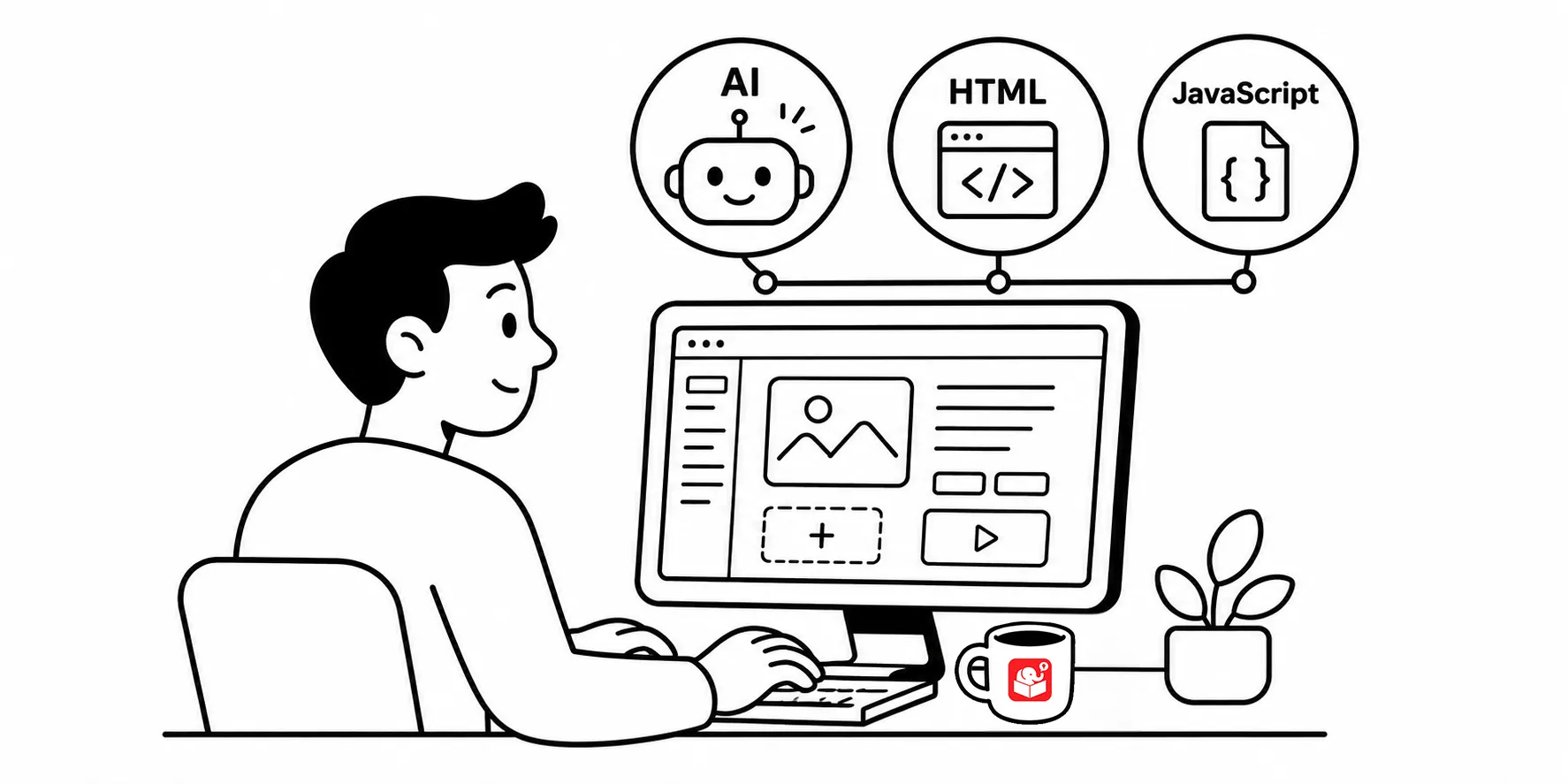
A lot has changed with e-learning over the past decade or so. When I got started, it used to require a team of people that usually included someone with some programming skills. However, as the rapid e-learning market emerged, the need for programming skills virtually disappeared. That’s great because it opened the industry to a lot of people and organizations.
The challenge is that while you don’t need to be a programmer, it is still good to know a little about some basic programming. For example, you may want to use web objects, vibe-coded content, or embedded objects. Often this involves using an iframe or some other simple web page. For the most part, it’s straightforward. But sometimes it means tweaking the embed codes provided by some services.
Because many people come to the industry without this type of experience or a background in programming, it’s a good idea to have access to some resources and tools.
AI has completely disrupted course authoring. It can create virtually all facets of your course in a lot less time and with less effort which is key if you’re a small team or the only course designer in your organization.
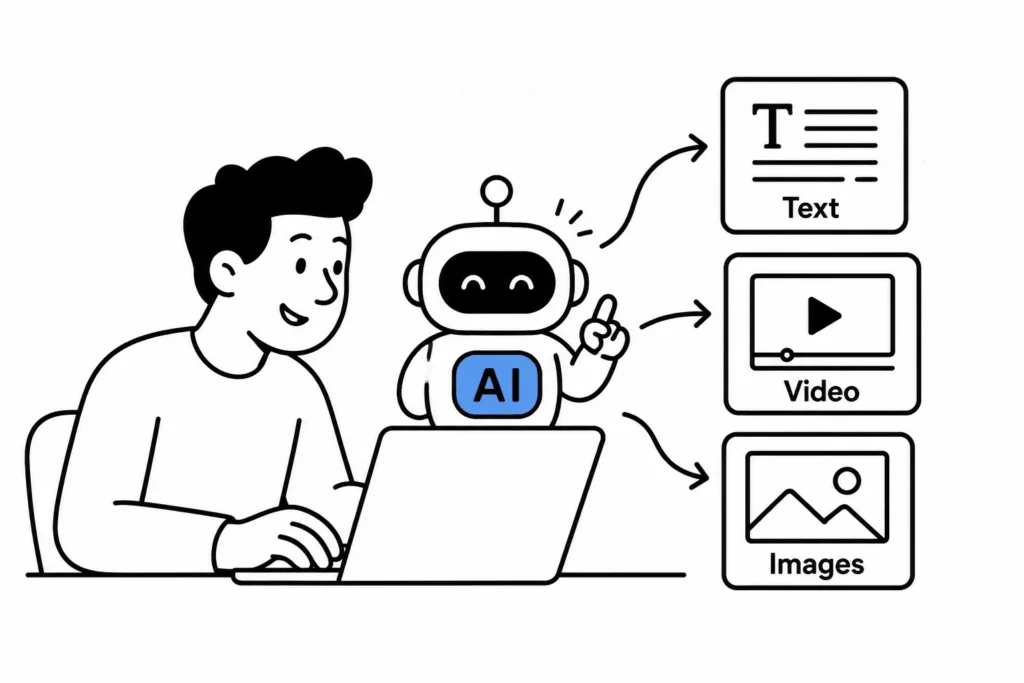
Here’s what you can get:
Most of this didn’t exist in any viable form just a couple of years ago. AI is here to stay and the evolution of what it offers is exciting and perhaps a bit scary for some.T
The prompt is only the starting point. Getting from “generated” to “usable in a course” takes a different skill than writing the prompt itself.
None of this requires becoming a developer, an illustrator, or a video editor. It requires enough working knowledge to spot when something’s wrong and enough patience to iterate until it’s right.
AI doesn’t remove the need for professional judgment. It moved the work. You used to spend your time creating the first draft. Now you spend it evaluating and fixing one. Hopefully.
I do find that a lot of people get enamored with the volume and structure of what’s created and assume it’s a good course. But that’s an entirely different post.
Learn the basics of prompting for whatever media you’re working with. Then learn just enough about the output, whether that’s image editing, script review, or reading code, to know when to accept it and when to push back. That combination is what separates a course that looks AI-generated from one that just looks good.
W3Schools is the most practical starting point for HTML basics. It has tutorials, references, and an in-browser editor where you can test code without setting anything up.
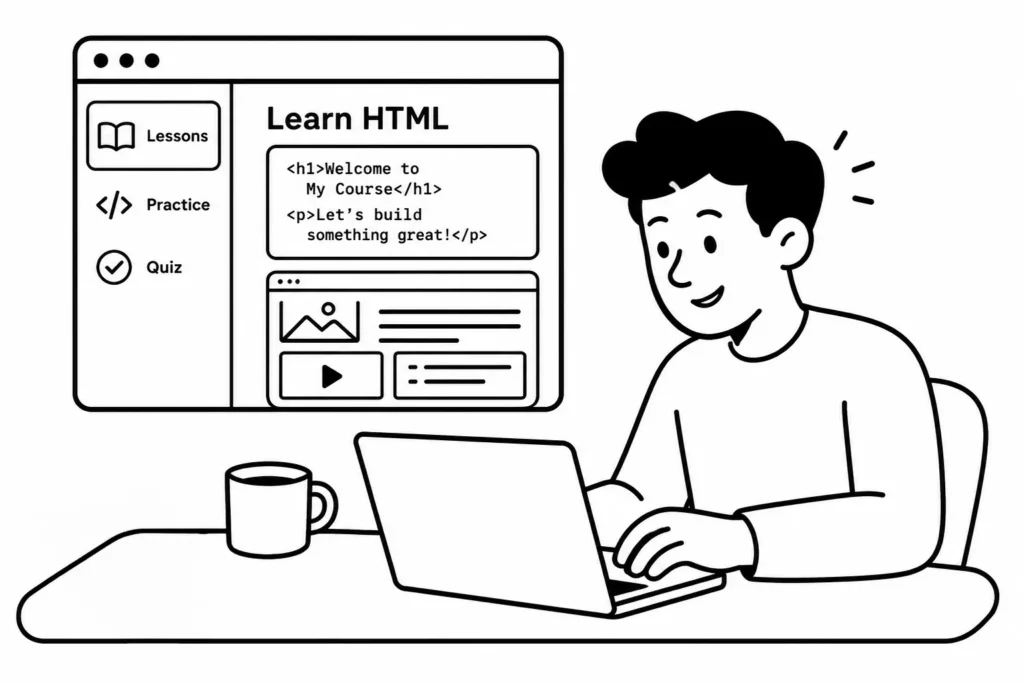
Two areas are worth focusing on early. First, learn how to build a simple local web page. In Storyline, you can link to a local HTML file that becomes part of the published output. This is useful for resource pages or any content you’d normally open in a browser.
Second, learn how iframes work. That knowledge covers the majority of embedding problems you’ll run into.
JavaScript has a reputation for complexity, and it can be. But using it in Storyline doesn’t require writing code from scratch.
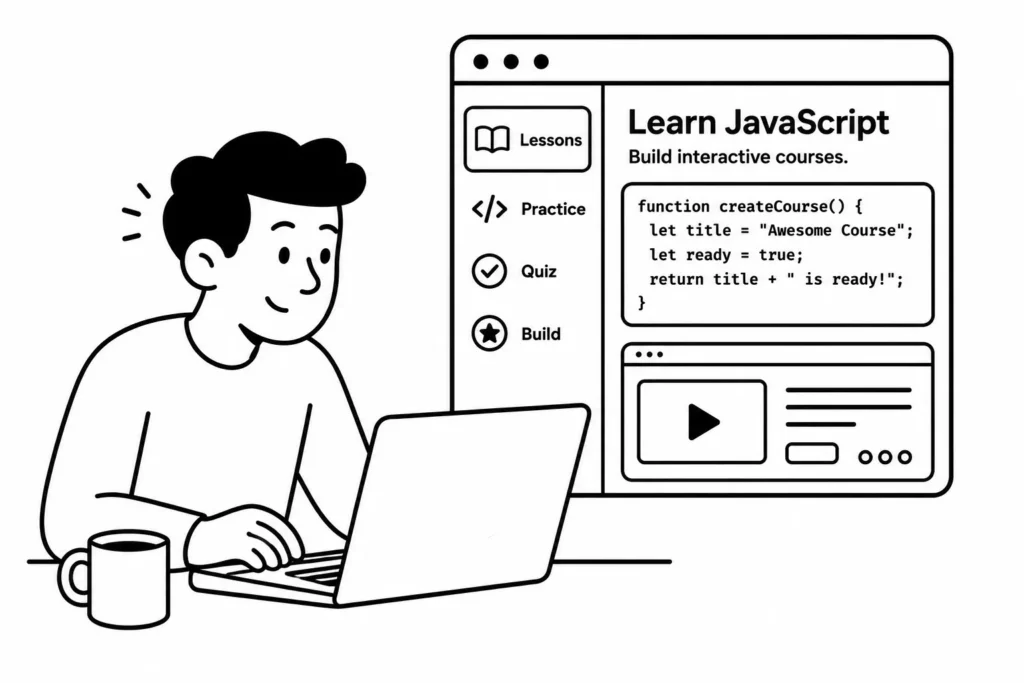
Storyline’s trigger system lets you execute JavaScript by pasting a snippet into a trigger. And the AI integration can create JavaScript triggers. Here are some cool examples people build using JavScript to augment their authoring.
Knowing enough to understand what a snippet does, and where to adjust variables, goes a long way.
Here are some resources to learn more about JavaScript. It’s not about becoming a developer. It’s about being able to adapt what other people have already built or add more to your current courses.
Here are some good resources to learn JavaScript for free:
For now, the authoring tools will always do the most important work. But every e-learning developer eventually hits a moment where a little code would solve a problem faster than any workaround.
Learn to prompt AI effectively, code HTML basics like how iframes work, and keep understand enough about JavaScript to figure things out. When that moment arrives, you’ll handle it quickly instead of stopping to ask for help. What code-related problems have you run into while building courses, and how did you solve them?