Physical Address
304 North Cardinal St.
Dorchester Center, MA 02124
Physical Address
304 North Cardinal St.
Dorchester Center, MA 02124
Helpful ideas. Squeaky value.
Helpful ideas. Squeaky value.
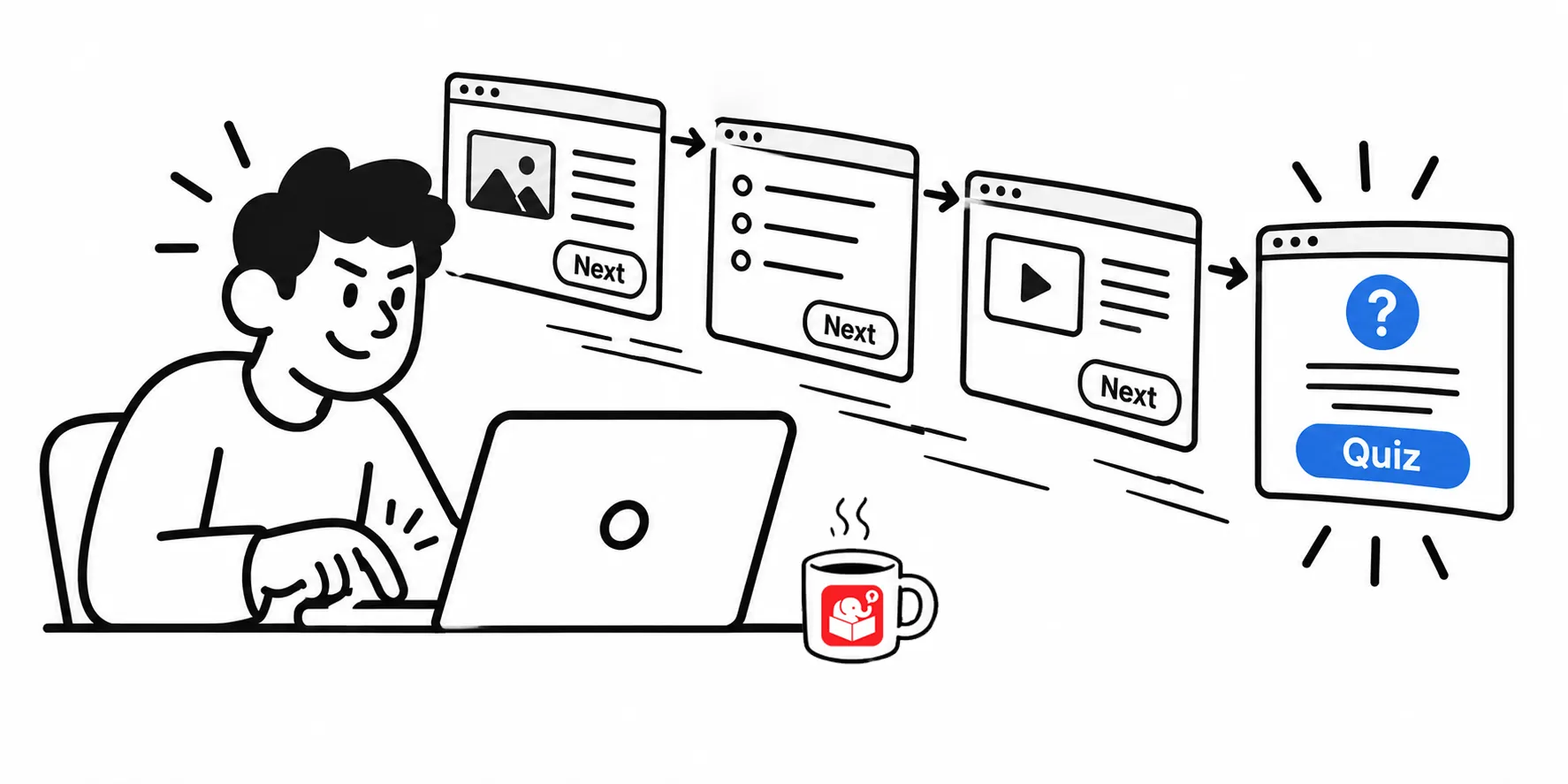
Most meetings are really just presentations in disguise. And I hate that. I sit there thinking, why didn’t they just record this and send it out? No discussion, no action items, just people watching a slide deck live. Feels like a waste of an hour.
You’ve been in these meetings too. Nobody likes them. Here’s why: the topic seems important on paper, but for most people in the room it’s all “need to know” and no “need to do.”
Now apply that same feeling to a typical e-learning course like an annual compliance training, certification refreshers, that kind of thing. The content looks valuable on the surface, but the learner experiences the same thing: heavy on “need to know,” light on “need to do.”
That’s why people blast through the course and beeline for the quiz. We try to solve it by locking navigation, which is a common response to this. But all it does is force people to wait out the slides. It doesn’t create learning.
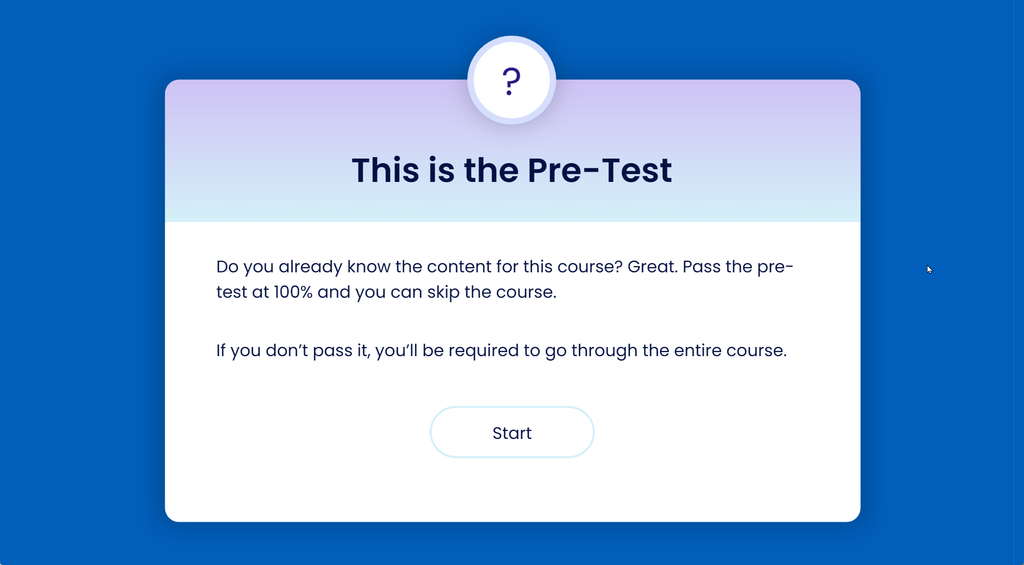
Add a pre-test and give learners a chance to prove they already know the material. If they pass, they get credit and move on. If they don’t, they go to page one of the course.
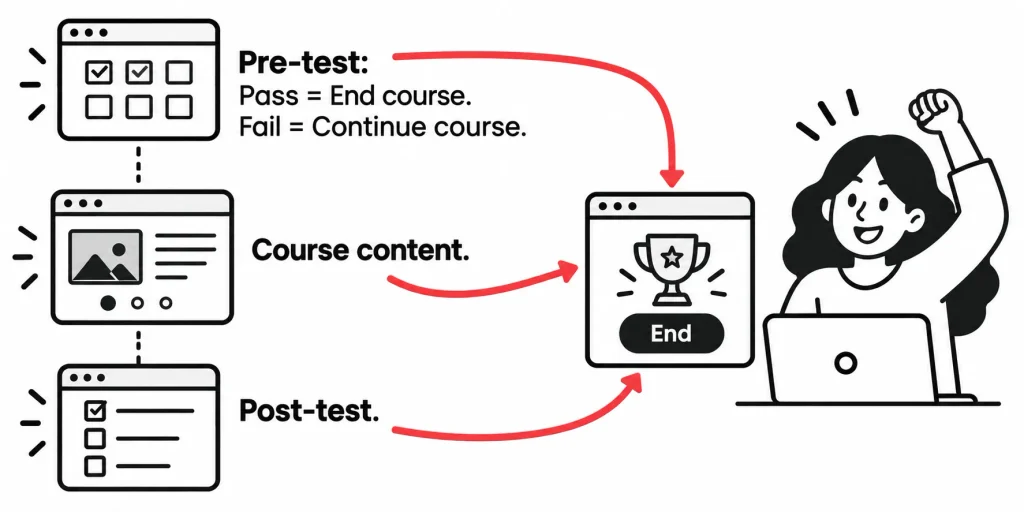
This approach respects learners who’ve done this training before or who already do the job well. And it stops you from wasting their time on content they don’t need.
Here’s an example with a free Storyline template.
Write quiz questions specific enough that learners who skipped won’t know the answers. Not trick questions. Questions tied to the actual core content.
In the screenshot below, odds are that the person isn’t familiar with RCW and all of the answers are viable, so they’re probably forced to go look up the answer to the question rather than risk missing it.
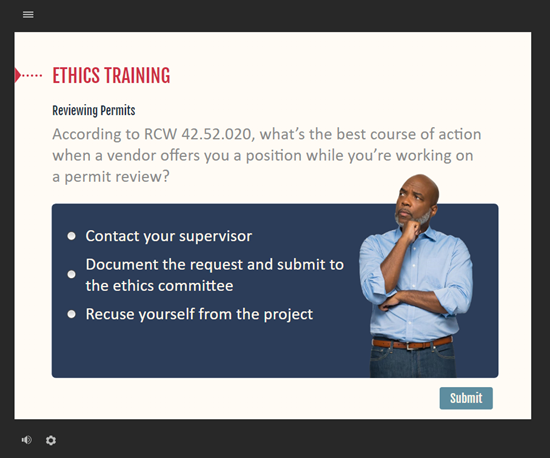
When someone hits a question they can’t answer, they’ll go looking for it. That’s when the content finally matters to them. You’ve turned skipping into a self-directed search.
Skip the content slides entirely. Start with the first question. Then deliver the core content based on how they answer.
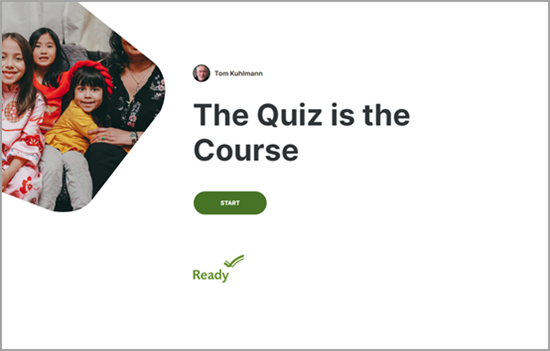
Click here to view sample quiz.
This forces you to figure out what content actually matters. You can’t fit fifty slides worth of material into a quiz-driven course. That constraint is a feature. It makes you choose, and your learners end up with something tighter and more useful.
Pick one of these approaches and try it on a course where learners are known to skip. Don’t try to redesign the whole thing at once. Start with one question format and see what changes.