Physical Address
304 North Cardinal St.
Dorchester Center, MA 02124
Physical Address
304 North Cardinal St.
Dorchester Center, MA 02124
Helpful ideas. Squeaky value.
Helpful ideas. Squeaky value.
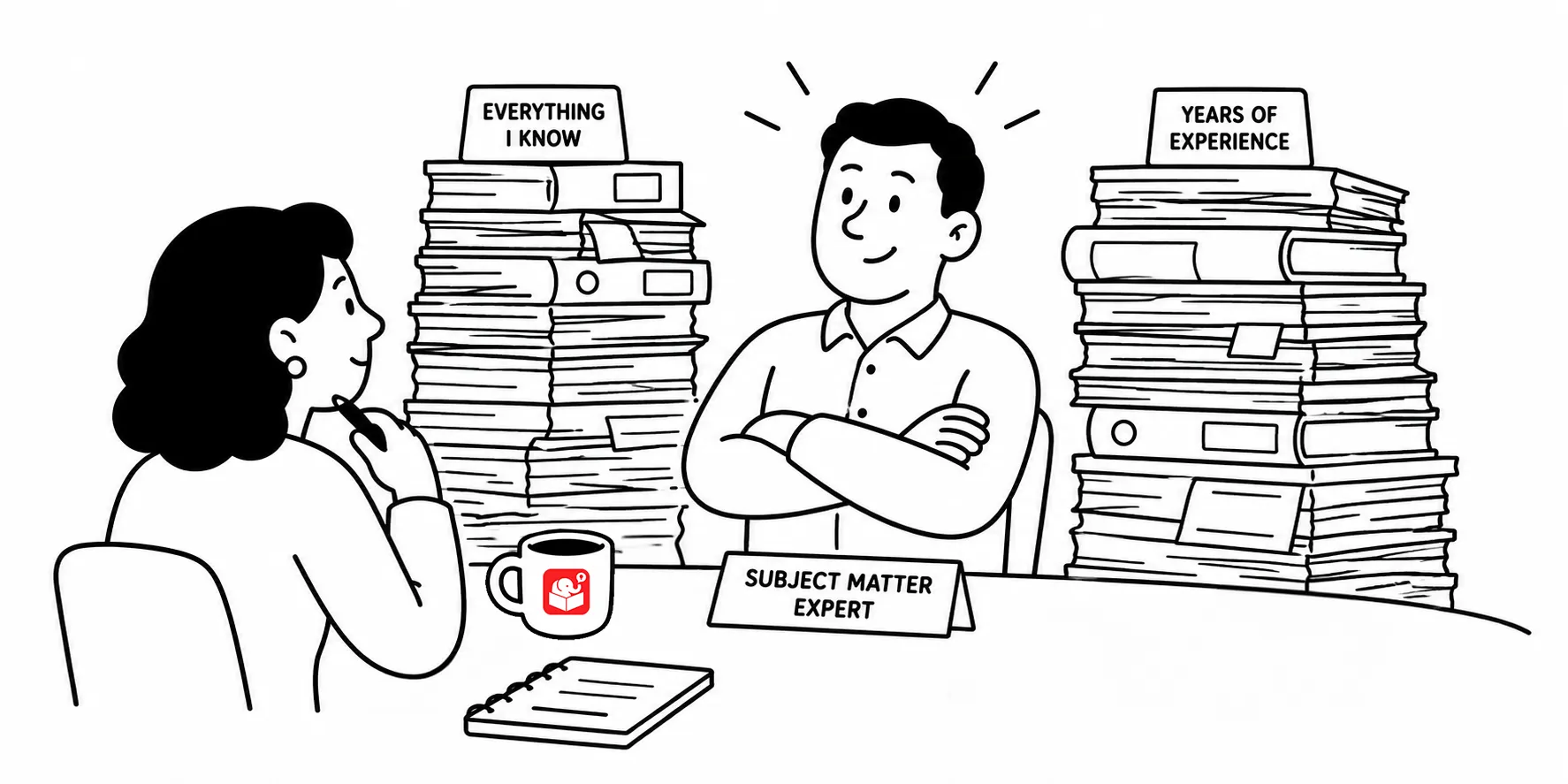
At a conference, developers were asked to name their biggest challenge in building e-learning courses. More than half said the same thing: working with subject matter experts.
Here are some things you can do to manage your relationship with them and build the best courses possible.
Your SME’s time is limited. Respect it by preparing before you ever sit down together. Collect whatever documentation already exists, research the subject, and come in with a basic understanding of the topic.
With AI this is really easy. Put all of the content and your ideas into a project and have it help you organize your thinking and focus on the right things.
This signals that you’re invested in their work, not just mining them for content. It also makes your conversations shorter and sharper because you’re not asking about things you could have looked up on your own.
Most subject matter experts don’t think like instructional designers. Many of them have done some form of training. They’ll assume training means writing down everything they know and handing it to you to put onto screens.
Before you start pulling content, spend a few minutes on a quick overview:
Keep it short. You’re not training them in instructional design. You’re giving them just enough context to help you build something useful. I like to show them some before and after examples of a content compared to course designed around activities.
Come to each session with a prepared list of questions. Again, AI is a good source for this. You can also find some templates here in the community. You can’t go wrong with the basics:
Active listening is a signal of respect. When your SME feels like you genuinely value what they’re sharing, they become allies rather than just sources. That makes every future conversation easier.
Experts sometimes forget what it was like not to know something. Their depth of knowledge is valuable, but it can also make the course more complicated or too heavy for new learners. Your job is to keep bringing the focus back to what a novice actually requires and what they need to know to meet objectives, which isn’t the same as all of the other stuff that is good to know.
One technique: ask your SME what they’d put on three screens if that’s all they had. It forces prioritization and usually surfaces the most important content quickly. Bringing in a recent hire or new learner to one session can also help balance the expert’s perspective with a beginner’s questions.
People like to feel valued. Something I learned years ago was to give them kudos. But if you give kudos in the forest and no one is there to hear them, did you give kudos?
Write a short thank-you note after each session. When the project allows, copy their manager and mention the specific ways their contribution helped the course. That always goes over very well.
It’s a small habit with real returns. SMEs who feel appreciated are easier to work with the next time, and the word tends to spread.
Pick one habit to add to your next project: a pre-meeting research routine, a simple content template, or a practice of following up with thank-you notes. The SME relationship improves when you treat it like any other professional relationship. The better your reputation with them, the easier your projects get.