
The blog
Training and e-learning tips, real examples, free resources, and the occasional tip about everything else.
-
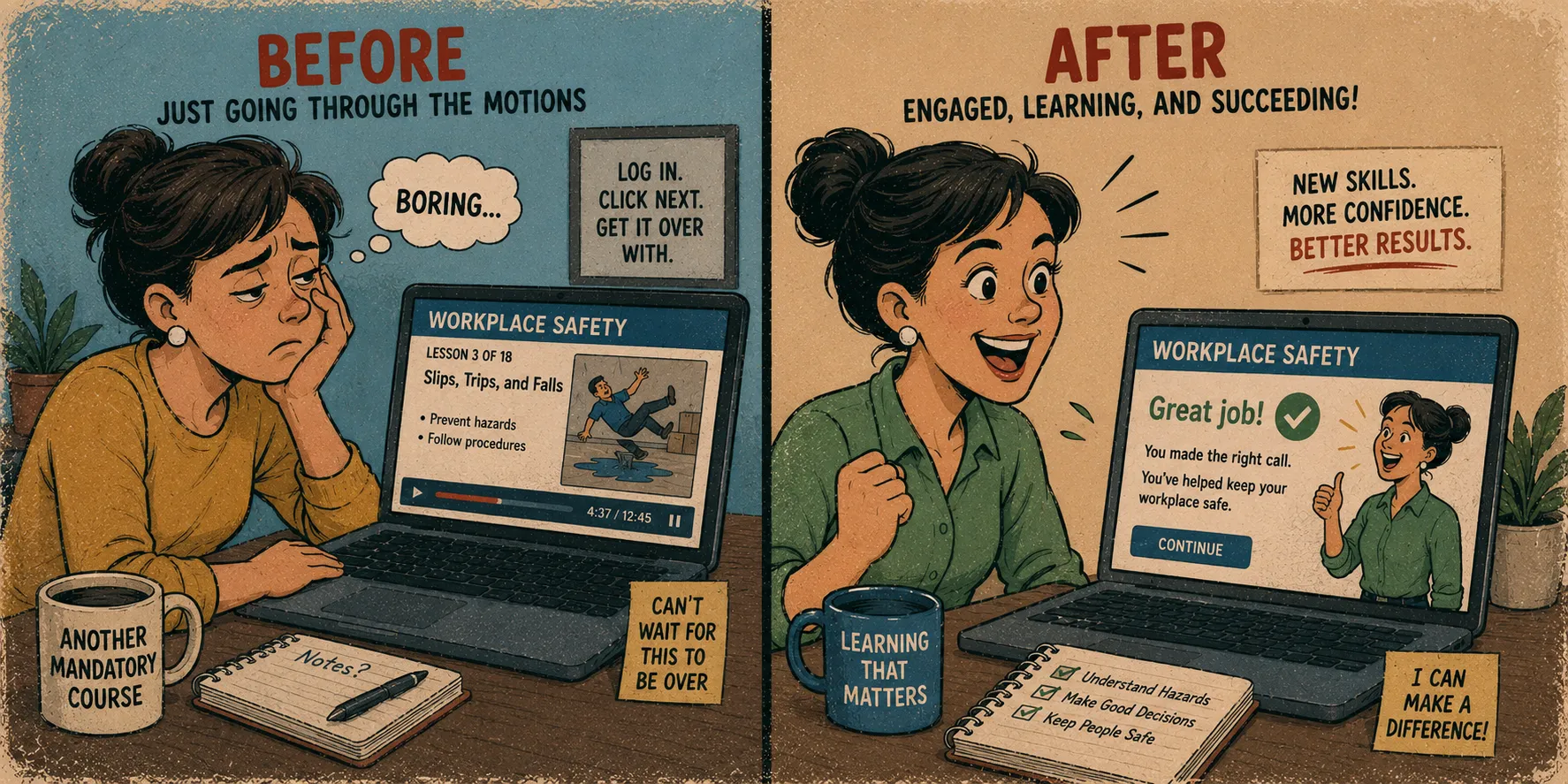
How to Build E-Learning Courses People Actually Want to Complete
You can’t force anyone to learn. But you can design a course that gives learners a real reason to try. Here’s how…
-
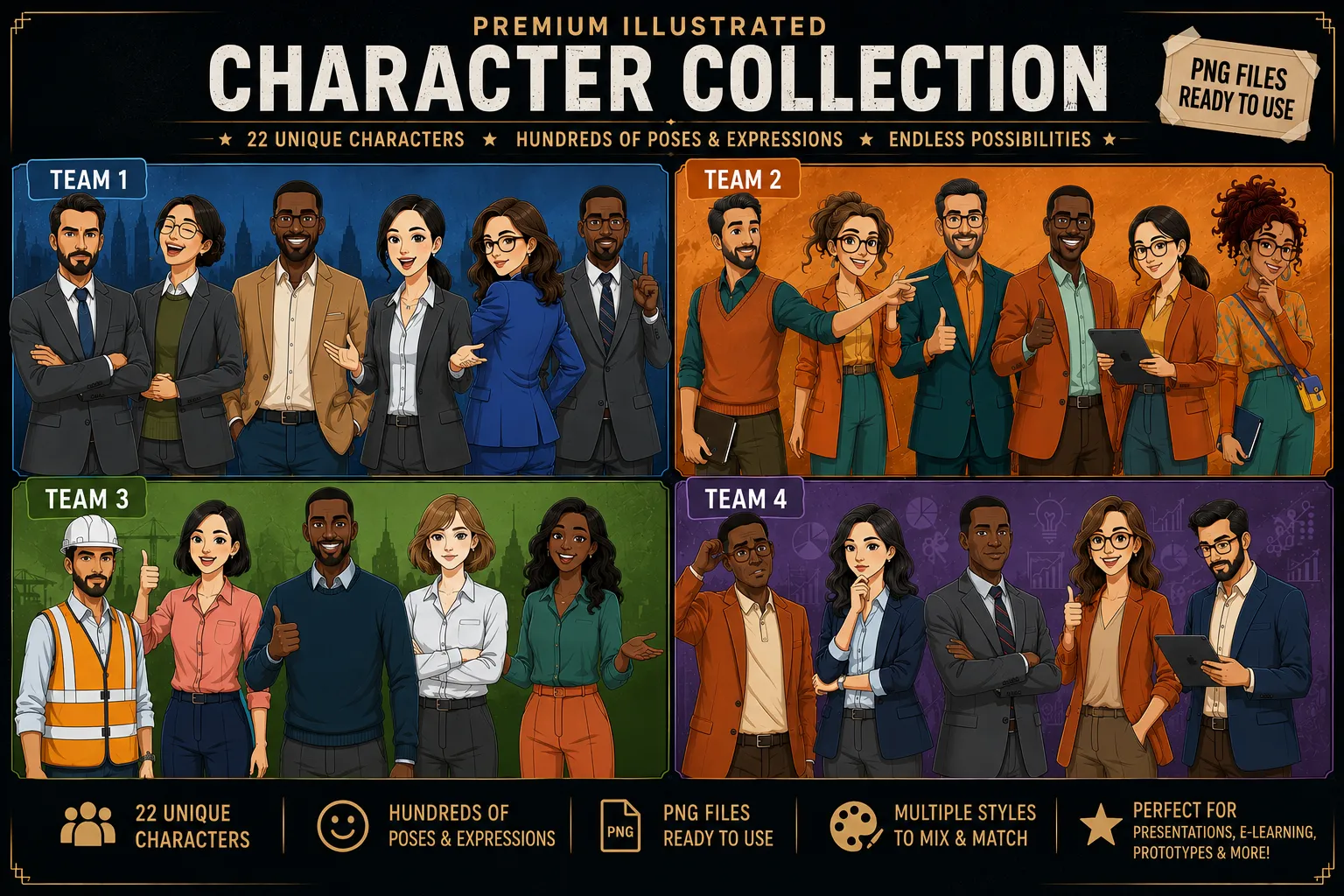
22 Free Illustrated Characters
22 free illustrated characters with over 400 poses and expressions. Four distinct teams of matching characters.
-
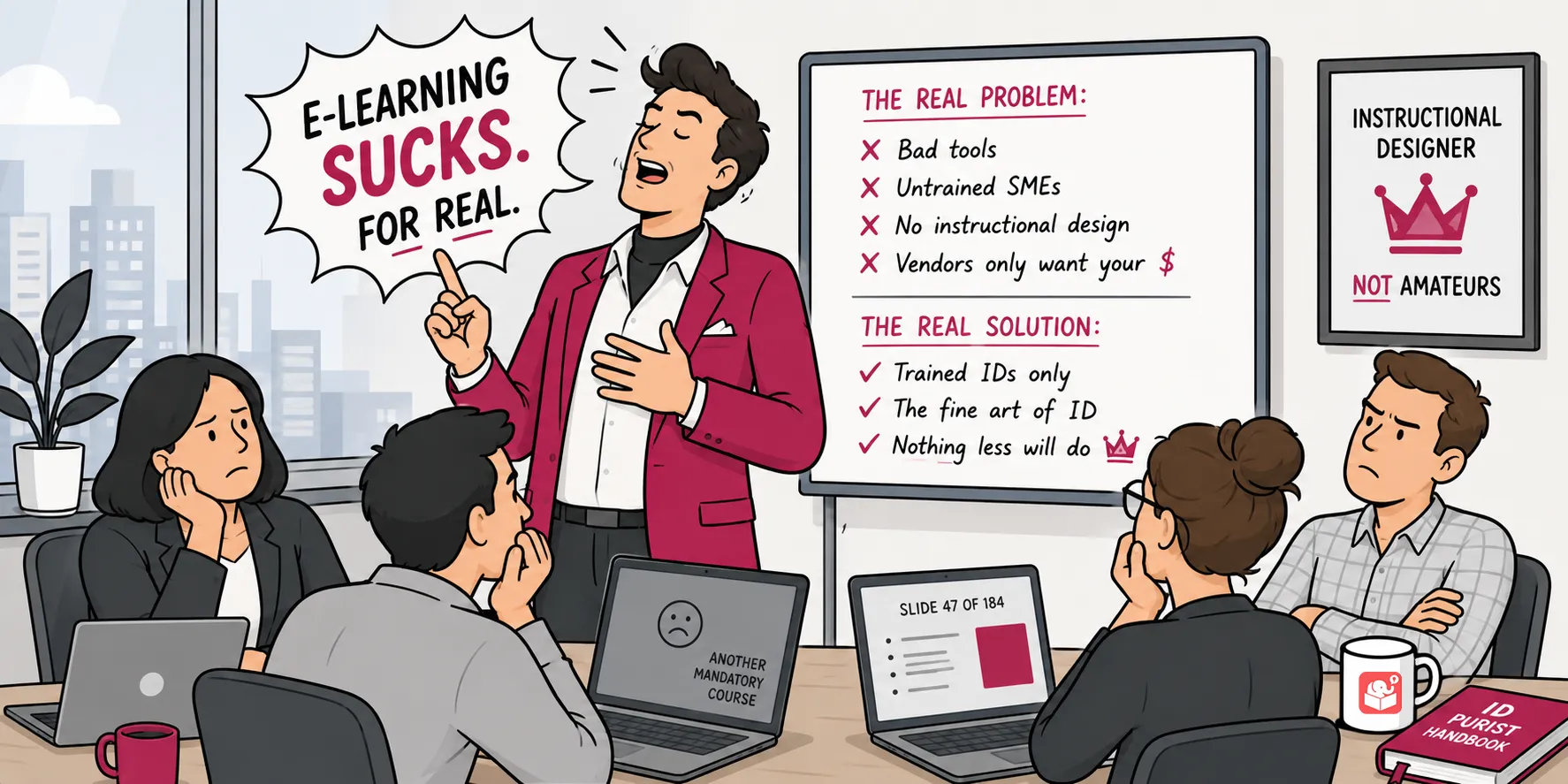
The Real Reason E-Learning Is So Bad
You’ve taken the course. You know the one. Three hours, a lot of slides, a quiz at the end, and nothing that…
-
What to Figure Out Before You Build Any Course
Most e-learning projects go sideways before the first slide is built. The problem usually isn’t the design. It’s what didn’t get sorted…
-
This Is Funny Because E-Learning’s Broken
Leslie Robinson’s comedy video about mandatory training went viral for a reason. The comment section turned into a catalog of every broken…
-
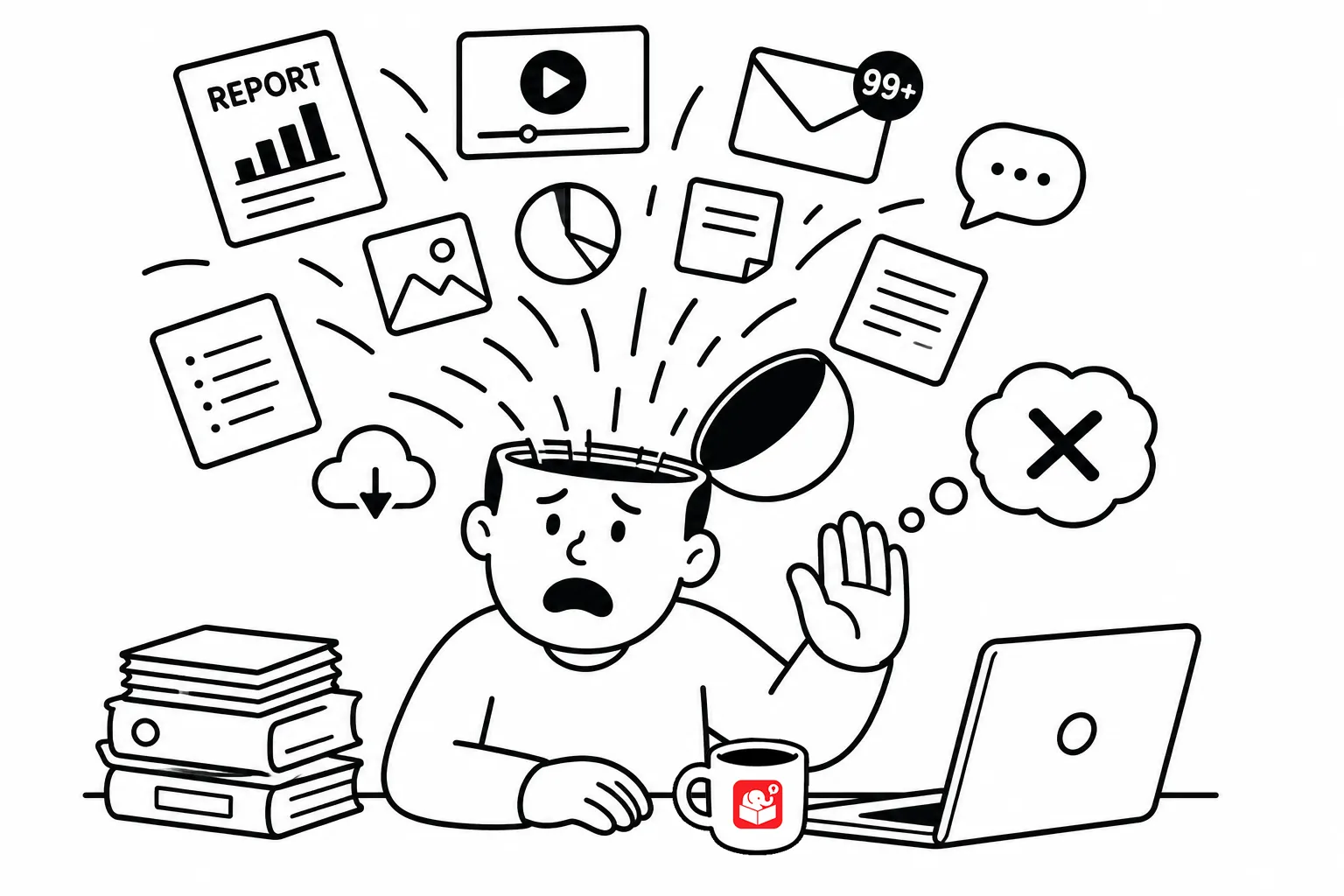
What Every E-Learning Designer Needs to Know About Cognitive Load
Your learners’ brains have a built-in limit on how much they can process at once. When you design without that in mind,…
-
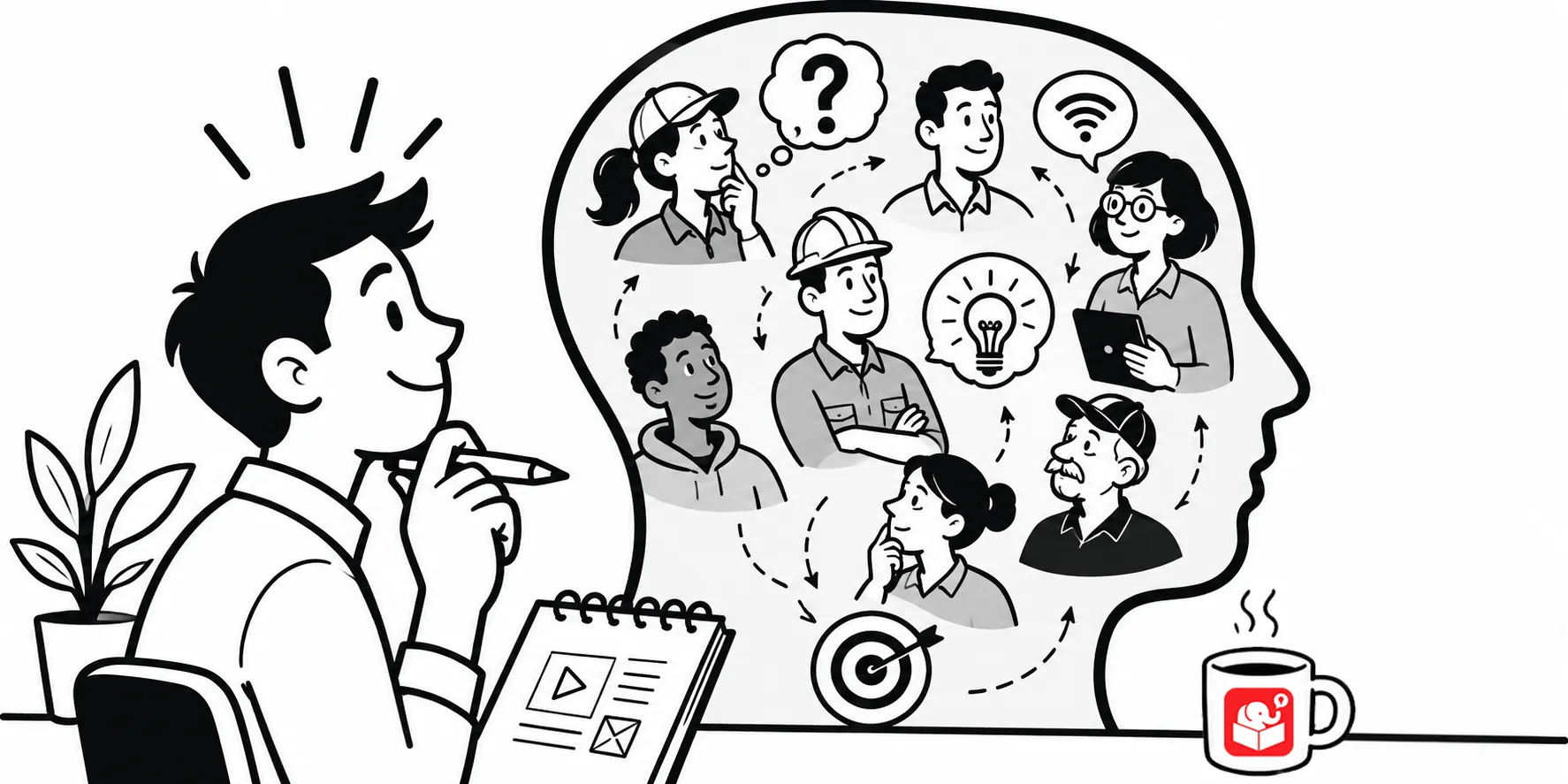
8 Things to Know About Your Learners Before You Build a Course
You can build a technically solid course and still miss the mark completely. It happens when you design based on what you…
-
Stop Building Courses Nobody Needs
Every training request that comes in costs time and budget to fulfill. But not all of them actually need a course. Three…
-
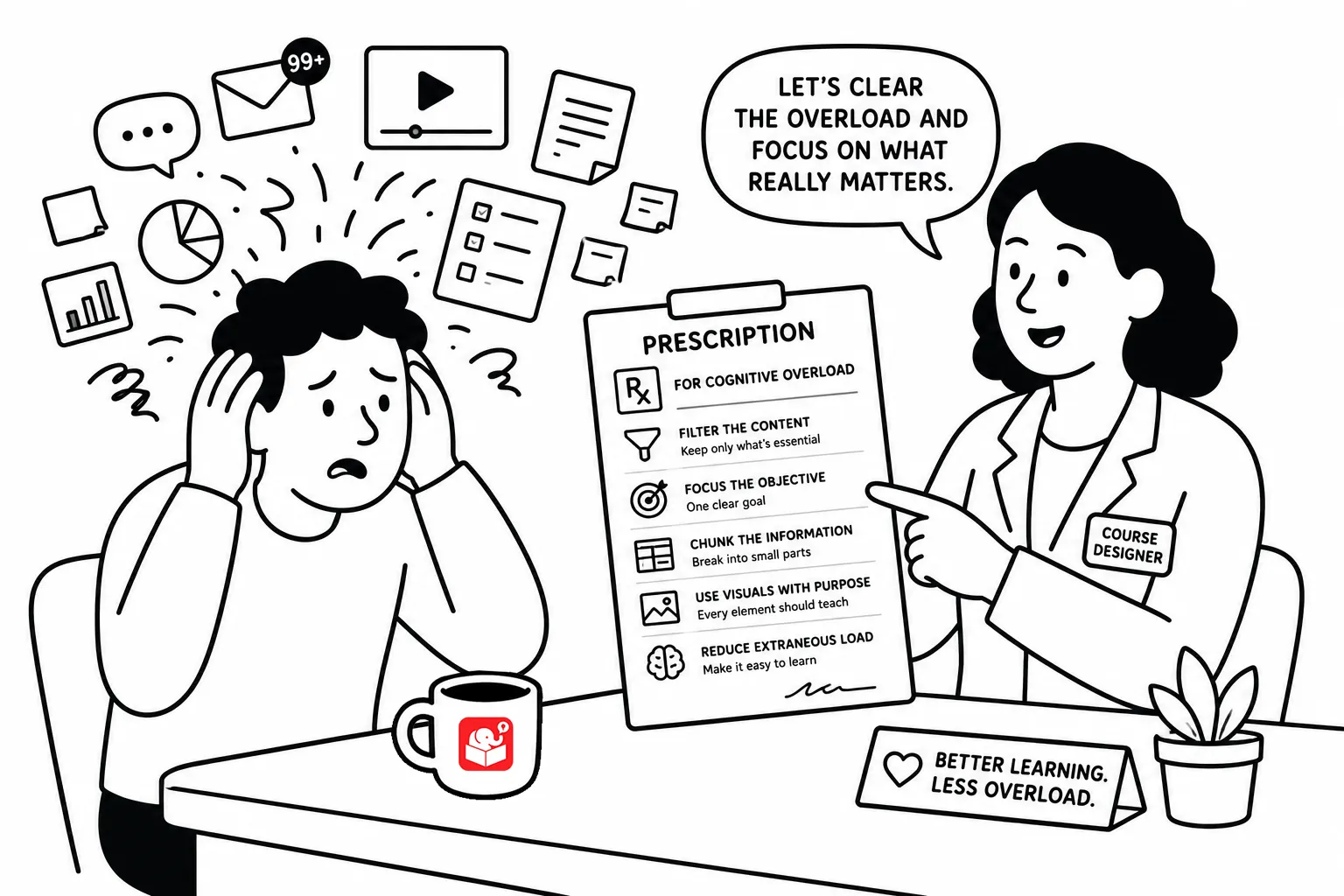
Simple Ways to Reduce Cognitive Load in Your E-Learning Courses
Good course design isn’t about adding more. It’s about removing the stuff that gets in the way of learning. Here are a…
-
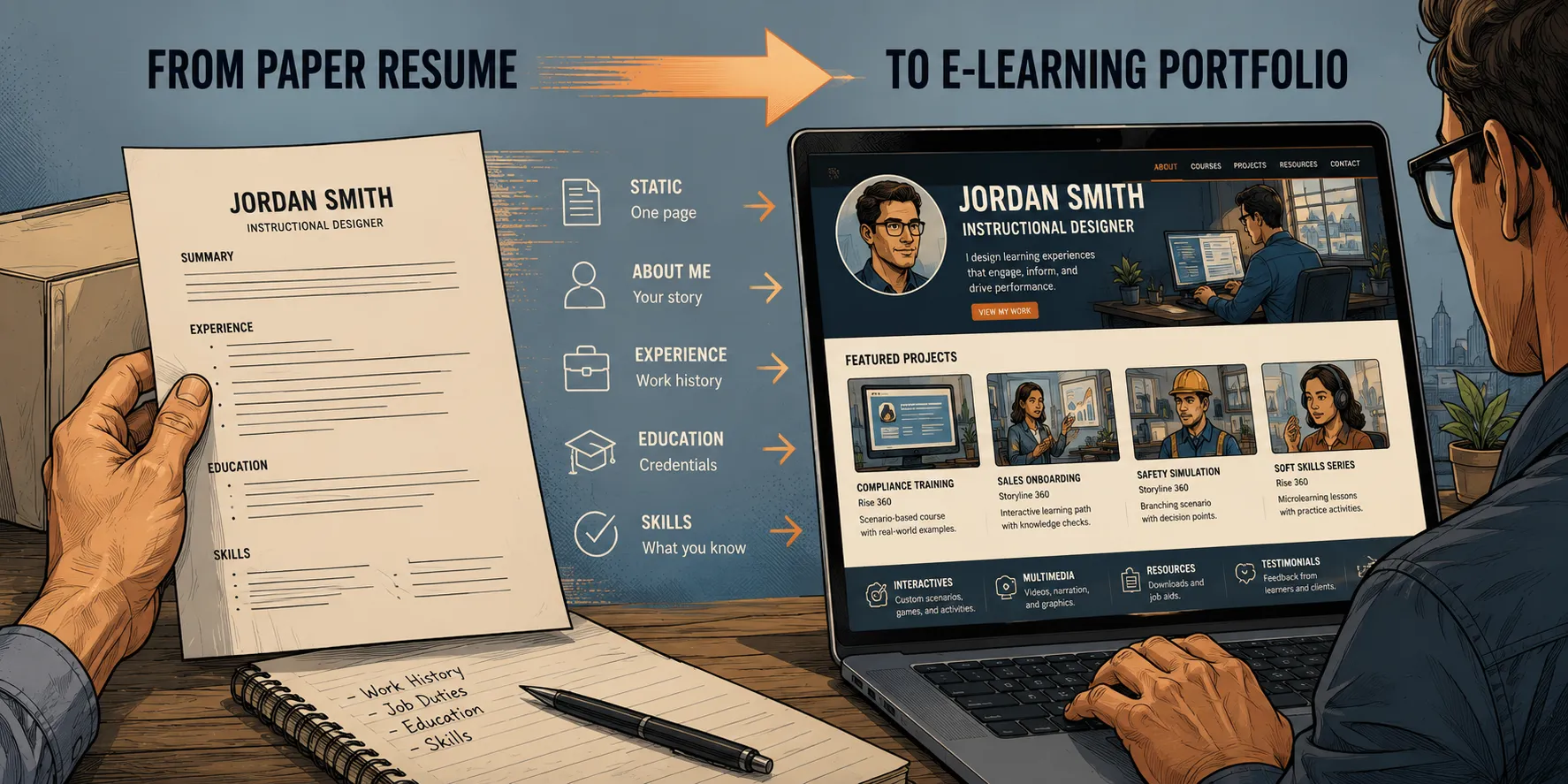
Why You Need a Professional E-Learning Portfolio
A portfolio isn’t just a nice-to-have — it’s the thing that gets you the interview. This post covers what to put in…