Physical Address
304 North Cardinal St.
Dorchester Center, MA 02124
Physical Address
304 North Cardinal St.
Dorchester Center, MA 02124
Helpful ideas. Squeaky value.
Helpful ideas. Squeaky value.
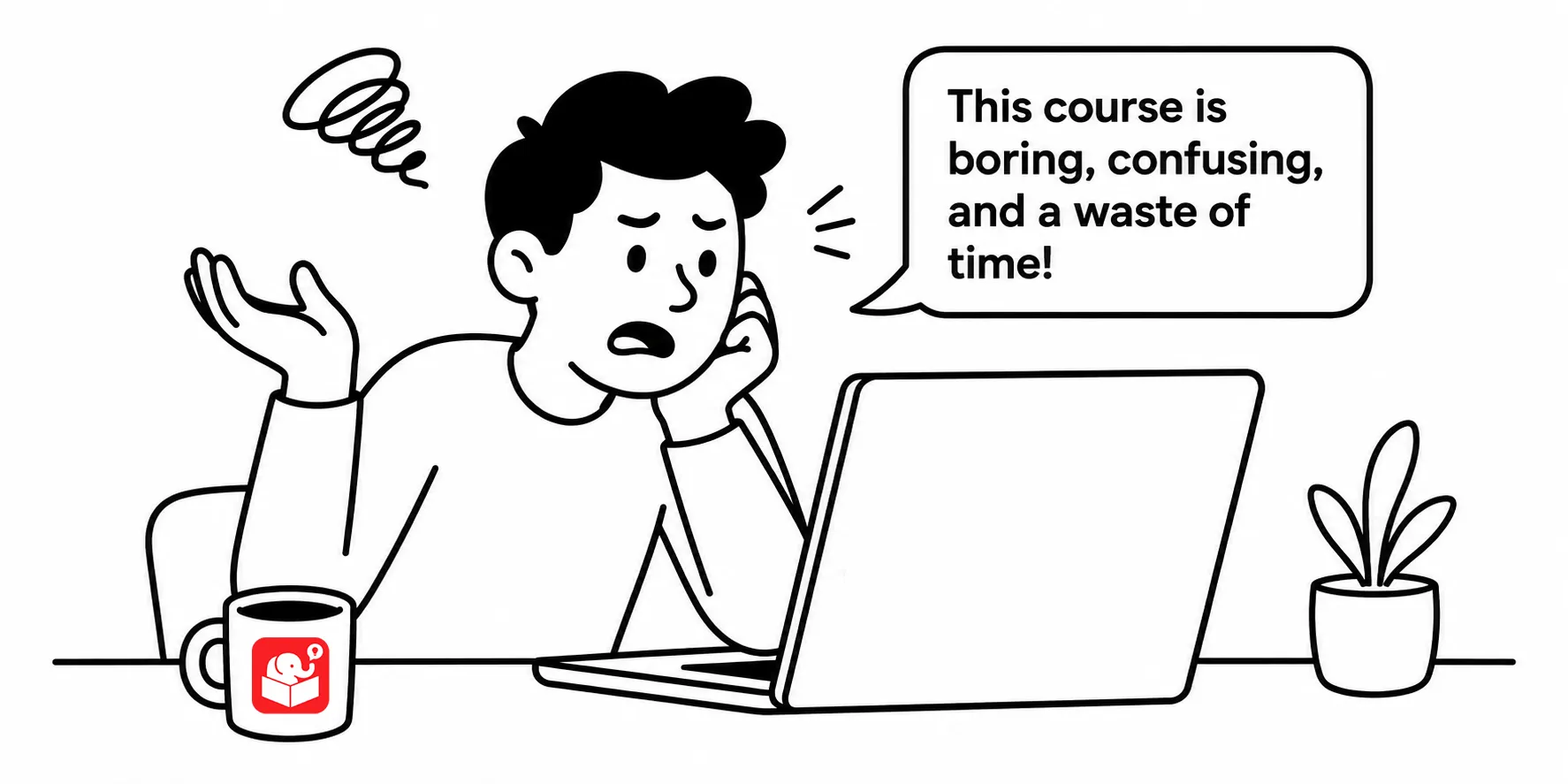
Whenever I meet people, I usually ask about the training they have to take and then I ask what they think about it. I’m not sure you’re aware of this or not, but most people don’t like their training.
They describe the courses as dull, irrelevant, and a waste of their time.
Most people take e-learning because they have to, not because they want to. That’s the starting position. So as a course designer, you’re already asking someone to spend time on something they didn’t choose.
If the course is also poorly designed and unrelated to real work, you’ve confirmed their worst expectations. And that’s where the frustration comes from.
You’re asking learners to commit their time. That commitment deserves respect. A course that’s interesting, well-structured, and relevant to the person’s actual work shows you took that seriously.
Not all courses need to be courses, which would solve a lot of problems. Ask yourself if the content could live in a PDF or some otehr type of job aid. If it could, and nothing would be lost, the course probably doesn’t need to exist in this form.
If you’re going to create a course, then build something that uses the medium: interactivity, scenarios, and feedback a document can’t give.
Motivation isn’t just a nice-to-have. It’s the difference between a learner who engages and one who clicks through as fast as possible. Tap into what matters to them, not just what matters to the organization.
That might mean framing content around a real problem they face. It might mean showing what success looks like after the course. The key is to find the connection between the course and something they already care about.
There’s a difference between a course and a brochure. A brochure presents information. A course should do something with the content. Build in decisions, practice, and activities where the learners apply what they’re consuming.
E-learning gets better when designers stop thinking about content delivery and start thinking about learner experience. The negative feedback from your learners is real data. Use it to identify where to prioritize changes: relevance, motivation, and real application.
When those three things show up together in a course, it stops feeling like an obligation.