Physical Address
304 North Cardinal St.
Dorchester Center, MA 02124
Physical Address
304 North Cardinal St.
Dorchester Center, MA 02124
Helpful ideas. Squeaky value.
Helpful ideas. Squeaky value.
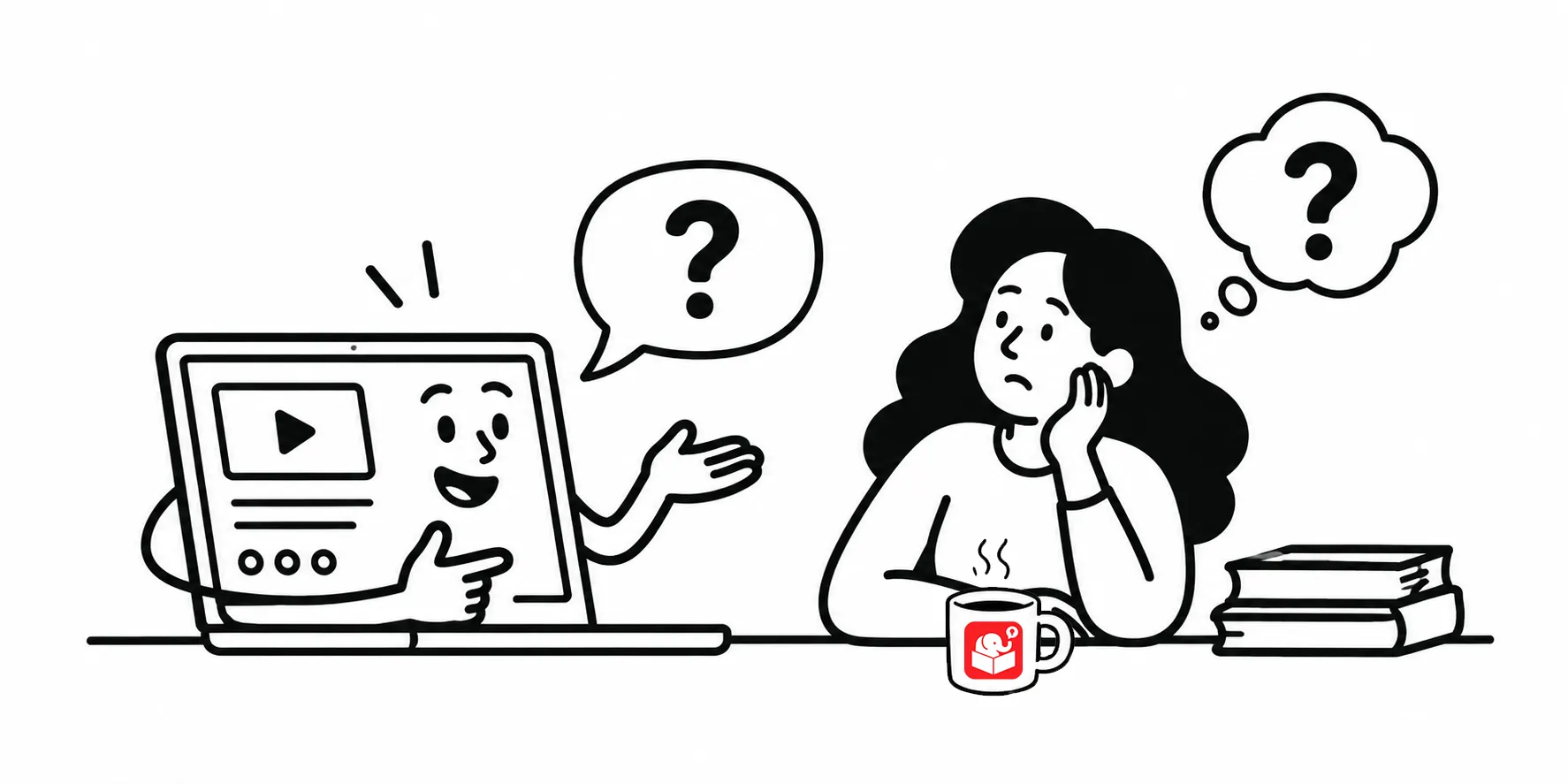
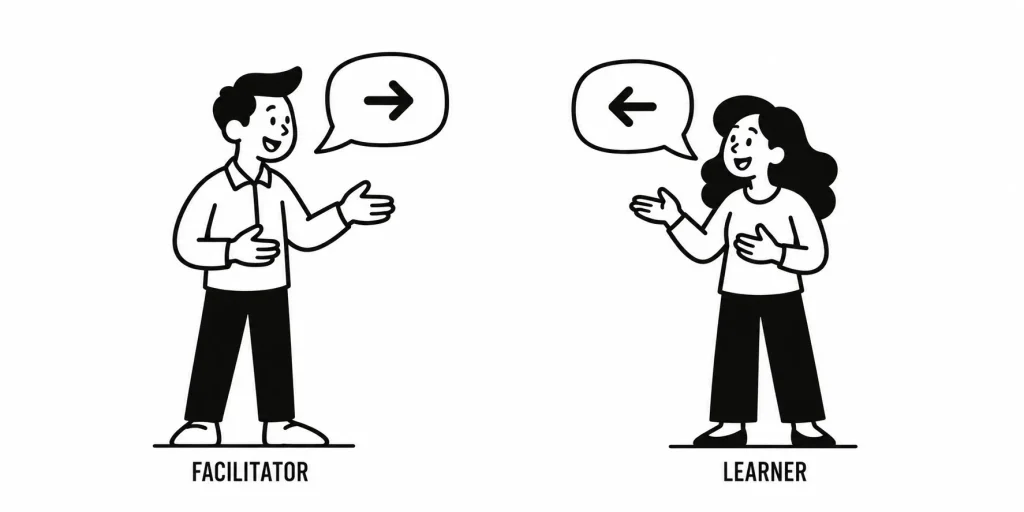
Think about the last time you were confused in a meeting and could just ask a question. That real-time back-and-forth is what makes facilitated learning so effective.
E-learning rarely has it, and that gap changes everything about how you need to design because we can’t see what the user is doing or how they’re understanding parts of what we communicate.
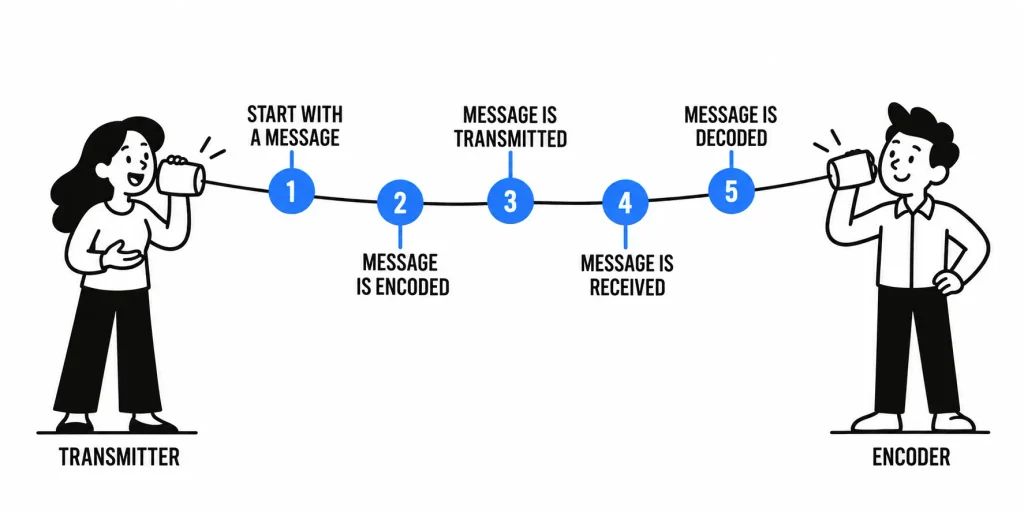
Every act of communication follows the same basic path. Someone has a message. They encode it, transmit it through some medium, and the receiver decodes it on the other end. If the decoding doesn’t match the encoding, there’s a breakdown.
In a classroom, that breakdown gets caught quickly. A blank stare, a raised hand, a follow-up question. The facilitator adjusts in real time.
In most e-learning, there’s no one watching for blank stares. The learner gets the content. The content gets decoded. If something goes wrong, nobody knows until the end-of-course quiz.
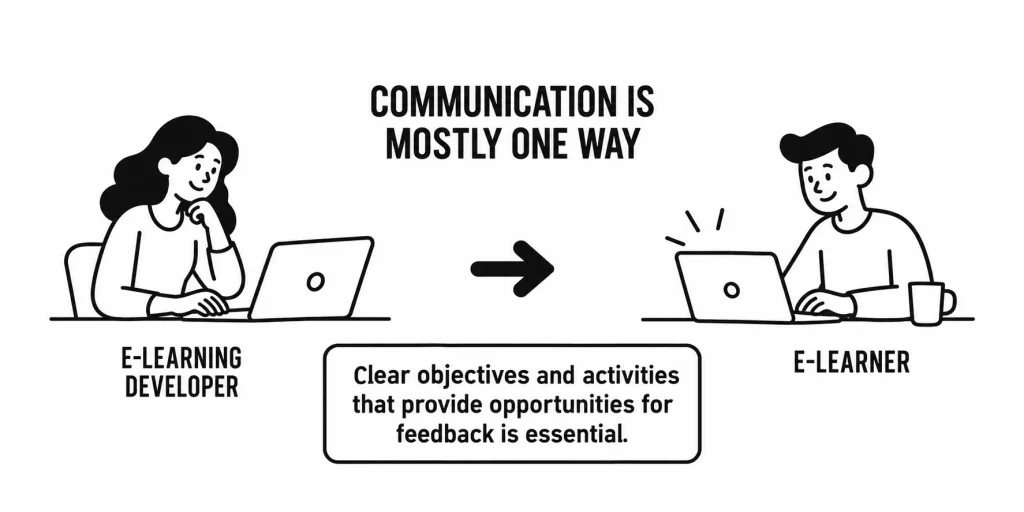
This is why information-heavy courses tend to fail. They put the communication burden entirely on the content with no mechanism to catch misunderstanding. A course that pushes ten screens of information and asks a few true-or-false questions isn’t assessing understanding. It’s checking attendance.
You can’t recreate a live facilitator in an e-learning course. But you can build structures that do some of the same work.
Start by making the content meaningful. Organize it so it makes sense to the learner. Give it context. Content that feels disconnected from real work won’t hold attention long enough to matter.
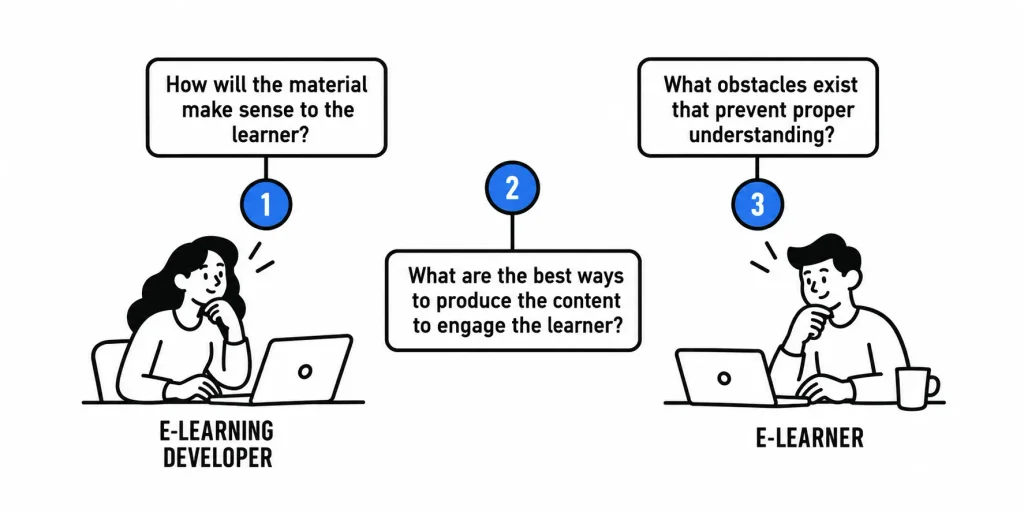
Then shift to activities.
Most courses are built around information delivery. Flip that. Start with what learners need to do and build backward from there. Design activities where learners apply the content and get feedback on whether they got it right. That feedback is the substitute for the live facilitator’s correction.
Text-heavy courses miss the opportunity to create more memorable experiences. Visual support, context, and relevant examples all reduce the distance between the intended message and what actually lands. Compliance training especially tends to feel abstract. Find a way to put people in a real scenario.
The goal in e-learning isn’t information delivery. It’s understanding and application. Every check-for-understanding you build is a substitute for that real-time facilitator conversation.