Physical Address
304 North Cardinal St.
Dorchester Center, MA 02124
Physical Address
304 North Cardinal St.
Dorchester Center, MA 02124
Helpful ideas. Squeaky value.
Helpful ideas. Squeaky value.
We trained machine operators at one company using e-learning to cover equipment, maintenance, and workflow. Then we put them in a slowed-down lab on real machines to practice what they’d learned. That combination worked better than anything we’d tried before.
Think about what a PDF, a slide deck, and an e-learning course have in common. They’re all just content packaged in different containers. The e-learning course can add interactivity and some novelty, but it’s still content.
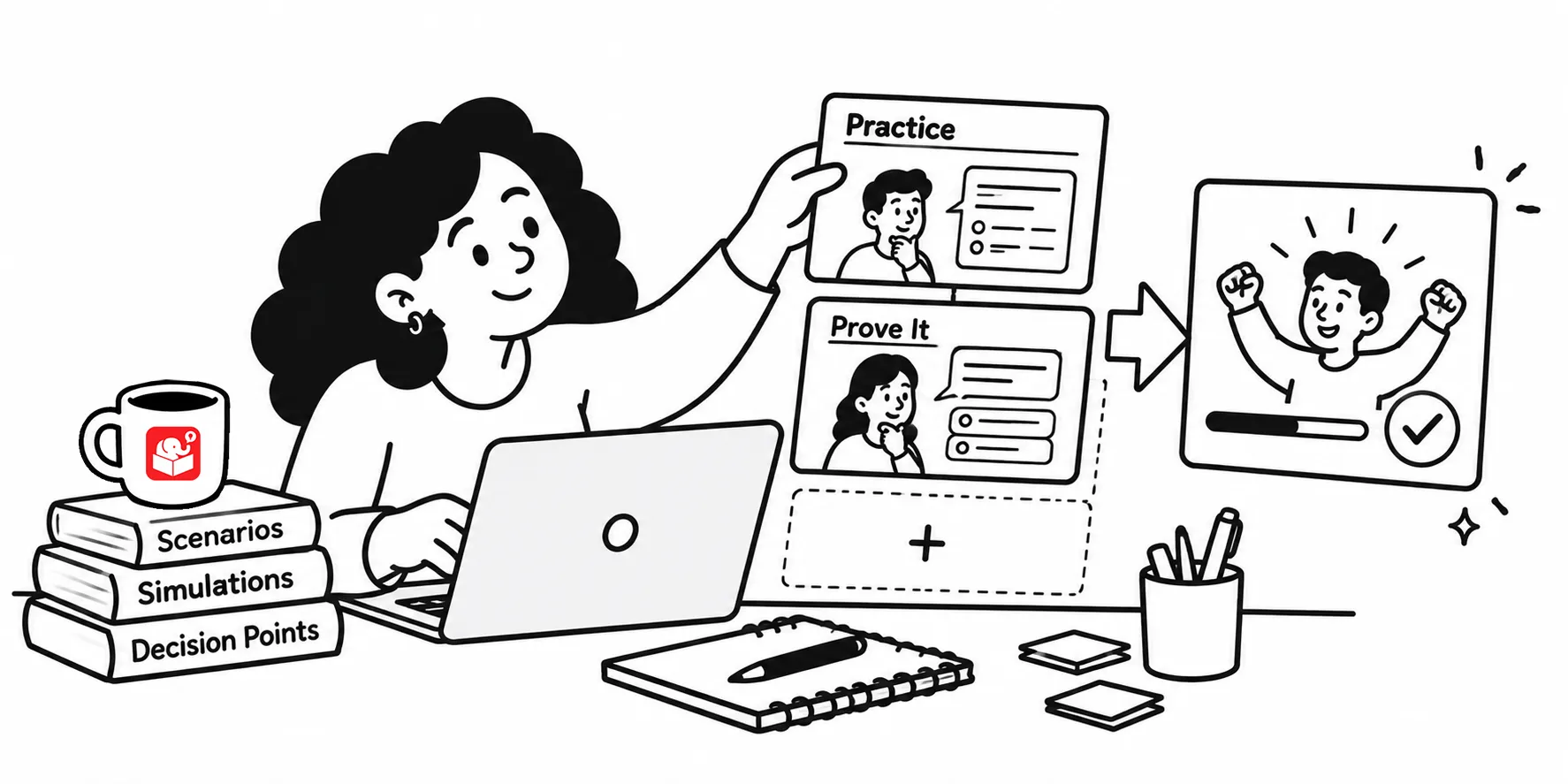
Content builds context. What it doesn’t automatically do is give learners a chance to practice using it. If your course has performance requirements, you need to ask two questions: how do learners practice? And how do they demonstrate what they know?
Sometimes the best practice happens away from the screen. In the machine operator example, the e-learning handled content delivery. The practice and prove-it activities happened in a real production environment with a peer coach and eventually a live machine.
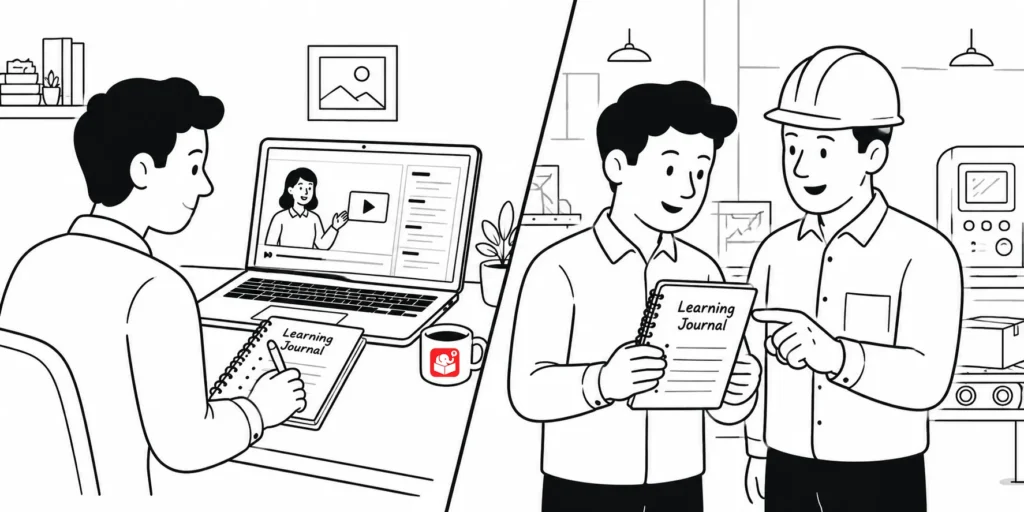
The e-learning got everyone to a consistent baseline before they ever touched the equipment. That’s a solid use for a content-focused course. It just wasn’t expected to do everything on its own.
If you want to build practice into the course itself, shift your focus from content to decisions. Instead of planning what learners need to read, plan what they need to do. What choices will they face on the job? Start there.
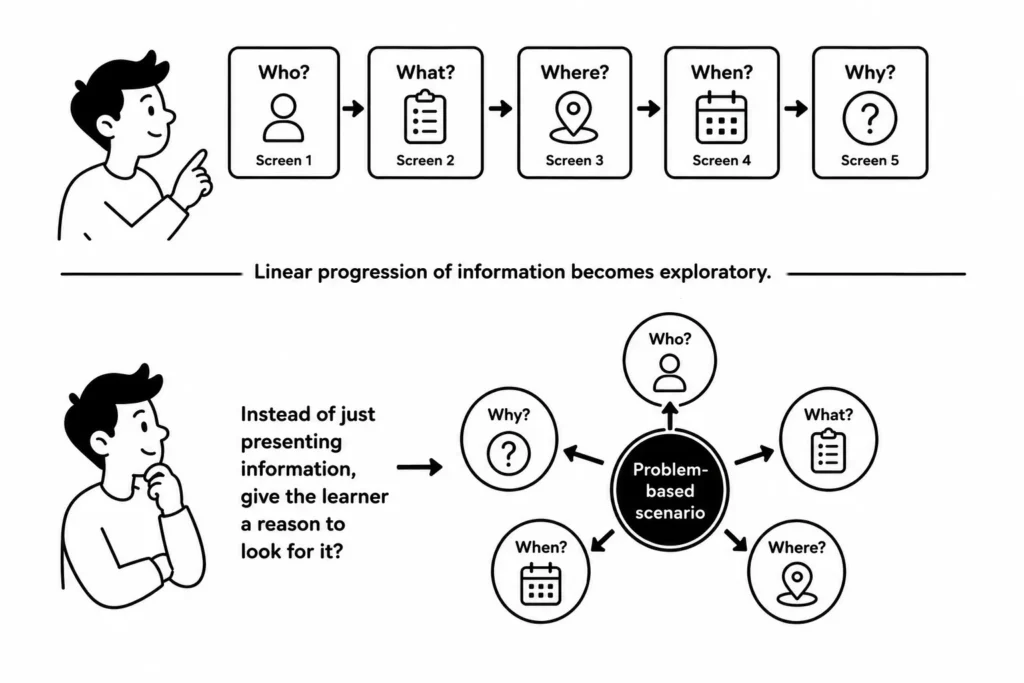
A typical compliance course explains the policy and ends with a quiz. A performance-based version puts the learner in a scenario where they have to make real decisions. They get feedback tied to what they chose, not a score at the end. That’s the difference between measuring recall and building real competence.
Take a look at the courses in your queue. For each one, ask whether it has performance expectations or just informational goals. If performance matters, decide where the practice and prove-it activities will live. They don’t have to be in the course, but they need to be somewhere.