Physical Address
304 North Cardinal St.
Dorchester Center, MA 02124
Physical Address
304 North Cardinal St.
Dorchester Center, MA 02124
Helpful ideas. Squeaky value.

Tired of right-clicking and saving images one at a time? Here are two quick tools that pull every image off a webpage in one shot, so you can grab on-brand visuals for your e-learning courses without the tedious clicking.

Most e-learning courses have natural pause points where learners need context before they move forward. Gate screens fill that role, and they show up in more courses than you might expect. Planning for them early makes the whole production process faster.

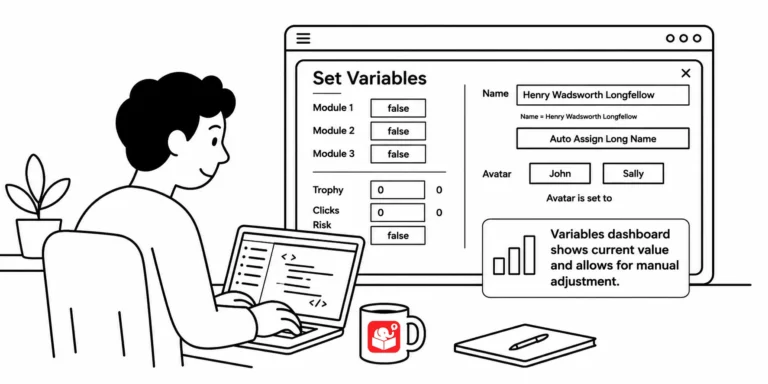
Most course authors build linear slides and stop there. Variables let you collect learner input, evaluate decisions, and send learners down different paths. They're not as complicated as they sound, and this post shows you where to begin.

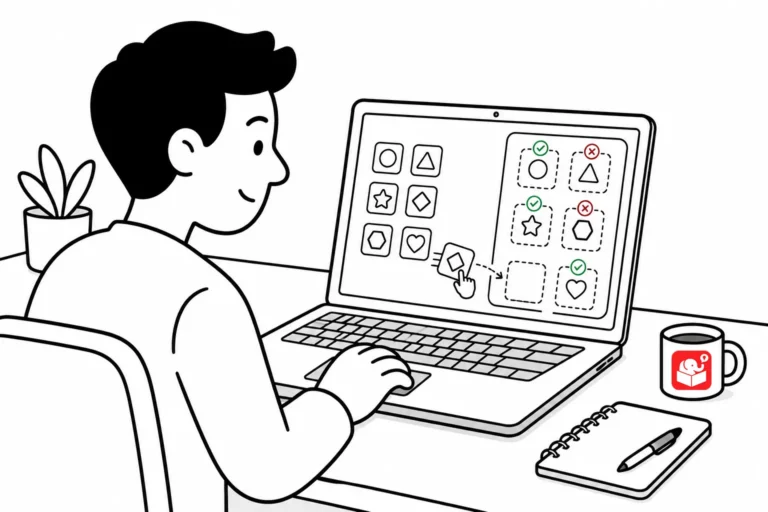
A lot of drag and drop problems come from decisions that weren't made before building started. Knowing your interaction type, how you'll mark targets, and how you'll give feedback will save you a lot of rework.

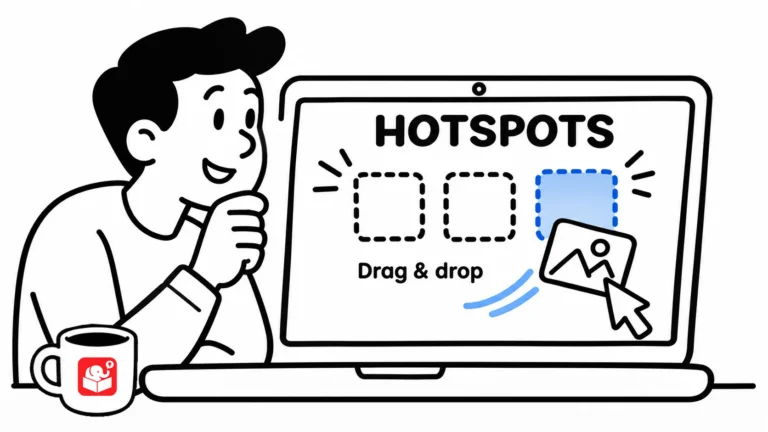
Most drag and drop interactions leave learners wondering what to do when they drop something in the wrong place. Hotspots offer a cleaner solution. They can provide feedback and give you precise control over where objects land.

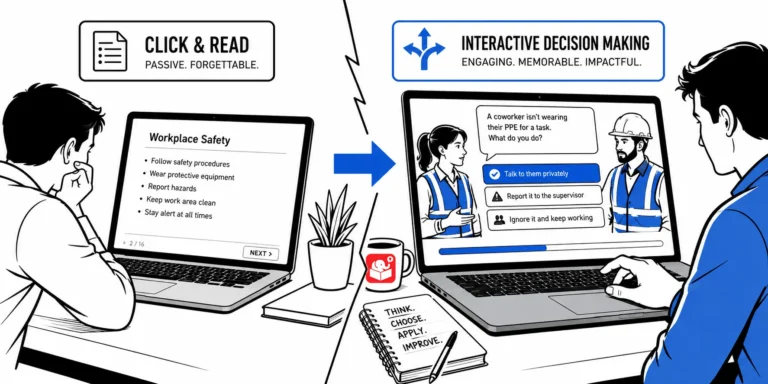
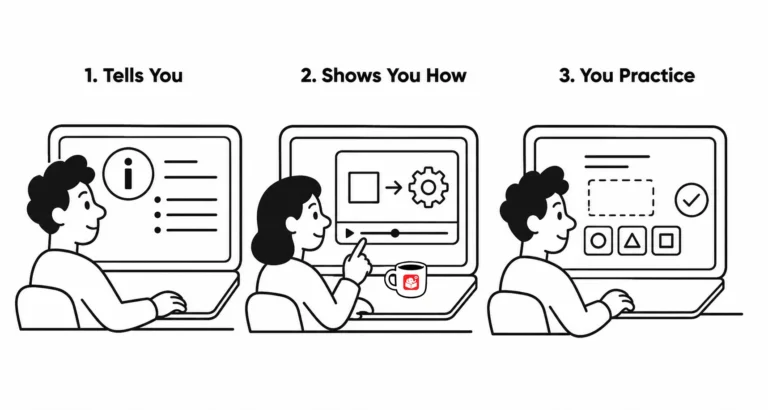
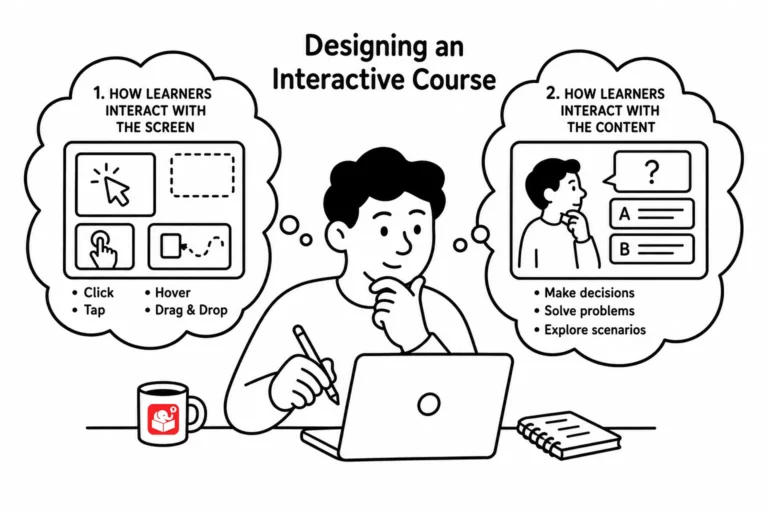
Ask a client what "interactive" means and you'll get answers like hover effects and animated buttons. Those matter, but they're only half the picture. True interactivity happens in two places: on the screen and inside the learner's head.

A spinning 3D object looks impressive in a slideshow. But when a learner clicks a tab and the object rotates in response, that's something worth remembering. This post picks up where the PowerPoint video tutorial left off and shows how to wire the full interaction in Storyline.

A lot of e-learning developers avoid variables because the terminology sounds technical. The underlying logic is actually simple. Once you see the pattern, you'll find uses for variables in almost every course you build.

When e-learning developers say they want more engaging courses, they usually mean more branching. But navigation type has almost nothing to do with engagement. What actually matters is whether the content connects to the learner's real world.

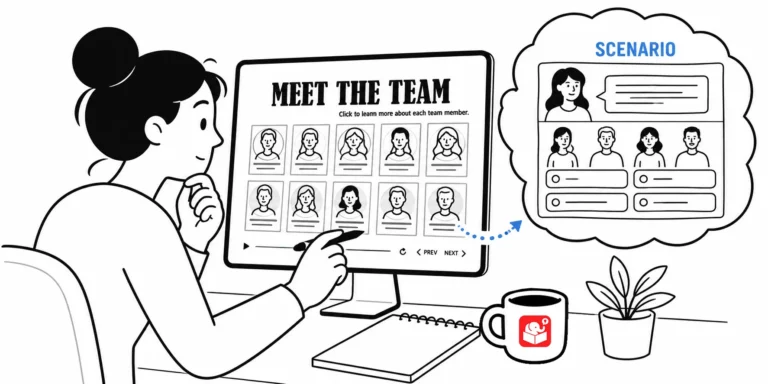
People keep hunting for the right software feature to build their interaction, but the fix isn't a better tool. Here's the 3C model for building interactivity with whatever features you already have, plus a few ways to bend common interactions like flash cards and tabs to do more than they were built for.

Mouseover interactions feel familiar, but mobile screens and accessibility standards are making them harder to justify. Here's why click-based design makes more sense for most new courses, and how to spot which of your hover interactions could easily become clicks.

Most e-learning courses lead with a bulleted objectives screen that few learners read carefully. There's a better way to meet the requirement without losing the learner before the course even starts. This post covers two simple alternatives that reduce clutter and keep things moving.

Interactive hotspots do more than trigger clicks. Use them as invisible buttons to speed up production, or as barriers that block interaction with what's underneath. Here are three ways to put them to work in your next course.