Physical Address
304 North Cardinal St.
Dorchester Center, MA 02124
Physical Address
304 North Cardinal St.
Dorchester Center, MA 02124
Helpful ideas. Squeaky value.
Helpful ideas. Squeaky value.
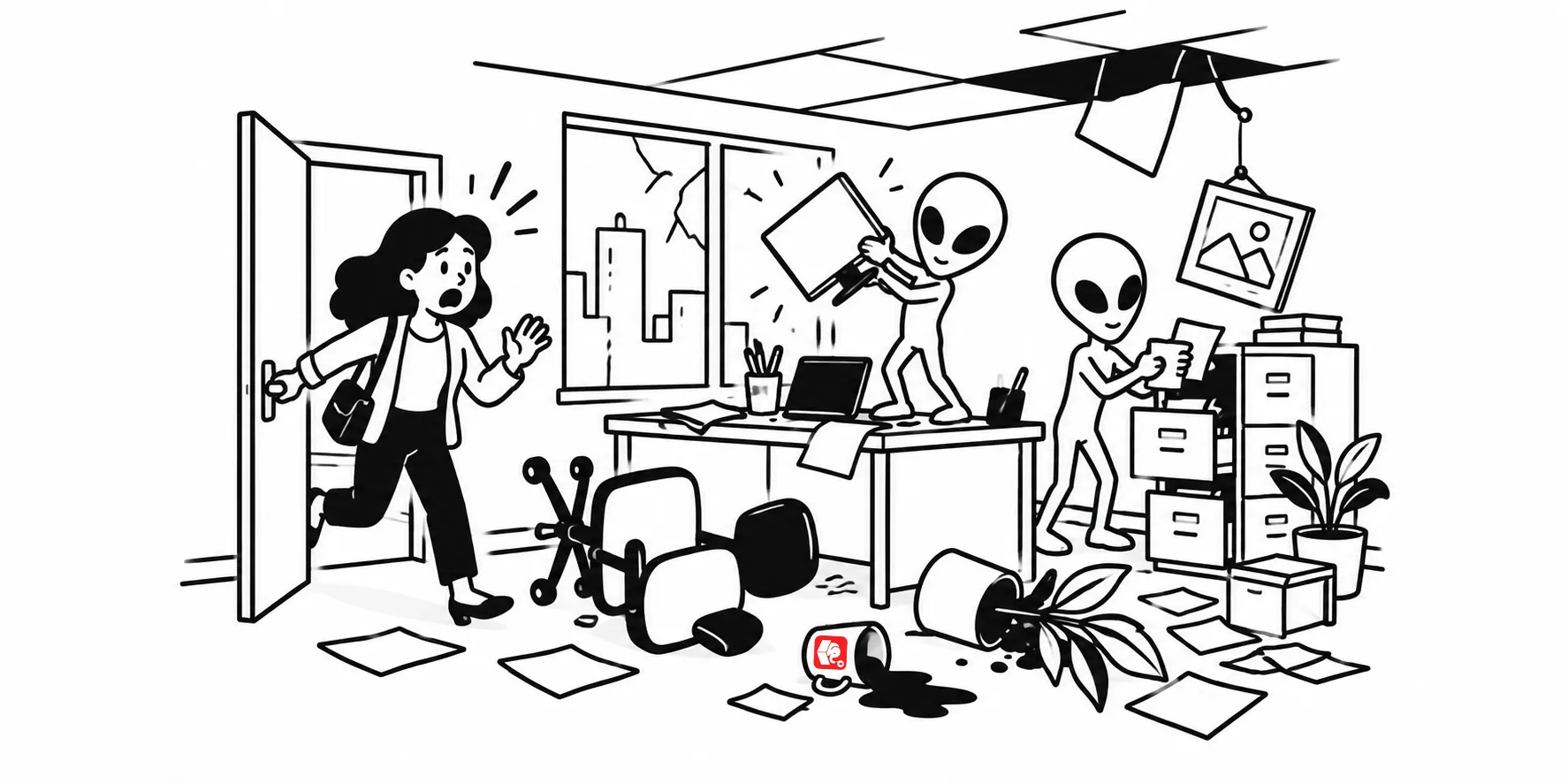
Picture this. You arrive at company headquarters and find tables overturned, documents scattered everywhere, and no sign of your staff.
Security footage confirms the building was overrun by aliens and everyone has been abducted. Question: what does your organization’s disaster recovery plan say to do now?
That scenario might sound absurd, but it makes a serious point about course design.
Here’s something worth considering. Content that’s too close to the learner’s real world can actually get in the way. Sometimes the better move is to flip the perspective and put learners somewhere completely different from their day-to-day.
Our courses need to be relevant and meaningful. That’s why I usually build scenarios around real-world content. But sometimes people get so hung up on the realism that they lose sight of what the course is actually trying to teach.
I ran into this with a demo I built to show off some software features and production tips. I used a fake CPR scenario as the backdrop just so I had some basic content. Every single time, I’d get complaints about the CPR content itself, even after I explained it was just filler and not a real course.
Nobody needed to learn CPR. That content was just a vehicle for teaching course design. But it was so close to what people already knew that it kept getting in the way.
Here’s the real lesson. When your scenario content sits too close to the learner’s actual world, they can’t see past it to the real objective. Flip the perspective and you pull them out of their routine.
When situational content mirrors a learner’s everyday world too closely, it competes with your real objectives. Learners can’t see past what they recognize, and the actual learning gets lost in the noise.
A flipped perspective shifts the scenario into unfamiliar territory. Alien abductions aren’t something most people deal with on a Tuesday. But disaster response is real, and the process for handling an alien-caused incident is the same as for any other emergency.
The novelty is the point. Learners can’t fall back on what they already know because they’ve never been in this situation before. That forces them to actually think through the content instead of skimming past it.
Here are a few things to keep in mind when you try this.
Next time you’re stuck in a scenario that keeps generating the wrong conversations, try moving it to a different world. Ask yourself whether the context is working for you or against you. The more comfortable you get with flipped perspectives, the more options you’ll have when familiar content stops doing its job. What’s a topic in your work where a flipped scenario might free up some better thinking?