Physical Address
304 North Cardinal St.
Dorchester Center, MA 02124
Physical Address
304 North Cardinal St.
Dorchester Center, MA 02124
Helpful ideas. Squeaky value.
Helpful ideas. Squeaky value.
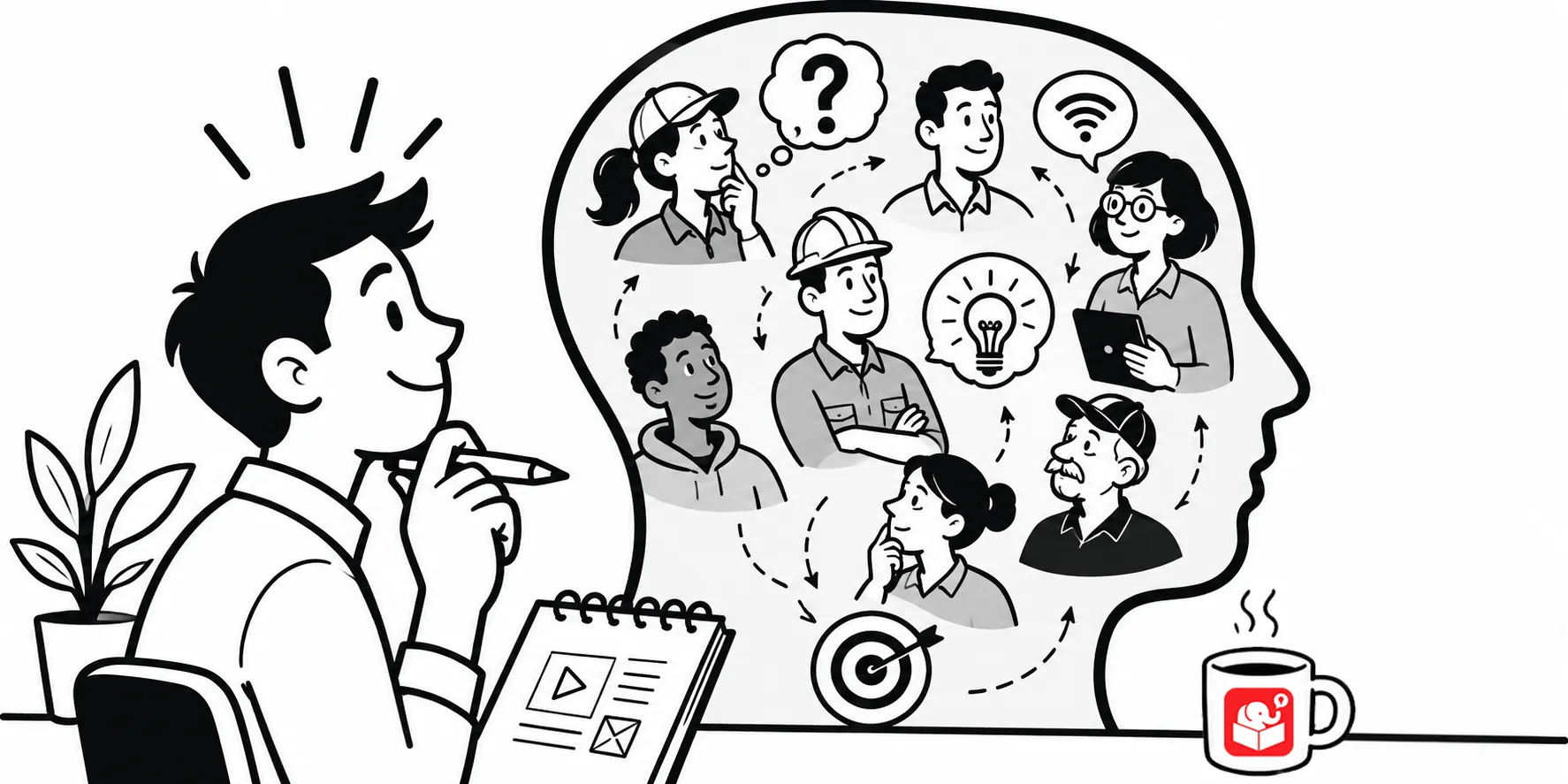
Most training problems aren’t about the content. They’re about the course designer not knowing enough about the people taking the course. Spend some time with your learners before you build anything, and you’ll avoid a long list of costly mistakes.
Here’s what to watch for.
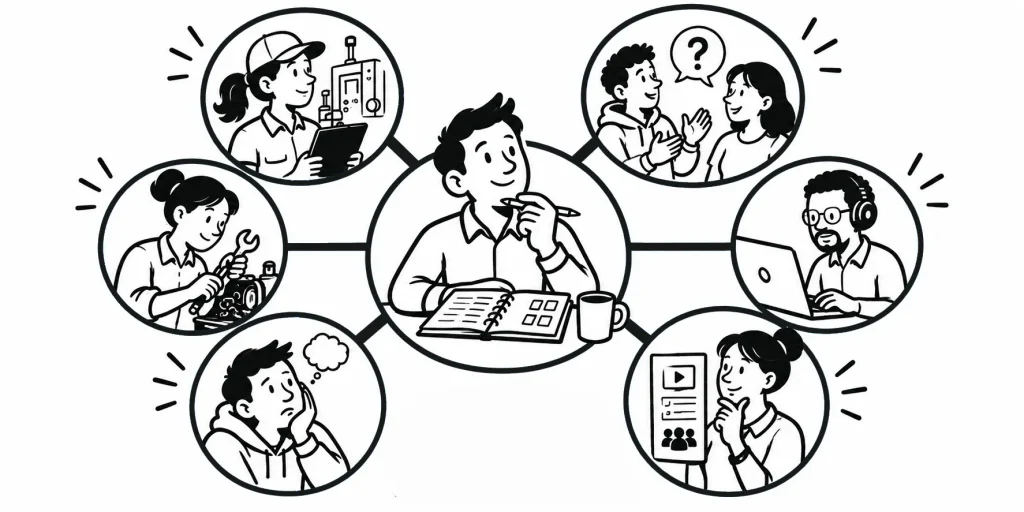
I once worked on a project for machine operators who couldn’t hit their 90-day performance targets. After talking to the subject matter experts and experienced machine operators, my first instinct was a task-based course. Standard stuff. But before I started building, I spent a few days on the production floor to get a feel for how things worked.
What I found had nothing to do with job skills. The new hires were paralyzed by fear. Every day someone reminded them, “This is a million-dollar machine, don’t break it.” That pressure had created a workplace culture of hesitation. They knew their jobs. They just couldn’t make themselves move because tehy were worried they’d mess something up.
That changed everything about the course design. Instead of job tasks, we spent the first week on preventive maintenance. We let them take the machines apart and put them back together. No production goals, no pressure. The goal was to help them feel comfortable around the machines. By the time real work started, their confidence was there. Within two weeks, almost all of them hit their targets.
I never would have found that without getting off my desk and talking to people. The obvious course would have been adequate. The real course was actually useful.
Learners know instantly when a course has nothing to do with their job. Screen after screen of information with no connection to how they actually work is the fastest way to lose them.
The fix is straightforward: find out how they use the content in real life. What decisions do they make? What situations do they run into? Build around those, not around what the SME thinks is important to cover because often the SME is separated from recognizing the needs for the beginning learner.
Going back to the previous point. This one’s easy to miss, especially if you’re also the subject matter expert. When you’ve been doing something for years, it’s hard to remember what it felt like not to know it. You make assumptions. You skip steps. You cover the wrong things at the wrong level or wrong time.
Spend time with people who recently learned this content, not just with the experts. They’ll give you a much more accurate picture of where the gaps actually are.
I’ve worked on projects that took months to complete. By the time we launched, the employees had already made their own cheat sheets and were getting along fine without us. We built something elaborate to solve a problem they’d already solved themselves.
Before you scope a full course, ask whether a job aid, a quick reference guide, or a short video would do the job. Sometimes the best training decision is to build something smaller.
There’s something that happens when people learn from each other on the floor that a course can’t replicate. Not everything is a knowledge problem. Sometimes people just need to be connected to someone who can show them the ropes. That’s more of a “I’m kind of lost and could use a friend” problem.
If you push e-learning into spaces where social learning should be happening, you’ll get course completions and not much else. Know when the course is the right tool and when it isn’t.
Here’s a real issue I ran into one time. We built courses where audio was a core component, only to find out later that none of the computers at that location had sound cards. That kind of thing is avoidable. It just requires asking and not relying on some manager who is half-heartedly involved in your project. Talking to you, Steve. 🙂
Find out where learners will take the course, what devices they’ll use, what the environment is like, whether there are any physical limitations. A course that works great on your setup can be completely broken in theirs.
That’s not a criticism of your work. It’s just reality. Most people taking e-learning are doing it because they have to, not because they want to. That means motivation is something you have to build into the design, not assume.
The most reliable way to do that is to connect the course to something they actually care about: doing their job better, not making an expensive mistake, understanding why something matters to them specifically. Performance context works better than screens of content.
This one tends to get skipped because it takes extra time. But assembling even a small group of actual learners, or recent learners, before you build is one of the highest-return things you can do. They’ll tell you what’s missing, what’s confusing, and what already exists in informal workarounds. Those are things you can work into your training.
You don’t need a formal process. Talk to two or three people. Watch someone do the job for a couple of hours. Send a short survey if you can’t meet in person. The insight you get will shape the course in ways no amount of client briefings will.
Before you open your authoring tool to build a course, block out time to talk to actual learners. Even an hour or two watching someone do the job can change the course you build.
If you can’t get onsite, find recent learners, send a survey, or pull together a small pilot group.
The goal is simple: know their world well enough that your course fits into it rather than ignoring it.