Physical Address
304 North Cardinal St.
Dorchester Center, MA 02124
Physical Address
304 North Cardinal St.
Dorchester Center, MA 02124
Helpful ideas. Squeaky value.
Helpful ideas. Squeaky value.
It’s not uncommon to get tasked to create a training program and then assigned to meet with a subject matter expert to help build identify the right contet for the course. She hands you a 60-page manual. Your job is to turn it into a course a new hire can learn from.
Subject matter experts know their subject matter. That’s why they’re called experts. They provide a lot of value because they’re able to touch on nuances that go beyond just information. This can be critical in your course design.
But they don’t always know how best to teach what they know, especially when it comes to elearning. Often they’re so far removed from the learning process (and where a new person is in the process) that they lose perspective on what is most essential to learning new skills.
Trying to get the right information and structure for your course can prove difficult.
When an SME hands you content, it’s usually organized in their mental model, not the learner’s. They structure it by how they learned and think about the topic, which makes sense to them. It doesn’t always make sense to someone encountering it for the first time.
The challenge is bridging that gap. You can’t just package up what they give you and call it a course. Help them reframe their knowledge around what a new learner needs.
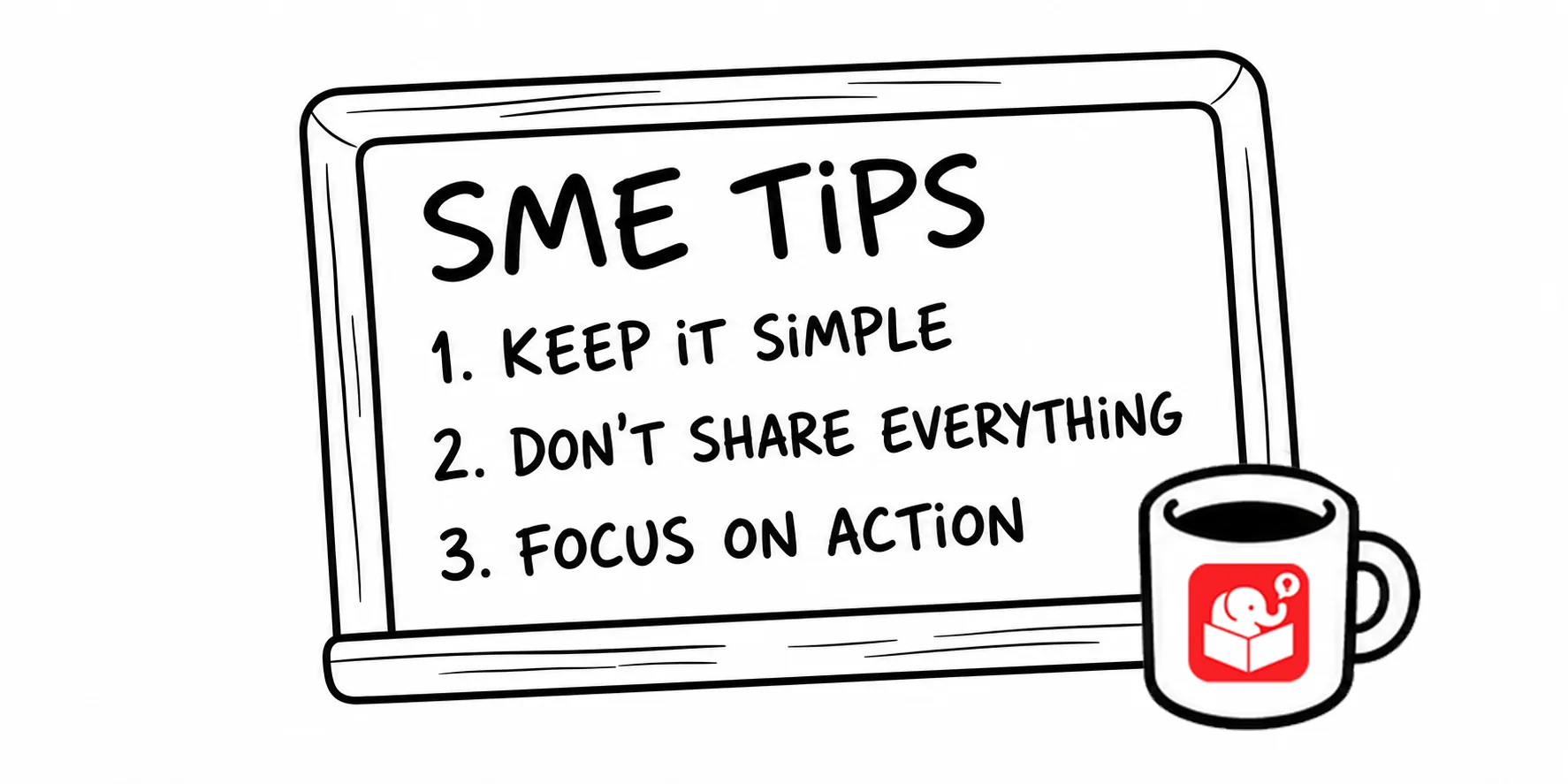
The easiest way to get usable content from an SME is to ask for bullet points, not written paragraphs. Tell them you just need the key things a person needs to know or do. Paragraphs invite them to explain everything; bullet points keep them focused on what matters.
Then take those bullets and turn them into structured content. Break each one into a step, a concept, or a decision. You’re essentially doing the instructional design work on their raw material.
Here’s a simple request that works well: ask the SME to imagine they’re training someone on their first day. What are the five things that person needs to know? That question forces prioritization.
SMEs love context. They want to explain why things are the way they are, how they got here, and all the edge cases. That stuff matters, but it doesn’t belong in the main learning path.
Move context into notes, job aids, or supplementary sections. Label it so learners know it’s background, not required. Your SME feels heard, and your learners don’t get buried.
The most useful thing you can do for an SME is help them see through a new learner’s eyes. Ask them to think back to when they first learned this. What was confusing? What do they wish someone had explained earlier?
This usually produces better content than asking them to document what they know. It shifts the frame from “everything I know” to “what actually helps someone learn.”
This where AI can really help. You can dump all sorts of content and resources into the mix. Things you wouldn’t have added in previous years. You can record interviews. Then have AI process it and compare to your objectives to help outline the course design.
But keep in mind, AI doesn’t think. AI doesn’t understand nuance and isn’t the best as determining value. This is where real eyes and experience come in. If you use AI to process and organize your content, make sure to get it back in front of the people who know it and can validate what was produced has value.
Sometimes the SME is the one building the course. You may be the SME. In that case, give them a framework they can follow without needing an instructional design background.
A simple structure works:
That pattern covers most workplace training. Give them a template built around it and they’ll produce something workable.
The next time you start a project with an SME, set up a short kickoff conversation. Ask them for bullet points covering the five or ten things a new learner needs to know. Build the course structure around those, then loop them back in for review rather than content creation. You’ll get better material and a faster process. What’s your go-to move for getting useful content from subject matter experts?