Physical Address
304 North Cardinal St.
Dorchester Center, MA 02124
Physical Address
304 North Cardinal St.
Dorchester Center, MA 02124
Helpful ideas. Squeaky value.
Helpful ideas. Squeaky value.
Most training departments have more requests than capacity. If you say yes to everything, you end up producing a lot of courses that shouldn’t have been courses. The first technique for saving time and money isn’t a production tip. It’s knowing when to push back.
Your clients will often assume that every problem can be solved with training, and today every training solution should be an e-learning course. That’s not your job to reinforce. Your job is to assess what the client wants and then what the learner actually needs and recommend the right solution.
Sometimes the right solution is a short meeting. Sometimes it’s a job aid or a checklist. Sometimes the content already exists on the company intranet and learners just need to know how to find it. Every course you don’t build is time freed up for something that genuinely requires a course.
Being the person who says “we don’t need a course for this” is one of the most valuable things you can do for your organization. It protects your time, saves budget, and keeps your learners from sitting through training that doesn’t need to exist.
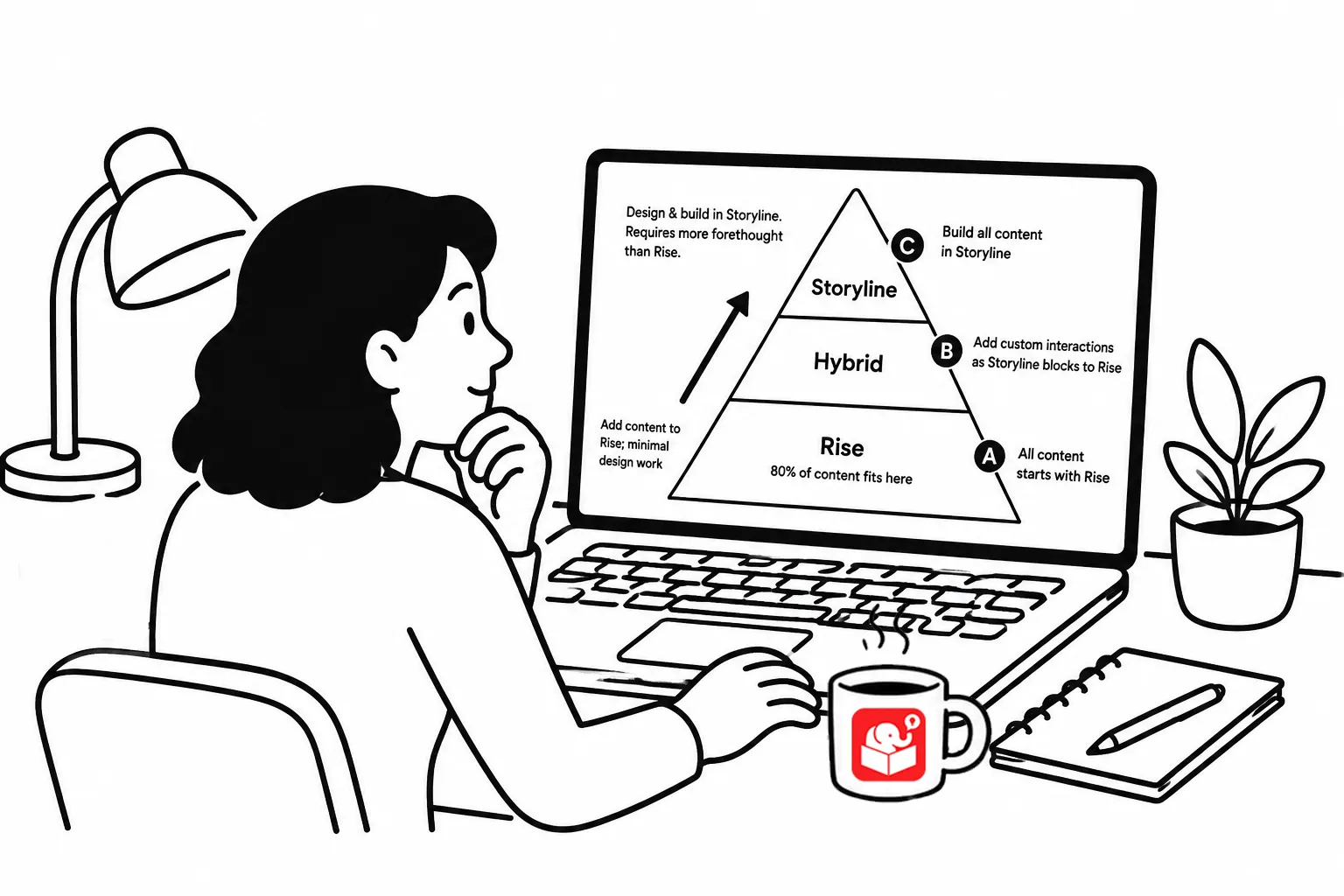
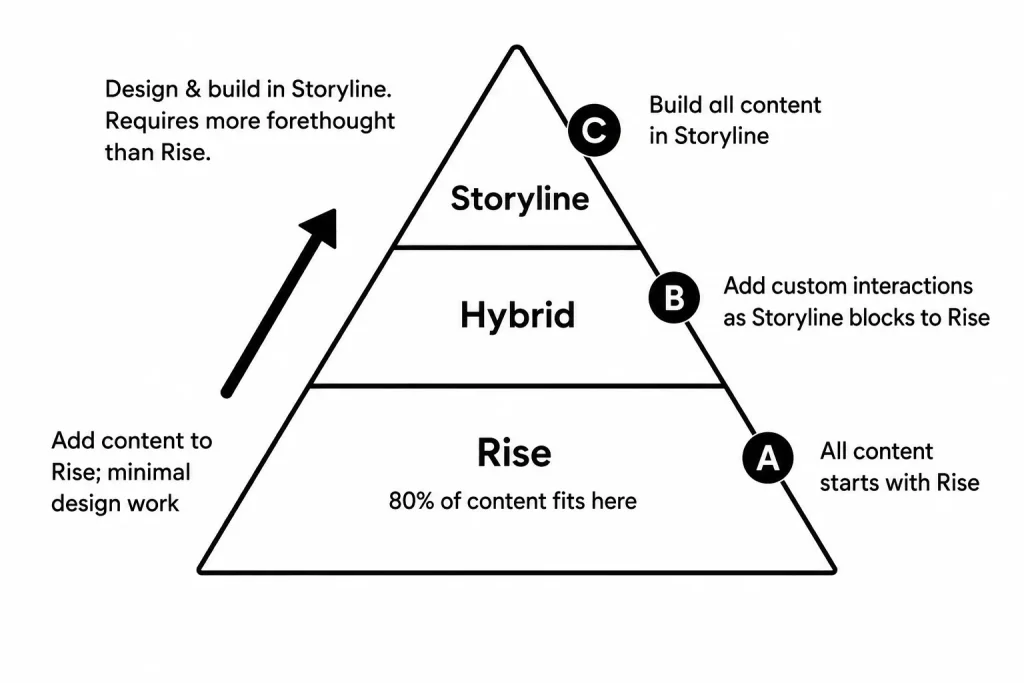
Not every course needs full custom development. A three-tiered approach helps you allocate your resources where they’ll have the most impact.
A lot of e-learning content is information that already exists somewhere in the organization. Instead of reproducing it all inside a course, build the course to teach learners how to find and use the content when they need it.
This approach has two benefits.
For step-by-step procedural content, ask whether a course is even the right format. A well-designed cheat sheet or quick reference card might give learners more practical value than a thirty-minute course, and it takes far less time to build.
Before your next project kicks off, ask two questions.
Most requests don’t need the top tier. Answering those questions before you start will save more time than any production trick applied after you’ve already committed to the wrong approach.