Physical Address
304 North Cardinal St.
Dorchester Center, MA 02124
Physical Address
304 North Cardinal St.
Dorchester Center, MA 02124
Helpful ideas. Squeaky value.
Helpful ideas. Squeaky value.
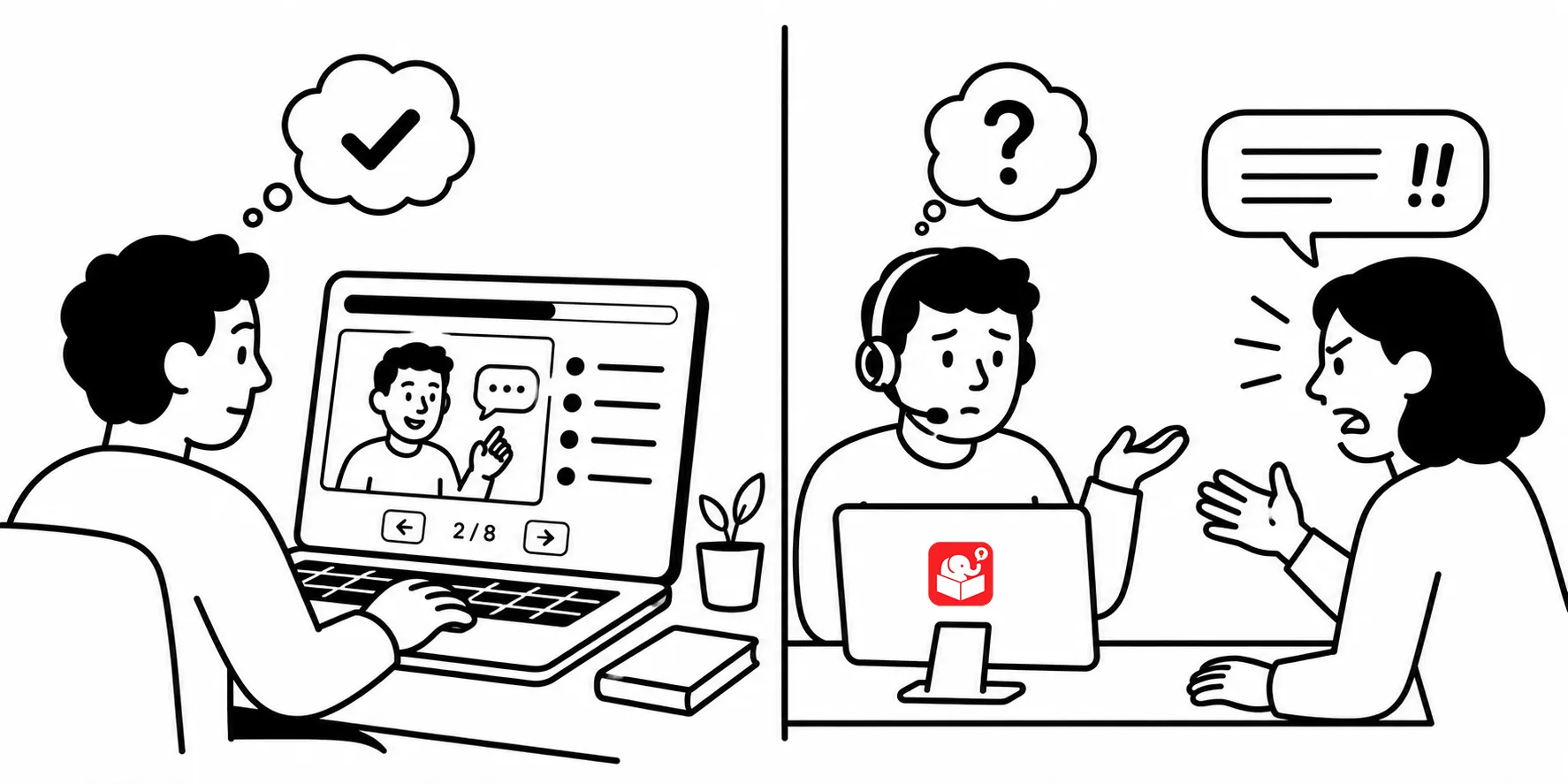
Think about a typical work year. It represents about 2,000 hours. During those hours, people are always learning. You don’t have an on and off button when it comes to learning. It just happens, through conversations with peers, feedback from managers, decisions that didn’t go the way they expected, and yes, sometimes a course.
Now think about what we actually build. A two-hour e-learning course. That’s two hours out of 2,000. If you compress all of it into a single event and then walk away, you’ve left a lot on the table.
Here’s the pattern I see all the time. The organization thinks it needs training (which may or may not be true). Someone builds a course. The course goes live. Everyone takes it. Done.
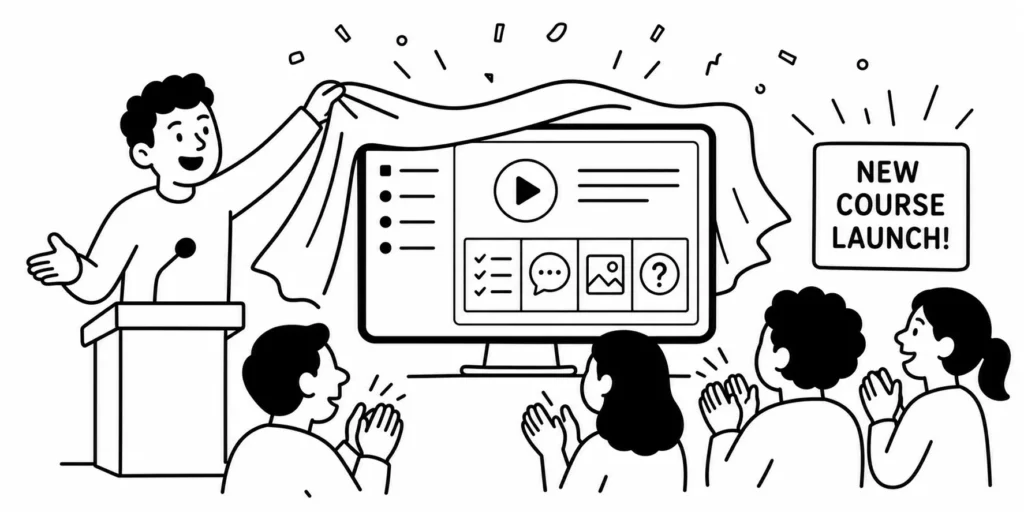
The problem is that the course becomes the whole picture when it should just be one part of it. Even the world’s best e-learning course can only do so much when it’s treated like a one-time event with no follow-up.
And here’s the thing about learning: a person doesn’t learn because we decided to create a course. Learning is always happening. It’s a continual process of taking in information, making decisions, and getting feedback. Formal training is a small slice of that.
This is the shift that changes how you approach everything. The goal isn’t to build a course. The goal is improved performance. The course is one way to help get there.
That means before you open your authoring tool, you should be asking a different question. Not “what content needs to go in this course” but “what does this person need to be able to do, and what will help them get there?” Sometimes the answer is a course. Sometimes it’s a job aid. Sometimes it’s a conversation with a manager. Often it’s a combination of all three.
E-learning courses aren’t the objective. They’re solutions. And if you start with a pre-determined solution before you’ve identified the actual problem, there’s a good chance you won’t solve it. And that’s also why most e-learning isn’t good or effective.
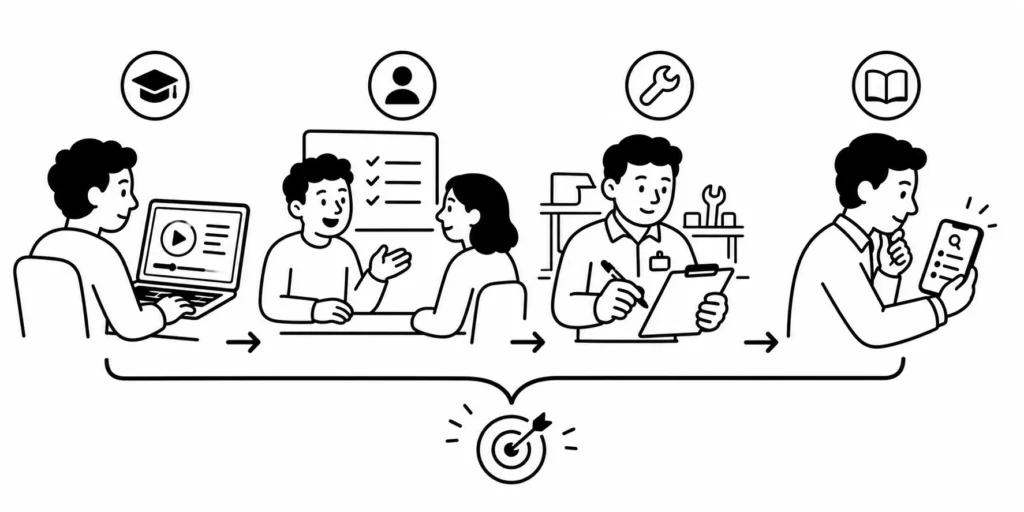
The courses that have real impact are usually part of something bigger. The e-learning delivers consistent foundational content. Then a manager follows up with the team. Then the learner practices on the job with some structured support. Then a quick reference tool gives them something to pull up when they need it at the point of need.
Each piece does what it does best. None of it tries to do everything.
I worked on a project once where the training program successfully taught new hires everything they needed to do on the job. But they were slow to get up to speed. After some analysis, we realized it wasn’t a skills gap. They understood their tasks but didn’t see how their work fit into the bigger picture. We added a few modules around the workflow and how their particular area became a bottleneck. That gave them that context, and once they had it, their teams started hitting their production goals.
The e-learning alone wasn’t the problem and wasn’t the solution. It was one piece that needed to be connected to something larger.
Generally speaking, a full time employee works about 2000 hours per year. If you’re designing a training program, the question worth asking is: how do we make the most of those 2,000 “learning” hours? A course covers two of them. What happens in the other 1,998?
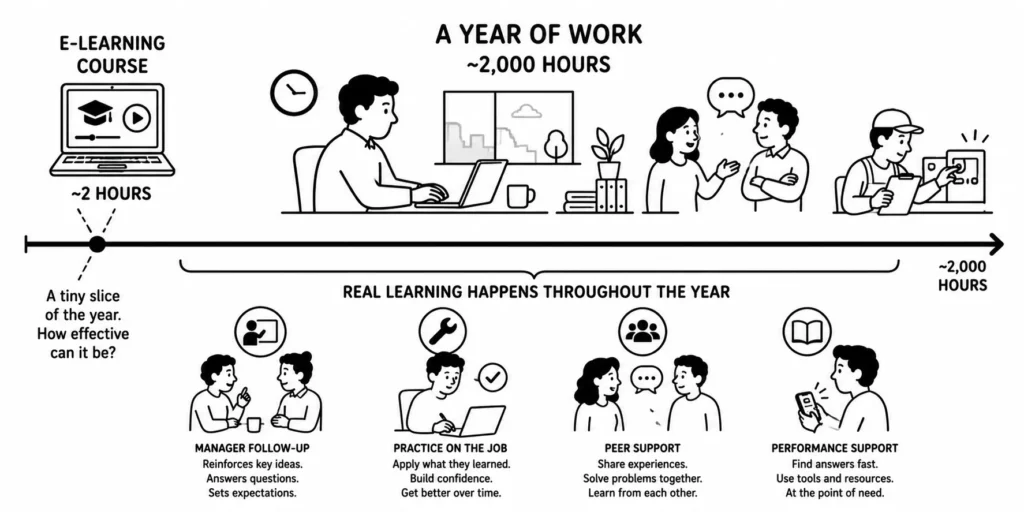
That doesn’t mean you need to build something for every hour. It means being intentional about what comes before the course, what happens during it, and what follows after. A short reinforcement activity a few weeks later. A manager conversation that connects the training to real work. A resource library they can return to as questions come up.
E-learning tools make this kind of approach practical. You can build a quick follow-up scenario, a short refresher module, or a simple job aid without a long production cycle. The flexibility is there. The question is whether you’re using it to extend the learning or just to produce the course and move on.
The next time someone asks you to build a course, start by asking what happens after it. If the answer is nothing, that’s where to focus first. Map out what comes before and after the e-learning and you’ll end up with a much clearer picture of what the course actually needs to do.