Physical Address
304 North Cardinal St.
Dorchester Center, MA 02124
Physical Address
304 North Cardinal St.
Dorchester Center, MA 02124
Helpful ideas. Squeaky value.
Helpful ideas. Squeaky value.
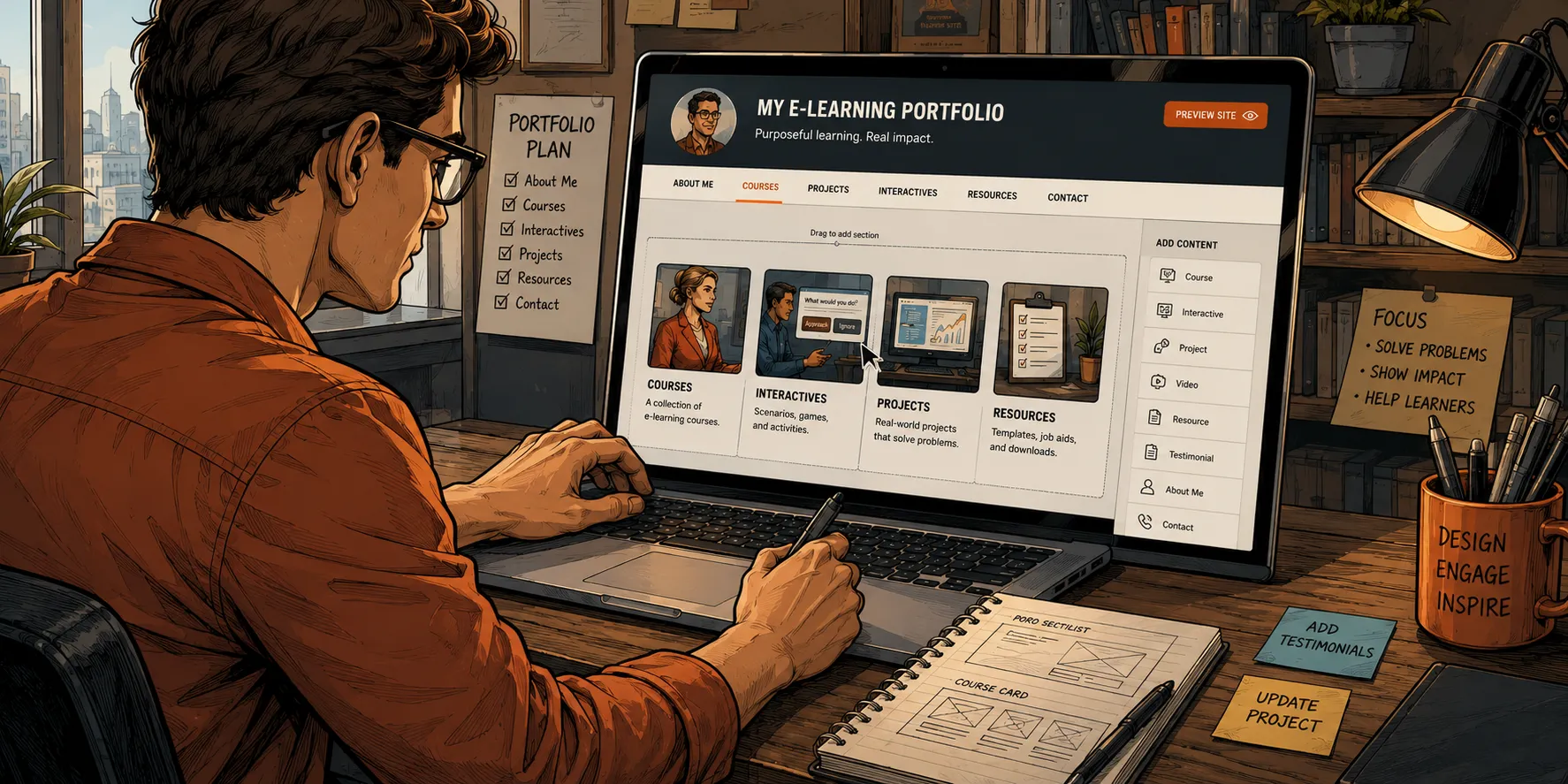
Portfolio questions come up constantly. The most frequent one is simple: what types of courses should be in it? A portfolio does something a resume can’t. It shows the work, not just a description of it.
Many designers work on proprietary content they can’t share publicly. That’s a common challenge, and it’s not a dead end. The solution is to build a few sample modules that showcase specific skills and show real design thinking.
The weekly e-learning challenges in the Articulate community are a great source of material. They’re short, varied, and built for exactly this kind of practice.
Here’s what belongs in a strong e-learning portfolio. Each type demonstrates a different skill, and together they show you can handle a range of design challenges.
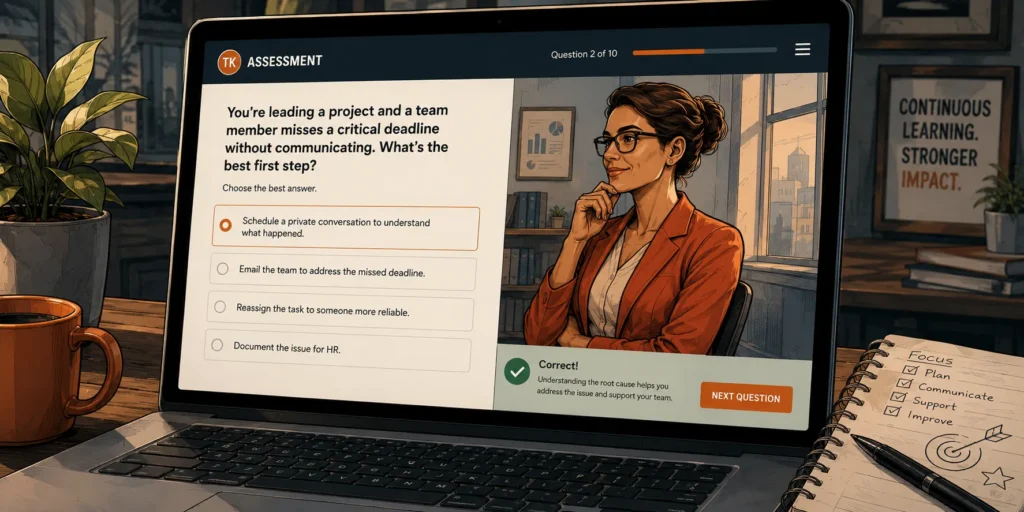
Quizzes show up in almost every e-learning course. Your portfolio should include a few, but they shouldn’t all look the same. Modify the defaults, change the layouts, and show you can build something beyond the standard blocky quiz format.
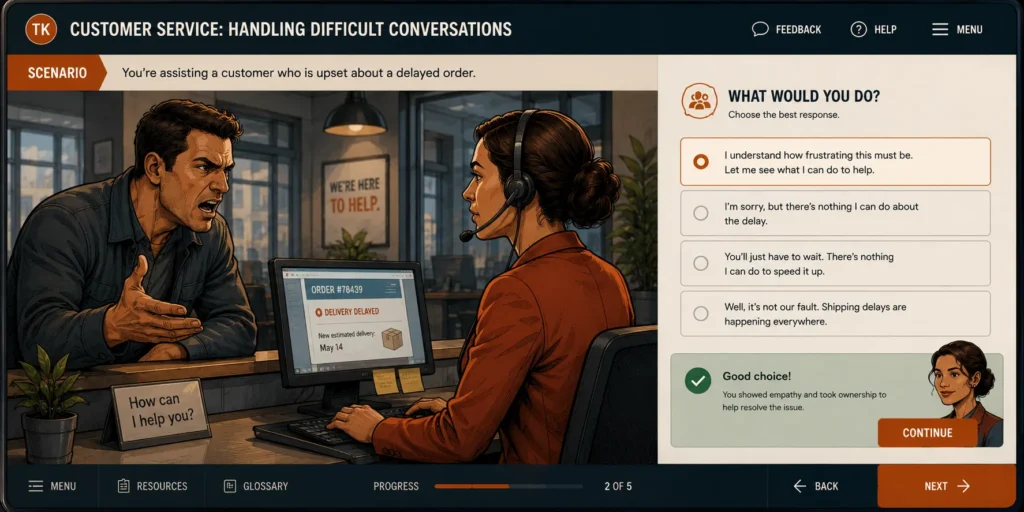
Interactive scenarios are among the most popular types of e-learning content. They show your ability to build situational training that mirrors real-world decisions. A well-designed scenario demonstrates more design skill than a screen full of bullet points.
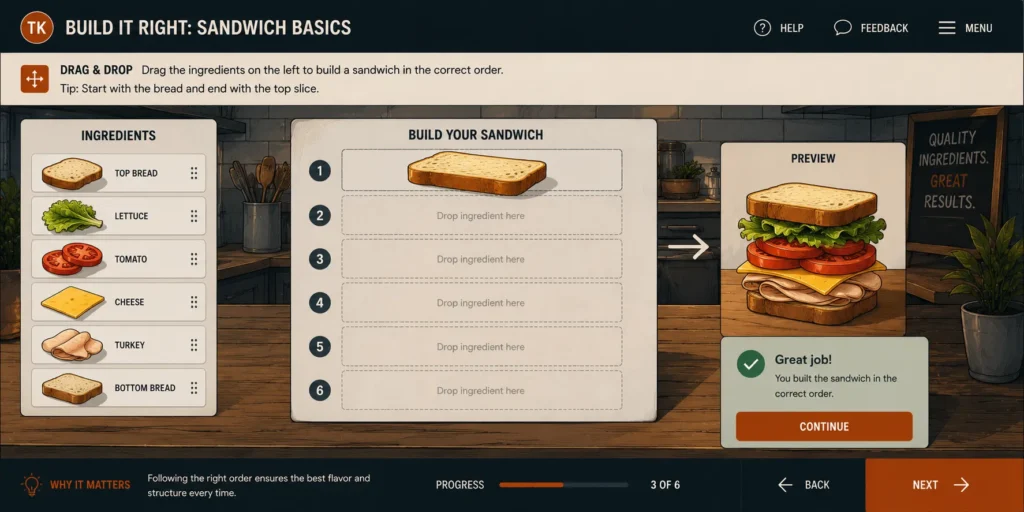
There are three main ways to engage with an e-learning screen: clicking, hovering, and dragging. Build modules that show you know how to use all three. Drag interactions are worth emphasizing. They’re less common and tend to catch reviewers’ attention.
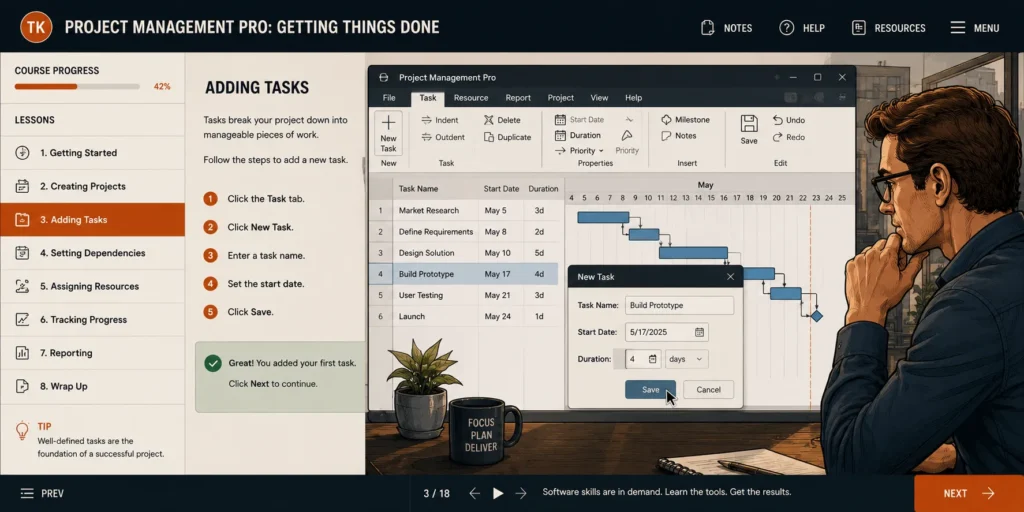
Most organizations have software training needs. Show that you can handle them. Include both a short screencast video and an interactive software simulation in your portfolio. Perhaps also some sort of step-through guide with screenshots and text descriptions.
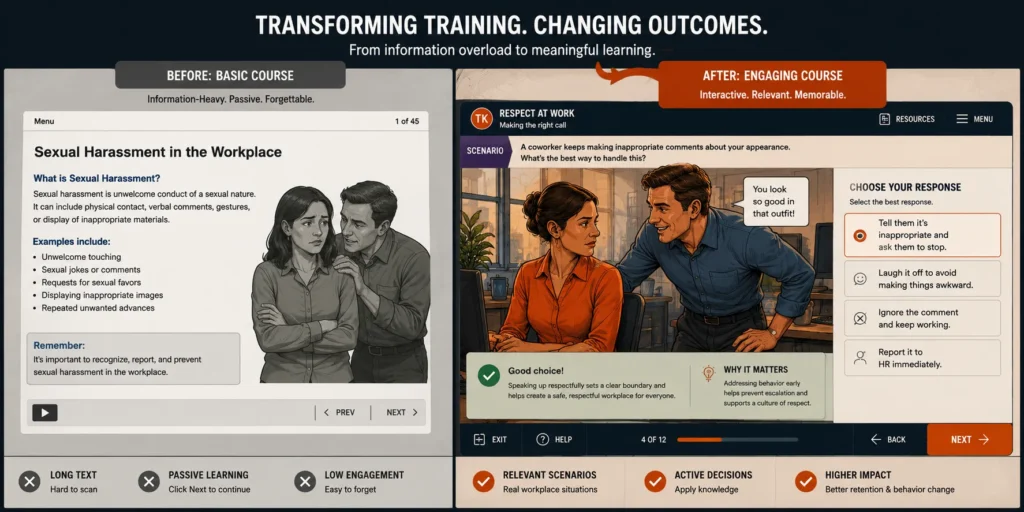
Take a dull, text-heavy course and turn it into something engaging. Show both versions. This demonstrates your judgment and creative problem-solving, not just execution of skills. If you’re trying to figure out how you’d do that, use a backwards design approach where you focus on the action and then figure out what activities and content best support it.
One thing worth knowing and this may sound a bit cynical, but the person reviewing your portfolio will lock on the visual design before they consider the instructional design. A well-designed module gets a longer look. So make your visuals strong.
You’re probably in a position where creating all of these types of modules will consume too much time. In some ways that’s true. But a good shortcut is to participate in the weekly challenges. They’re diverse, interesting, and small enough to work for a portfolio.
A portfolio isn’t a one-time project. It grows with your skills, and every course you build is a chance to capture something worth showing. Start with these five types, make the visuals strong, and keep adding as you learn. What’s one piece you could add to yours this week?
Comments are closed.




[…] gets the whole point of this post: you need to maintain an active portfolio. And here’s […]
[…] which skills to build is half the battle. Years ago I decided to transition to from media production to training. I went […]
[…] its core, a portfolio shows your skills and thinking. For some people, it’s a curated set of best work they rarely touch. For others, it’s a […]