Physical Address
304 North Cardinal St.
Dorchester Center, MA 02124
Physical Address
304 North Cardinal St.
Dorchester Center, MA 02124
Helpful ideas. Squeaky value.
Helpful ideas. Squeaky value.
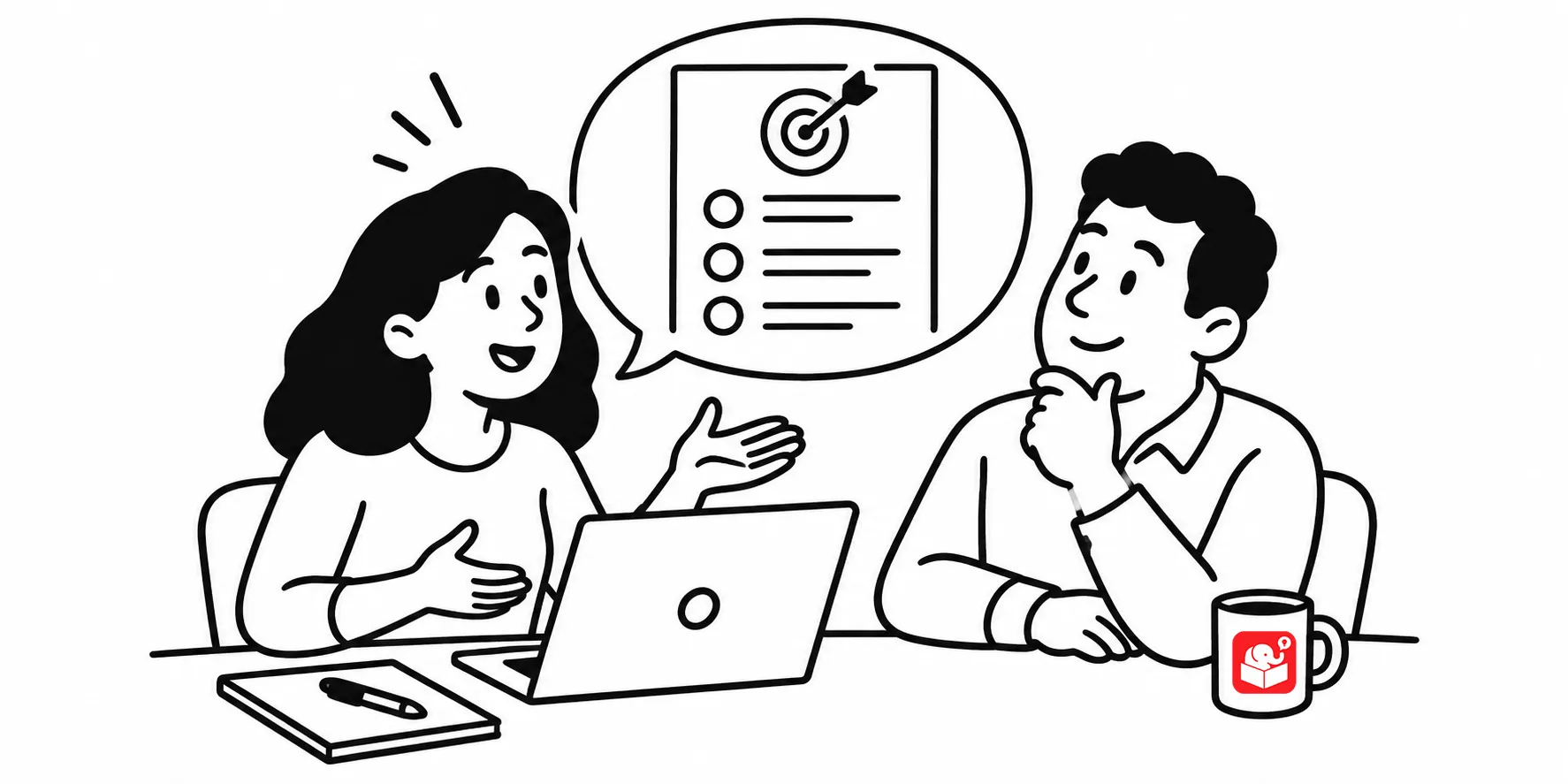
The key to a course that works is clear goals mapped to measurable outcomes. Without that map, you’re guessing at whether the course did what it was supposed to do. Most objectives fail not because the writing is bad, but because the course purpose was never clearly established.
Not every course is designed to change what someone does. For example, some courses exist to build awareness of policies, not to train people to handle specific situations. Understanding that difference is the first design decision you make.
A compliance course on bribery, for example, might have completely different goals depending on who’s in the audience. An international sales rep who regularly encounters bribery attempts needs decision-making practice. An IT analyst in the same organization who will never encounter a bribe needs something much simpler.
Forcing both through the same course wastes the IT analyst’s time and probably doesn’t serve the sales rep either. The objective should match the expectation.
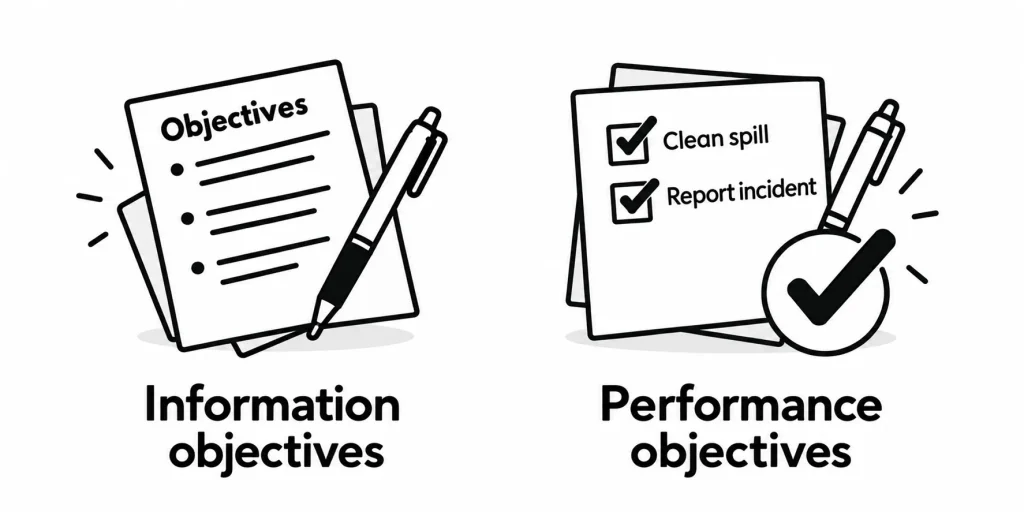
I like to separate the courses into one of two buckets: information or performance.
Customers tend to lean more into content delivery and assume that performance follows.
Once you’re clear on the course purpose, you can focus on what the learner actually needs. A simple set of questions gets you there:
These questions don’t take long to answer, but they change the course you build. They force a conversation about the performance expectation rather than the content.
I use a simple document where I break down the learner audience, where they’d use the content, the learning objective. and how it’s measured.
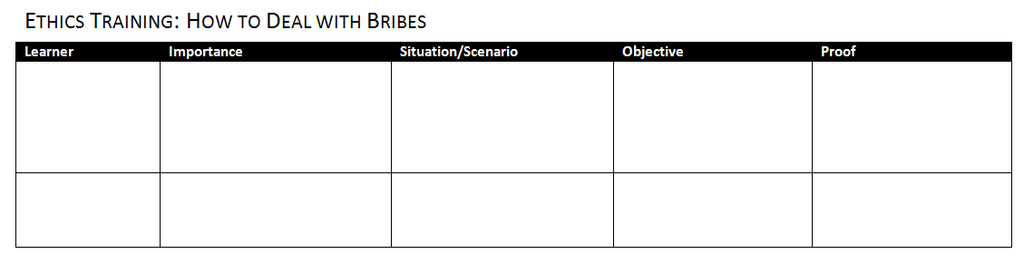
Take the bribery course example. For international staff, the course is performance-based. You want specific behavioral outcomes. The course should put them in realistic situations and have them make decisions consistent with company policy. You measure success by whether they navigate those situations correctly.
For IT staff, the objective is general awareness. They need to know the policy exists and what it says. A scaled-down course with a simple quiz to certify understanding is the right fit. There’s no need to walk them through scenarios that have nothing to do with their work.
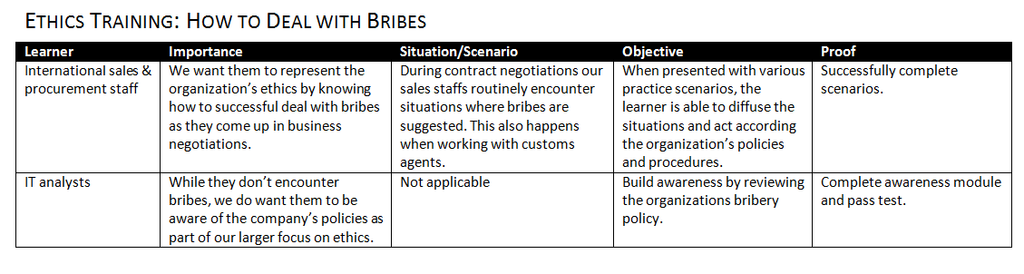
One table can capture both profiles. List the learner, the relevance, the situation, the objective, and the proof of understanding. Do that for each audience type before you start building.
A few principles that help keep objectives grounded:
The questions above are a starting point for a conversation with the people who commissioned the course. What are they actually expecting learners to do differently? How will they know if the training worked? Those two questions, asked early and answered honestly, will shape better objectives than any template can. Try asking them at your next kickoff meeting.