Physical Address
304 North Cardinal St.
Dorchester Center, MA 02124
Physical Address
304 North Cardinal St.
Dorchester Center, MA 02124
Helpful ideas. Squeaky value.
Helpful ideas. Squeaky value.
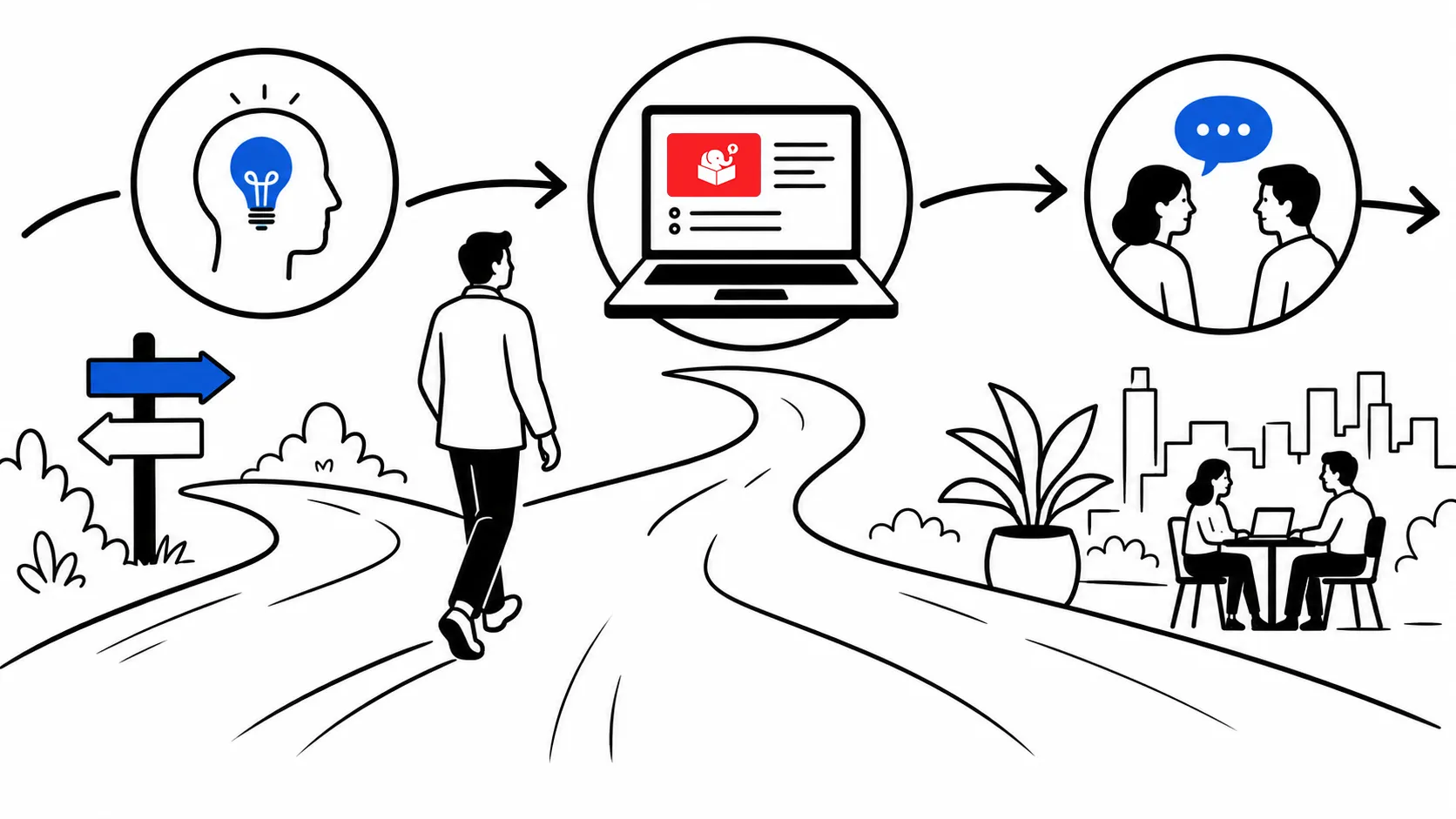
Many organizations take the “Field of Dreams” approach to e-learning. Build it and they will come. That’s really not how it works.
An e-learning course can save time and compress complex content into something manageable. But it’s only one event in a longer learning process. Think about what happens before and after it, and you’ll get a lot more out of the build.
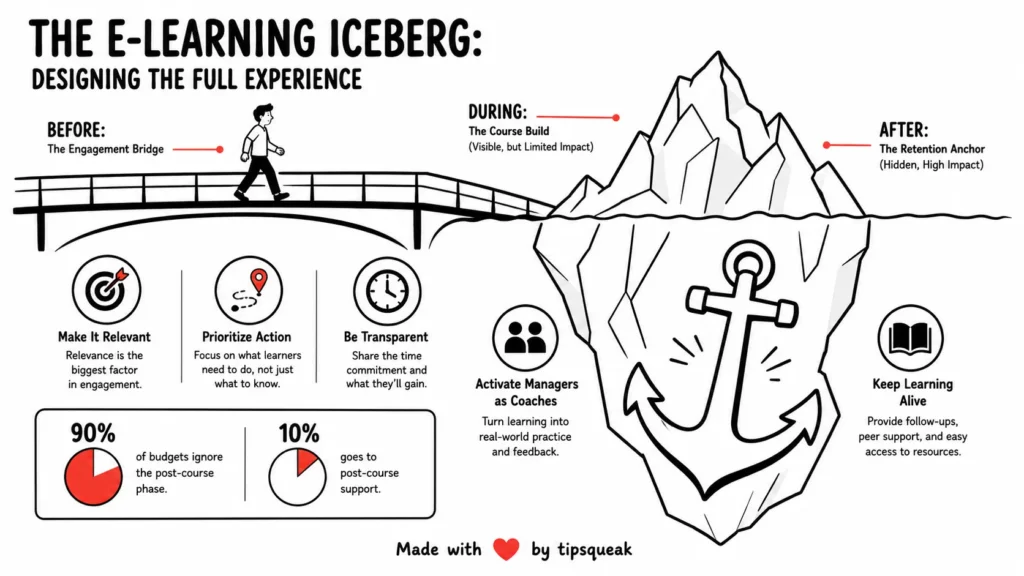
Before anyone clicks the start button, they’ve already decided whether this course is worth their time. If they’re not convinced, they’ll complete it and walk away without retaining much.
A few key questions help here.
When someone sends me a YouTube link, I check the runtime before I click. Your learners do the same thing with your course. They’re running a quick cost-benefit check before they start.
Give them that information upfront. Tell them how long the course takes and what they’ll walk away with. That small thing can make a real difference in buy-in.
Once learners show up, your course needs to do three things: deliver the right content, look the part, and give people something to do.
That’s the question to keep asking during the build. The best courses don’t just present information, instead they make learners use it. Practice scenarios, decisions, reflection moments. Those are the things that move content from short-term recall to something that sticks.
Here’s where most e-learning budgets fall apart. Research suggests around 90% of course budgets go toward building the course. Almost nothing is left for what happens after.
That gap matters. A few things can help close it.
Start thinking about the learning experience as three separate design challenges: what happens before the course, what happens inside it, and what happens after. Pick one phase you tend to overlook and focus there first.