Physical Address
304 North Cardinal St.
Dorchester Center, MA 02124
Physical Address
304 North Cardinal St.
Dorchester Center, MA 02124
Helpful ideas. Squeaky value.
Helpful ideas. Squeaky value.
I get to speak to a lot of subject matter experts or small organizations that are starting to dip their toes into the e-learning pond. They know they need online training, but they’re not quire sure how to start.
Here are a few thoughts.
I try to simplify the process. Generally, there are two useful types to know.
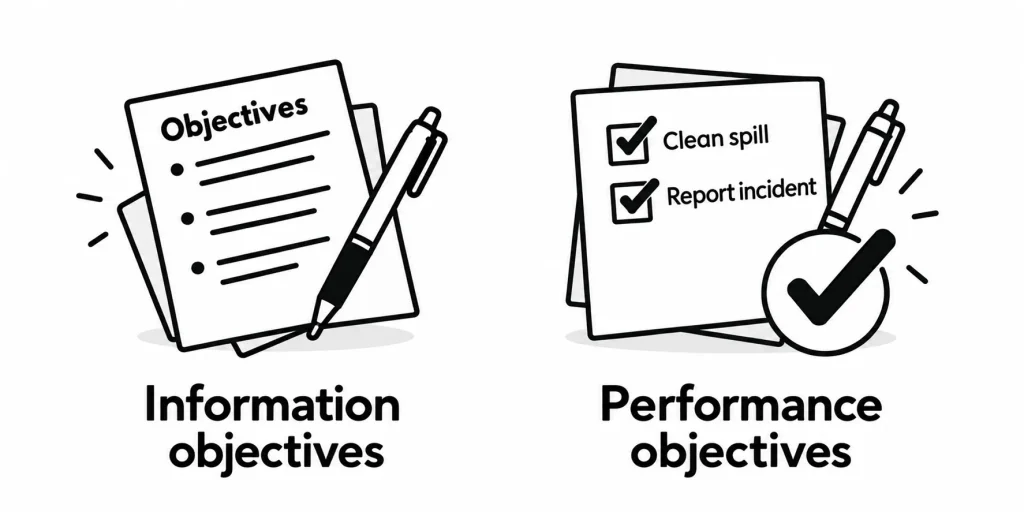
Both types have value. The question is whether you’re choosing the right one for the job.
Trainers are hired to build training to meet a goal. The goal isn’t to build a course. The course is a solution to a specific problem. Thus, after someone goes through the course, what are they supposed to do differently? Start with that question.
If it’s an explainer course, the goal is course completion by a specific date. If it’s a performance goal, the objective is tied to some sort of measurable and observable outcome.
A lot of online courses fail because there’s no clear performance expectation attached to them. Getting the basics right prevents that.
If you can’t answer what changes after the course, keep designing or recognize that it’s an explainer course and track completion.
This is the biggest issue with most e-learning. Organizations have tons of content. Everything is important. Because of this courses often get designed around the content, not the learner.
Annual compliance training is a familiar example. The material matters to the organization for various reasonse. However, most of the content is irrelevant to the learners or not framed in a meaningful manner. This doesn’t have to be the case.
You may not control whether a course gets built. But you can advocate for a design that respects the learner’s time. Connect the content to their actual work, and the course has a reason to exist.
These three questions sound simple. But most programs skip at least one of them. Build the habit of asking “why” before asking “how,” and your program will get stronger with every course you make.