Physical Address
304 North Cardinal St.
Dorchester Center, MA 02124
Physical Address
304 North Cardinal St.
Dorchester Center, MA 02124
Helpful ideas. Squeaky value.
Helpful ideas. Squeaky value.
You’ve probably seen enough bad online training to know that something’s missing. That there’s something wrong.
From my experience, one of the biggest issues is that organizations tend to start with a problem that they think training will fix. Surely the people would do better if only they knew more. This is obviously not the way to start.
That’s why good discovery work at the start saves you from building the wrong thing later.
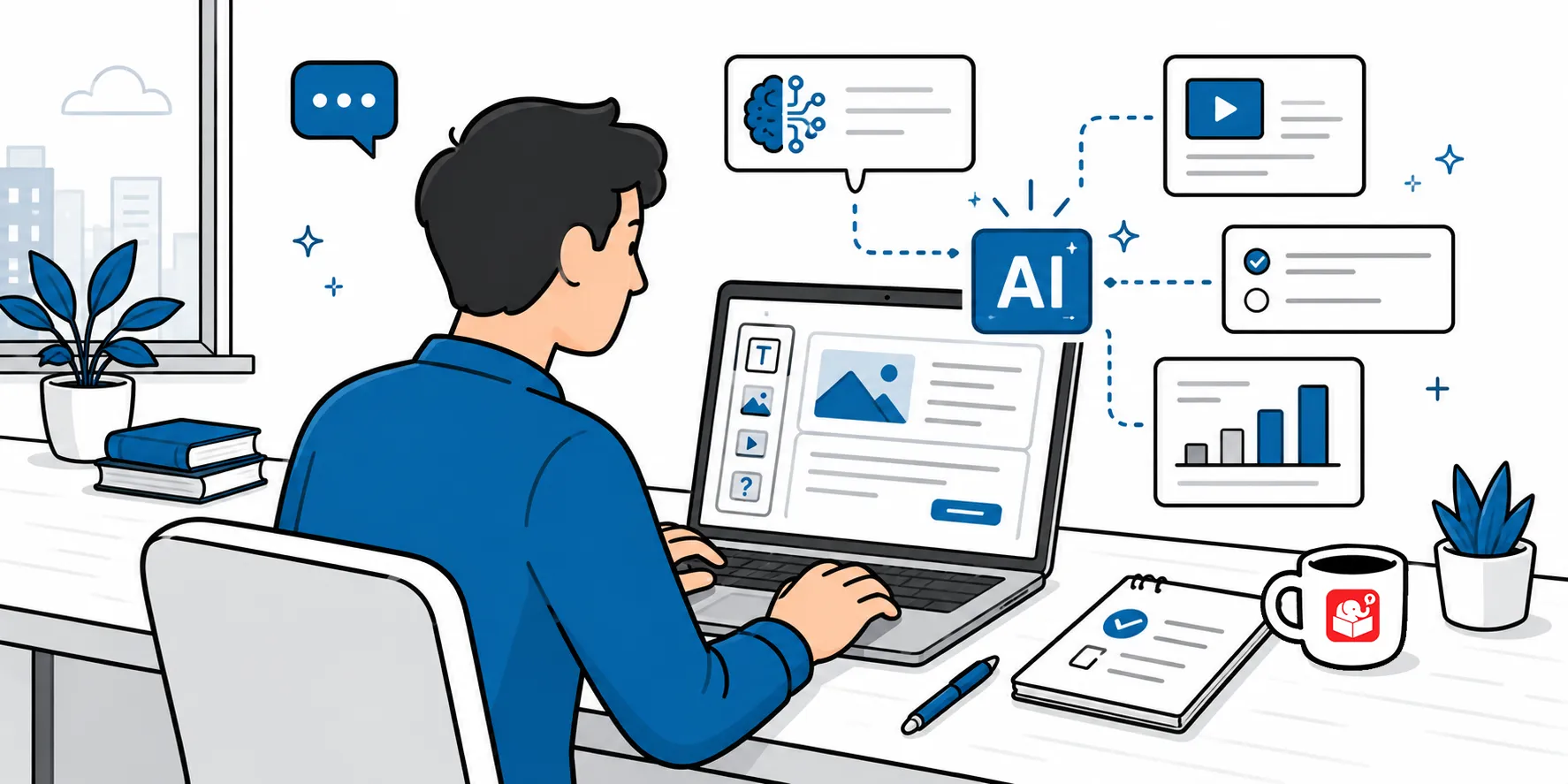
I wrote about this topic a while back, but I want to reframe it with AI as part of the process because AI is not going a way and anyone who uses it knows that it has value. In this context, it can help you prepare for these conversations we detail below.
But there’s a real risk if you lean on it too hard. You end up with content that sounds polished and complete but doesn’t reflect what the client told you. Generic questions get generic answers, which produces generic content. And generic course content doesn’t change behavior.
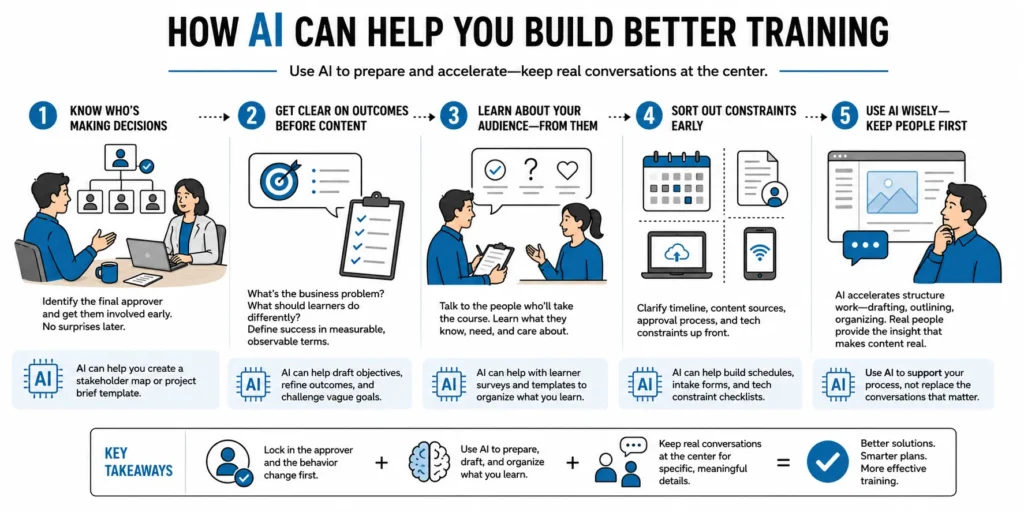
Here’s a typical scenario: you build something, a new reviewer appears halfway through, and you’re two weeks behind making changes nobody mentioned at the start. Figuring out the approval chain early is one of the most protective things you can do for a project.
Ask directly who signs off before the course goes live. Get their input early and copy them on your project plan. The goal is no surprises at the end (or during production), and that only happens if you know who’s in the room from the beginning.
AI can help you build a stakeholder map or a project brief template. That kind of structure work is where it’s useful. What it can’t tell you is who the real decision-maker is in this organization, or what that person actually cares about. That part comes from the conversation.
Two things will tell you more than anything else:
These questions shift the conversation away from “build a course” (which tends to be the default) and toward “solve this specific problem.” If a client can’t answer them, that’s your first signal something is off.
Work with them to define what success looks like before going further. And be honest about the reality many of us face: a lot of instructional designers don’t get access to this conversation at all. We’re handed content and told to build. Do what you can with what you have.
Watch out for what AI does to vague objectives. Ask it to tighten one up and you’ll get something that reads like a course catalog: “learners will demonstrate proficiency in applying core competencies.” It sounds right. It says nothing.
The goal is a specific, observable behavior. Not “they’ll understand the process better,” but “they’ll follow the new approval steps without calling the help desk.”
One you can see. One you can track. If the AI output doesn’t reflect what the client actually said, throw it out and write it yourself.
The more you know about who’s taking the course, the more useful it’ll be. That context shapes your tone, your examples, and your level of detail more than any single design decision you’ll make later.
If you can, skip the manager (and client) and talk directly to the people who’ll actually take the course. Find out what they already know, what they don’t, and what they care about.
AI can help you draft a learner analysis template or a quick survey to send ahead of the kickoff. That’s useful prep.
Here’s where the disconnect risk gets real, though. AI-generated audience descriptions are generic by default. “Mid-level professionals who value efficiency” won’t help you write a better example. And if you hand a content document to AI and ask it to turn it into course material, you’ll get something that reads like course material. It won’t sound like the expert who actually knows this stuff, and it won’t have the specific examples that make it land.
Use AI to organize what you learn from people, not to replace learning from them.
Timeline, content sources, and technology all shape what you can realistically build, and they need to be in the picture from day one.
A two-week deadline and a six-month one call for completely different approaches. Get a real due date and work backward. I account for about 60% of my week for actual production, then add 30% buffer to the project timeline after mapping the project out. Doing that gives me room to negotiate without overpromising.
Content delays are the most common reason e-learning projects run late, so if material still needs to be gathered and approved by multiple people, build that time into your schedule now. Same goes for tech constraints: does everyone have access to audio? Is there an LMS with known limitations? Will learners be on mobile? Some teams share a single device. Some locations have slow or no internet.
AI can help you build a project schedule, a content intake form, or a tech constraints checklist once you have the real information. Give it the actual variables and it’s a solid starting point. Just don’t ask it to fill in the blanks.
Keep in mind that making a vague timeline sound confident doesn’t make it real.
Going into your next kickoff, start by locking in who has final approval and what behavior change the course is supposed to produce. Those two things will shape every decision that follows.
From there, use AI to help you prepare, draft templates, and organize what you learn from conversations. It’s a real time-saver for the structure work.
Just keep the actual conversations with real people at the center. That’s where the specific details live that make your content feel real instead of generic.